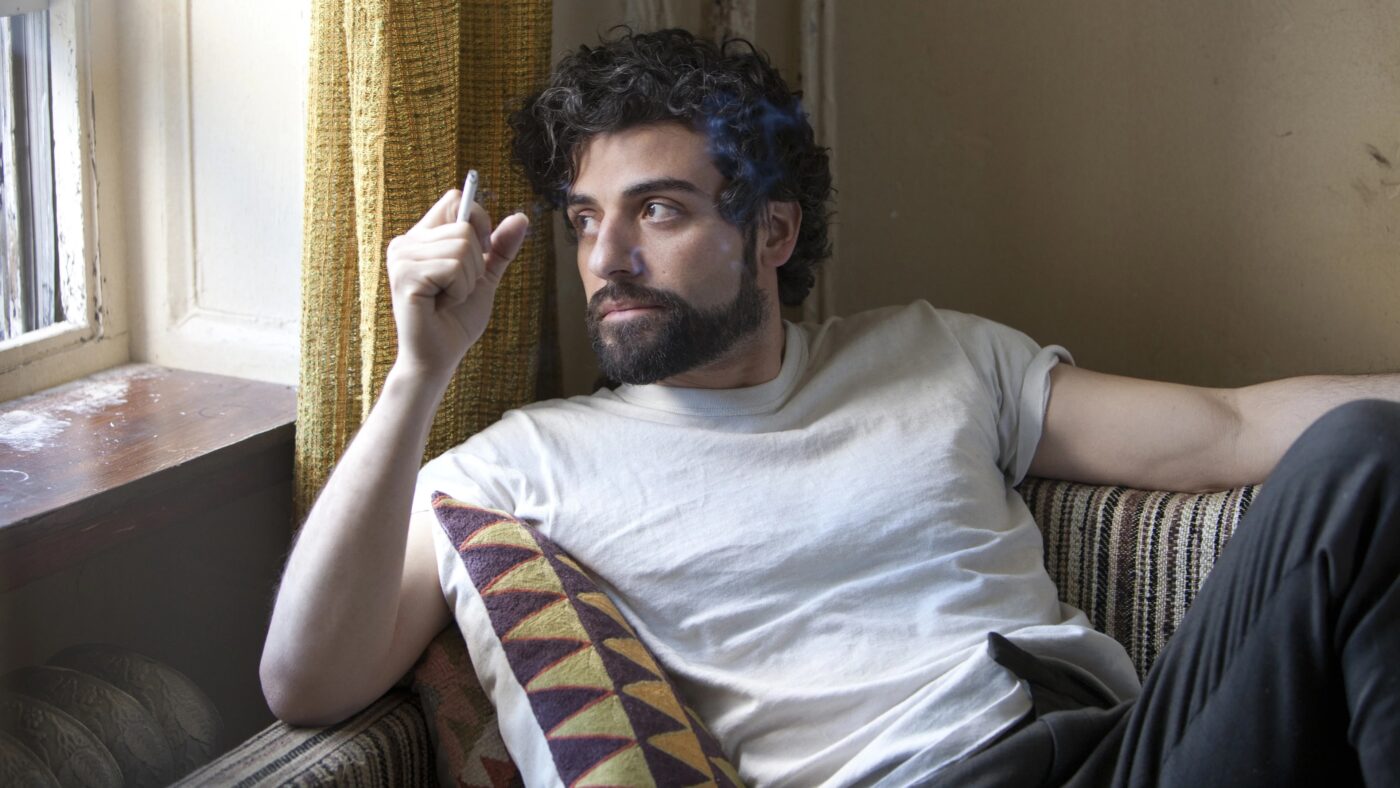
In 2010, Keanu Reeves sat down on a park bench, ate a sandwich and looked sad. That was pretty much it. A paparazzi photo caught him hunched slightly forward, staring at the ground while eating alone, and the internet did what the internet does: It turned him into a meme. “Sad Keanu” was Photoshopped into increasingly depressing scenarios, inspiring equal parts mockery, concern and affection. People wanted to hug him, sit beside him and, perhaps most importantly, they still wanted to fuck him.
His sadness hadn’t diminished his status as a sex symbol. Women had been lusting after melancholy, emotionally complicated men for decades. Anyone who came of age fantasizing about River Phoenix, Chris Cornell or a young Johnny Depp could tell you that. The ’90s had practically perfected the beautiful, brooding man who seemed to be carrying the weight of the world beneath his flannel shirt.
There was something different about that particular breed of male sex symbol. They were pretty, sometimes almost androgynous, with long hair, eyeliner and an apparent indifference to the traditional rules of masculinity. Their appeal wasn’t built around how powerful they were, but how little they seemed to care about proving it.
The tortured, sensitive male romantic figure was hardly new; Rudolph Valentino and James Dean built careers on it. But the alternative culture of the ’90s helped make a particular version of that man a mainstream sex symbol. What none of them had was an internet capable of turning their emotional complexity into an entire category of thirst.
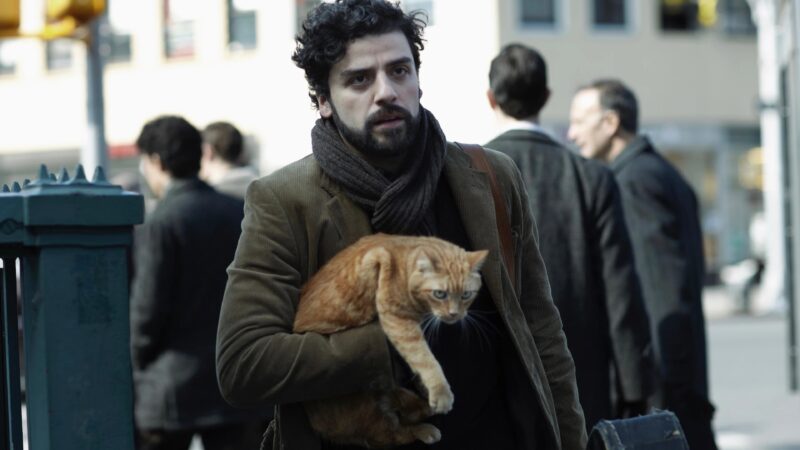
Inside Llewyn Davis • Photo: CBS Films.
By the time Sad Keanu appeared, the tools to do exactly that were falling into place. Tumblr, Twitter, GIFs, memes and fan fiction gave women and queer audiences the ability to collectively celebrate qualities in men that Hollywood never intended to sexualize.
Ryan Gosling spent the early 2010s turning wounded, emotionally constipated men into sex symbols in Blue Valentine, Drive and The Place Beyond the Pines. Tumblr took one look at Tom Hiddleston’s rejected, insecure, daddy-issues-riddled Loki and decided the villain was the one it wanted. Adam Driver’s strange, volatile character on Girls became an unlikely object of desire, while Oscar Isaac spent Inside Llewyn Davis broke, grieving, failing professionally and looking beautiful while doing it.
By 2016, Ben Affleck was staring silently into the void during a Batman v Superman press interview, inspiring someone to edit Simon & Garfunkel’s “The Sound of Silence” beneath the footage. Sad Affleck was born. Sitting beside him was Henry Cavill, the literal Superman, yet the internet couldn’t stop looking at the exhausted middle-aged man who appeared to be contemplating every decision that had led him there.
Something broader was happening to the male sex symbol. He was getting weirder, more emotionally exposed and decidedly less composed. But it wasn’t that women’s desires had changed. It was that women were increasingly empowered to express them.
For decades, Hollywood largely manufactured male sex symbols through a male-dominated system. The resulting ideal often looked suspiciously like a male power fantasy being sold as a female sexual fantasy: handsome, strong, successful, controlled, confident and emotionally impenetrable.
Then the internet fucked with that entire system.
Hollywood could decide who got cast as the leading man, but the internet could decide which three seconds of him were hot. Increasingly, those three seconds weren’t the moment he looked strongest. They were the longing glance, the awkward smile, the trembling jaw, the man crying, failing or looking so fucking exhausted he might need to lie down.
And perhaps the most revealing part wasn’t that women found vulnerable men attractive. It was what that vulnerability allowed women to feel about themselves.
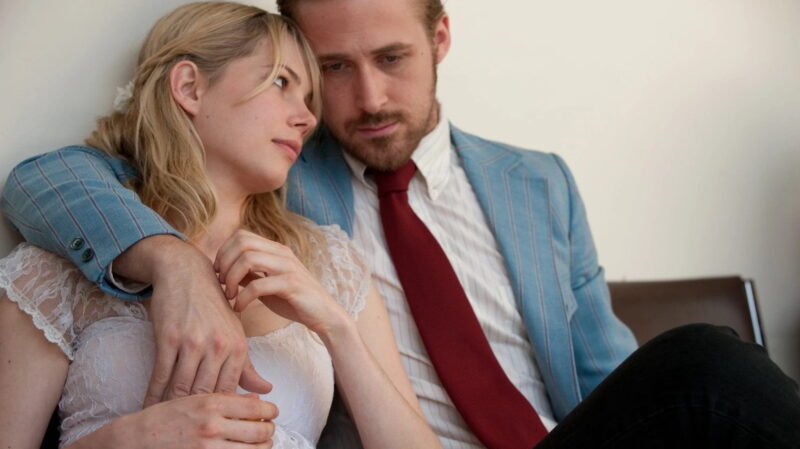
‘Blue Valentine’ • Photo: The Weinstein Company
The traditional masculine ideal is built around power, dominance and protection. A desirable man is someone who can keep a woman safe. But that same ideal can also make men seem intimidating, unknowable or threatening. There’s a difference between a man who possesses strength and one who seems compelled to demonstrate it.
For the second Halloween in a row, my social media feeds have been absolutely inundated with videos, photos and fan edits of a scare actor known as Fryboy. A tall, lanky performer with black-and-white face paint and the general appearance of someone who wandered off the set of The Crow, Fryboy is a slider, a haunted attraction performer who sprints toward unsuspecting guests before dropping to the pavement and sliding toward them on protective gear.
As someone whose teenage crushes included Brandon Lee’s Eric Draven, I get it.
There’s something undeniably hot about a tall, mysterious man in theatrical makeup who looks like he might either kill you or write a really depressing song about you. He’s intimidating, a little dangerous and conveniently unknowable, a blank canvas onto which viewers can project whatever fantasies they want.
But what’s interesting isn’t why women were initially drawn to Fryboy. It’s why so many stayed after getting to know the man behind the makeup.
His name is Carter, a Los Angeles-based performer in his twenties who has cultivated a substantial following outside his scare-actor persona. Through social media and Twitch livestreams, he’s introduced fans to his love of music, his interest in DJing and, more significantly, his vulnerability.
Carter has spoken openly about being bullied, feeling insecure and struggling with anxiety and depression. He’s acknowledged that his chosen form of performance art is unconventional, perhaps even a little weird by mainstream standards. He became visibly emotional while talking about his friends and cried over the support he’s received from his audience. He’s even worn a tank top proclaiming that “Hot Boys Cry.”
There’s something familiar about the appeal. But Carter, and dozens of other rising streamers and content creators of his ilk, represent a different relationship between the sex symbol and the people who desire him.
River Phoenix couldn’t livestream from his bedroom. Chris Cornell couldn’t spend hours chatting with fans on Twitch. Their emotional lives were accessible largely through their work and whatever glimpses the media provided. Today’s version can choose to share his vulnerabilities directly with the people watching him.
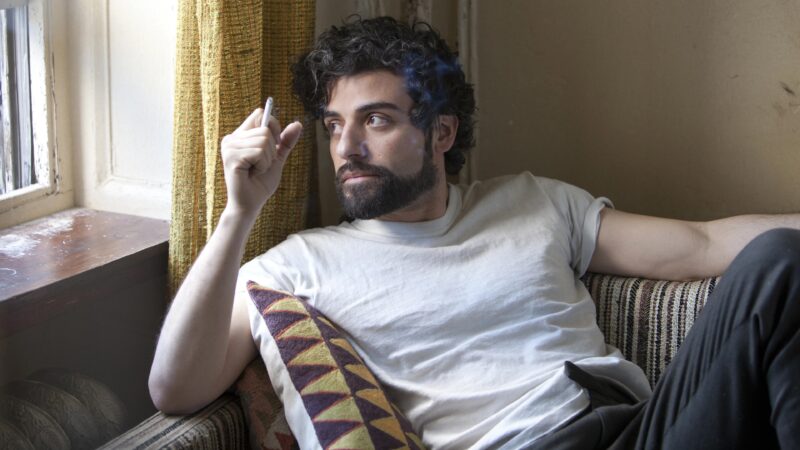
Inside Llewyn Davis • Photo: CBS Films.
It’s not simply that fans find Carter attractive despite his struggles. Many recognize their own experiences with anxiety, depression and insecurity in his disclosures. His willingness to acknowledge those struggles makes him relatable in ways his intimidating character never could be.
His vulnerability doesn’t make him less desirable. It makes him recognizable.
For generations, women have been sold romantic fantasies in which men are the protectors and women are the protected. The man is strong, confident and capable of keeping danger at bay. The woman is allowed to be vulnerable because he isn’t.
But what happens when he is?
With the Sad Hot Man, a woman isn’t the only one who has to show her weaknesses. She can be strong when he needs her to be. He can be strong when she needs him. And sometimes neither of them has to be particularly strong at all.
Women aren’t necessarily fantasizing about rescuing helpless men. They’re imagining what it would feel like to be the person a capable, desirable man trusts enough to be vulnerable with. There’s something particularly gratifying about that, not because it gives a woman power over a man, but because it allows her to experience power alongside him.
The appeal of the Sad Hot Man may ultimately have less to do with sadness itself than with what emotional openness makes possible. A relationship in which strength and vulnerability aren’t opposing forces, and being needed doesn’t automatically mean being responsible for fixing someone.
It’s a fantasy that challenges one of traditional masculinity’s most persistent assumptions: that a man becomes less desirable when people see his weaknesses.
The ’90s made that alternative mainstream. The internet gave women a language to celebrate it. Now the Sad Hot Man is back in eyeliner.
Only this time, he gets to help write the fantasy himself.