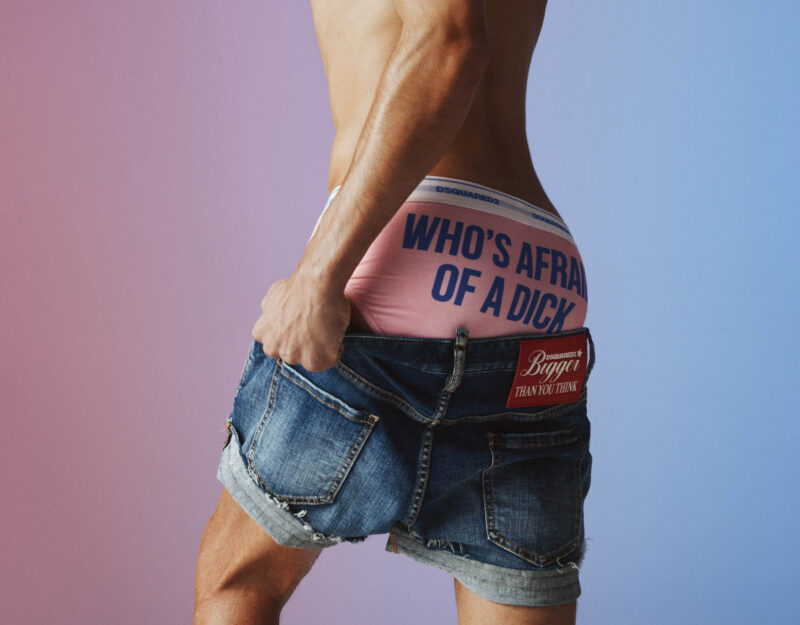
Some of the most formative men in my life are the guys from Jackass, so much so that the first dicks I saw were theirs.
It was 2002, and I was 12, uncomfortably wedged between my father and brother in a Texas movie theatre, white cherry ICEE melting in a cup holder between us. I’m sure I was told to cover my eyes; I obviously worked around it.
My first glimpses came from Chris Pontius and Steve-O in the franchise’s full-length debut, Jackass: The Movie. The close-ups are incredibly thorough as buckets of shrimp are dumped into the pair’s transparent fishnet undies. They then jump into the Pacific to groin-feed harmless giants in a relatively tame bit called “whale shark gummer.” Naturally, the men progress to humping the cartilaginous fish.
Of course, all manner of genital gags are explored throughout that first film and would only escalate with each iteration. Pontius’ balls were another first for me, on display during the electrical endurance bit, “the muscle stimulator,” as is Dave England’s gooch — my unfortunate introduction to the term. Full-frontal is cleverly skirted in that first installment, but unapologetic, unobstructed hog would become a staple shortly thereafter.
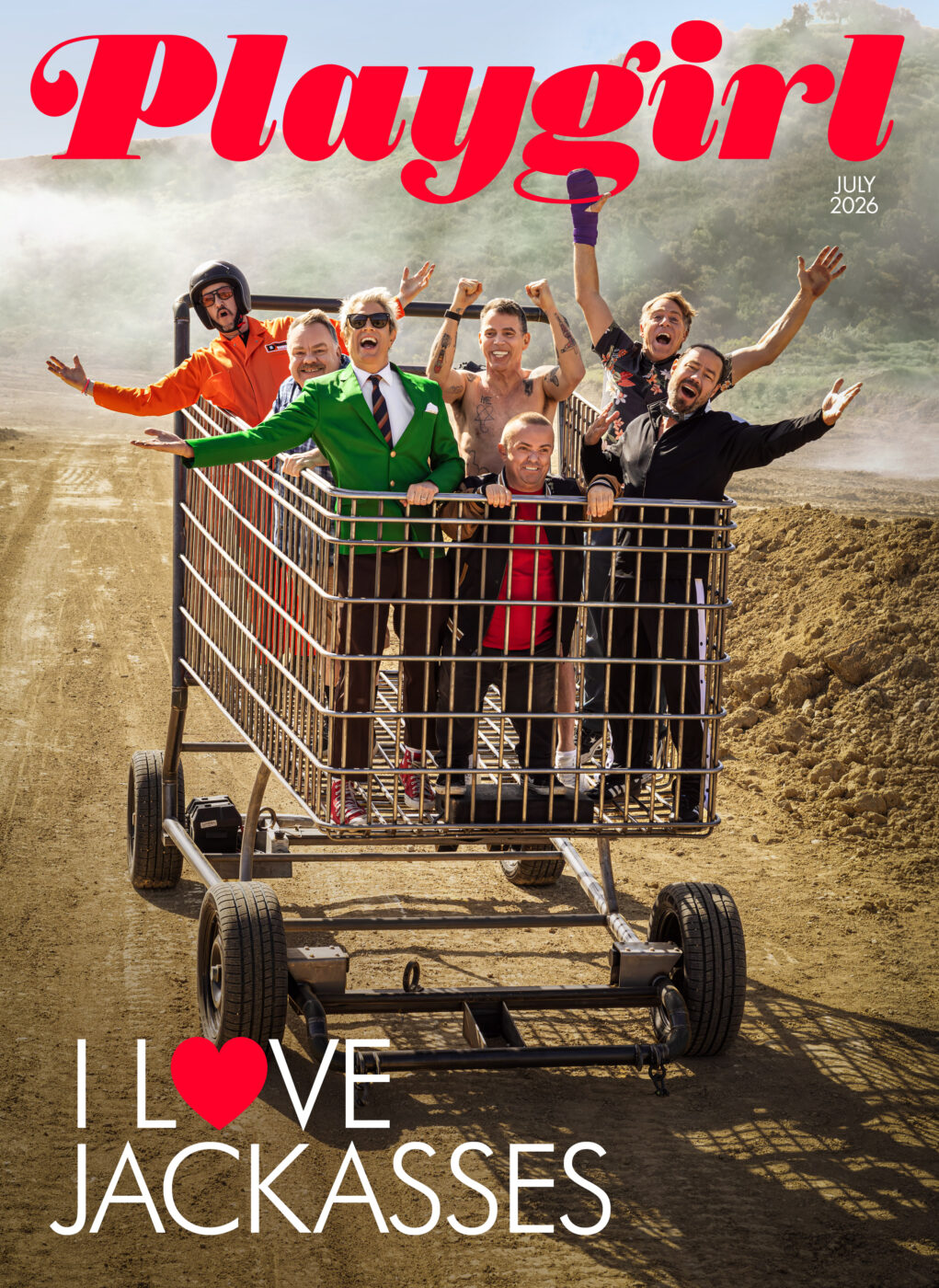
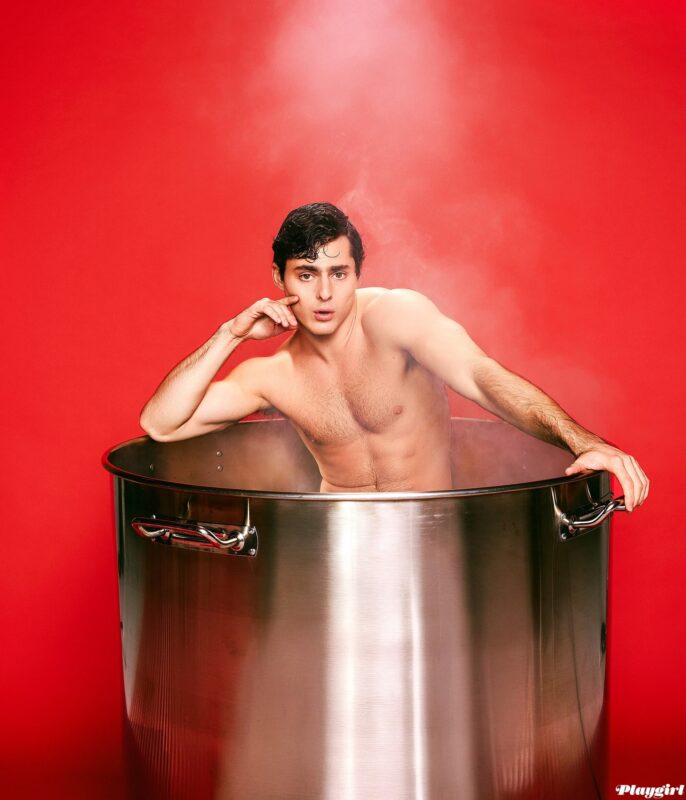
Playgirl • July 2026.
Questionable parenting decisions aside, I joyfully laughed, cringed, and retched my way through those 85 minutes. It was the gnarliest content I had seen to date — remember, this was pre-Myspace, pre-YouTube, back when content was passed around on VHS, and a skateboarding resurgence seeped into almost every corner of mass media. The film was pure cartoonish absurdity punctuated by shock humor, but I recognized something resonant in it, distinct from the permissive violence my father, brother, and many of my male peers found.
It was unclear then what a cerebral pre-teen girl found so impactful and alluring in a man taking a dump in a hardware store display toilet or another dangling raw chicken from his g-string while hanging onto a tight rope above a pit of alligators, but I sure as hell did. I couldn’t look away, and haven’t stopped watching in the 25 years since.
When news first reached me that my favorite irreverent crew of dipshits was to return this summer with a final film, their confirmed swan song, it was immediately followed by a brouhaha over an explosion in Simi Valley. Guess who was at fault. It was the final day of shooting Jackass: Best and Last, and apparently, the gang went all out.
The film’s announcement left me surprisingly distraught about the end of this quintessential cultural touchstone. Yes, there’s sadness in the passage of time, in realizing bodies can no longer endure what they used to, that my body, too, has aged. Yes, it’s easy to drown in the nostalgia of it all, but the feeling was more nuanced than that. I thought, “Why do these idiots matter so much to me? Why do I feel both attracted and disgusted, intrigued and repulsed by them, and have for decades?” I mean, these were my first parasocial relationships, for crying out loud (second only to Geri Halliwell leaving the Spice Girls).
“Your body was formative for many millennials,” I tell Pontius at a coffee shop in Tarzana. “You know, you were the first naked man many of us saw. What does that legacy feel like?”
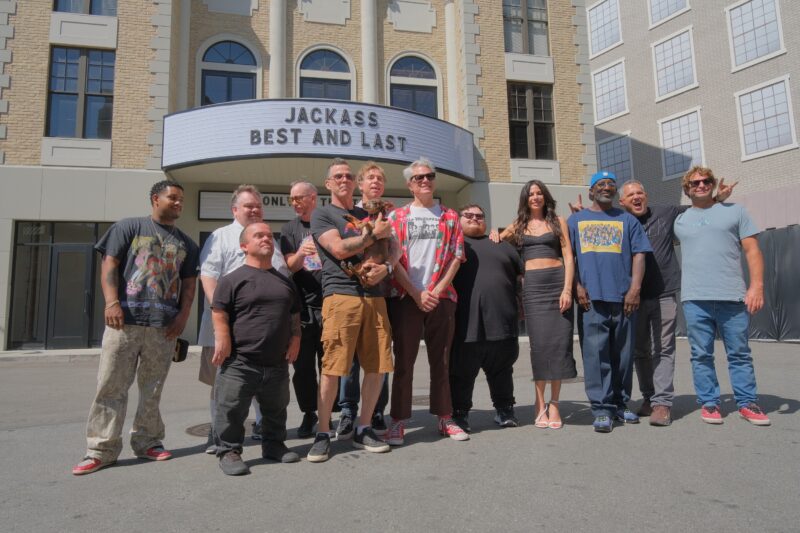
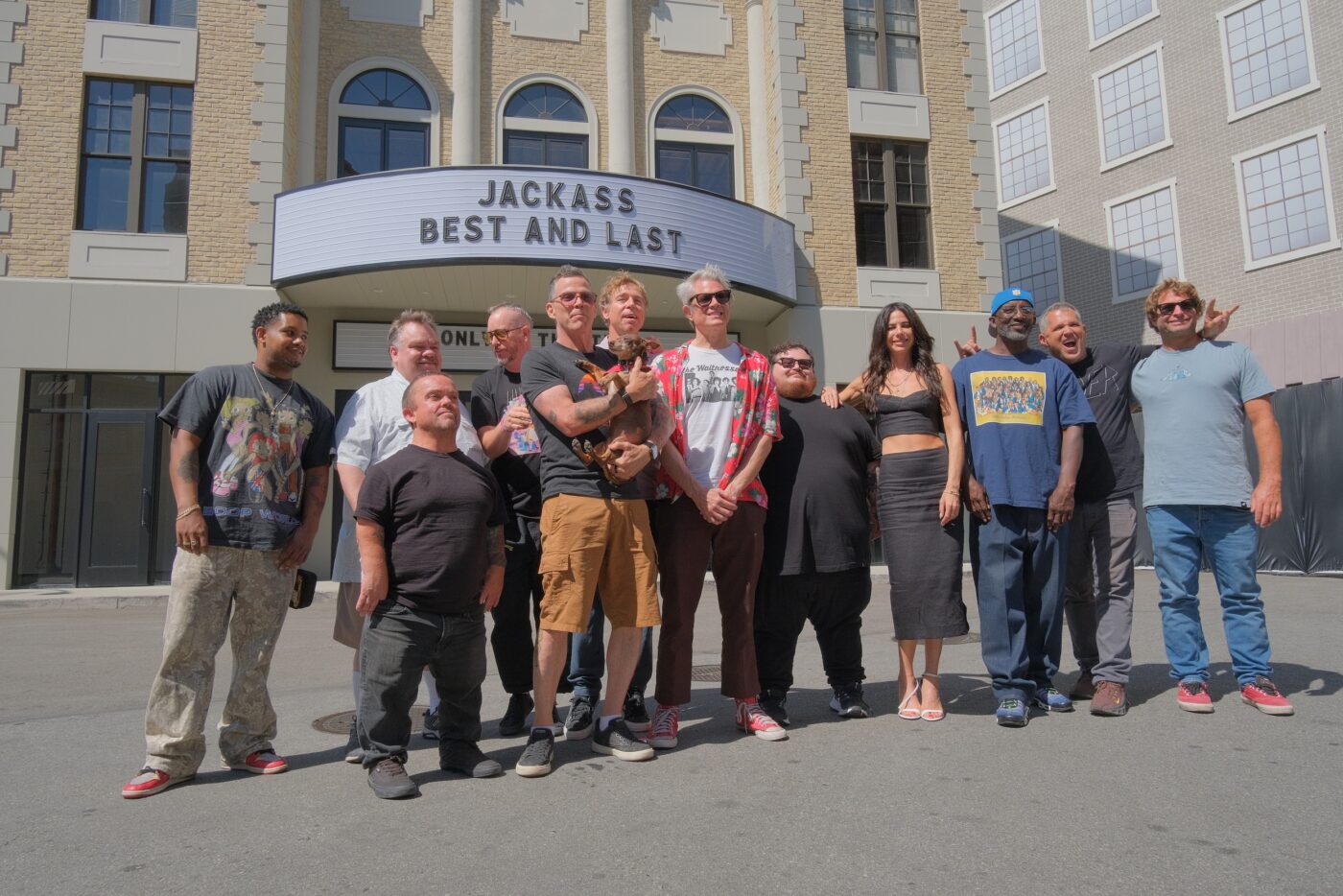
The ‘Jackass’ Team • Photo: Ali Ivosevich.
“It feels really good, actually,” he laughs. “If they’re gonna have to see some guy naked at some time, I’d prefer it to be a nice person and also presented in a funny way. A woman told me once, ‘If you wanna make a penis go away, just laugh at it.’”
And laugh at it, we have. Pontius’ dong has been bitten by a snake, clamped by a snapping turtle, pecked by a woodpecker, crushed in a mousetrap, attached to fireworks in Steve-O’s butthole, pulled by a remote-controlled helicopter, and even painted green as a towering kaiju to destroy a city. Funnily enough, “Playgirl Pontius” is an original-series bit in which Pontius posed nude and sent the photos for publication. We tried to get our hands on those photos, dear reader, to no avail.
I ask the rest of the original crew about the phallic phenomenon in a boardroom on the Paramount lot a few weeks later, gathered before a promotional block party on the New York Backlot. The banter between them is immediate, effortless, and infectious.
“That’s a hell of a cock to see for the first time,” says series co-creator and director Jeff Tremaine.
Instigator, concussion connoisseur, and unofficial daddy, Johnny Knoxville interjects, “It could turn you against men altogether.”
Tremaine doubles back, “You’d be let down the rest of your life.”
Patron saint of pooing on command, Dave England adds, “The war hammer is what we call it.”
Now that I’m thinking about it, across the original series, five films, and three extended cuts, Pontius’ dick and/or bulge may be the most consistent in my life thus far. I ask the group, out of genuine curiosity, “Pontius seems to get the least amount of shit. Is it because he has such a big dick?”
Knoxville smiles, “He gives the least amount of shit. He doesn’t really go after people. He’s just fundamentally a sweet person.”
“He also doesn’t give great reactions if we torture him. If he’s getting shocked, he just giggles,” says Tremaine, ever the pragmatist.
The Jackass story begins — as does the latest film — with Knoxville shooting a .38 revolver into his chest with a cheap bulletproof vest strapped to it. The stunt was part of an article he wrote for Big Brother magazine, a now-defunct, notoriously provocative and transgressive skateboarding magazine, in which he tested self-defense equipment on himself. It was at Big Brother that Knoxville met then-editor Tremaine, as well as staff writer Pontius and subscription manager Wee Man (Jason Acuña). From the same misfit subculture came creative heavyweight and producer Spike Jonze (Her, Adaptation), already gaining some traction for his work in skate photography and experimental filmmaking.
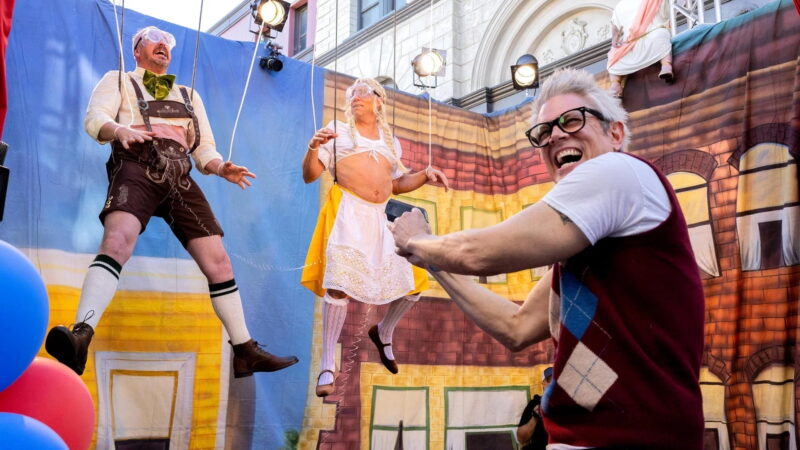
‘Jackass: Best and Last’ • Photo: Paramount Pictures.
A few more peripheral hell-raisers were added to the lineup, including skate/stunt maniac Steve-O, snowboarders Ehren “Danger Ehren” McGhehey and Dave England, and incidental recruit Preston Lacy. Best friends Ryan Dunn and Bam Margera emerged from the Pennsylvania-based DIY stunt collective CKY (Camp Kill Yourself) Crew. And just like that, the ensemble of semi-professional dickheads was assembled. The formation was serendipitous, but the chemistry was sui generis.
Jackass debuted on MTV in October 2000, to the shock and horror of mothers everywhere. It ran for only three seasons (24 episodes) and performed better than most of us thought possible. The original series obliterated every boundary in sight, spawned a microcosm of spin-offs, and laid the foundation for modern reality television. As if that weren’t enough, the boys — along with early cast member Stephanie Hodge — pioneered prank-based content that anticipated what social media would mainstream a decade later. Quite the resume. The revolution was first televised, then screened in theatres because it imposed fewer constraints on comedic grotesqueries.
Bits generally fall into one or more of the following categories: pain-forward (“the toro totter”), vomit-inducing (“poo cocktail supreme”), pranks (“golf course airhorn”), and/or absurdist performance art (“party boy”). Here, the body is foregrounded and tested until it becomes something more honest. In Jackass world, whatever’s obscene is transcendent, the profane remade sacred. Anarchy and depravity abound, as does vulnerability and sincerity.
Shock and rebellion don’t necessarily equal success, though, nor are they always interesting — ask any teenage parent — but the Jackass brand of abject comedy mixed with consensual pain and camaraderie was a hit. I mean, Hal Needham said, “Bullshit doesn’t photograph.” Buster Keaton said, “Never fake a gag.” There’s a reason slapstick doesn’t go out of style. As critic Pauline Kael said, “…movies are so rarely great art, that if we cannot appreciate great trash, we have very little reason to be interested in them.”
I spoke with preeminent Jackass scholar, cultural critic, and author Niko Stratis about the cultural legitimacy of Jackassery, as well as her essay “Jackass made me the trans woman I am,” originally published in Bitch magazine in 2022.
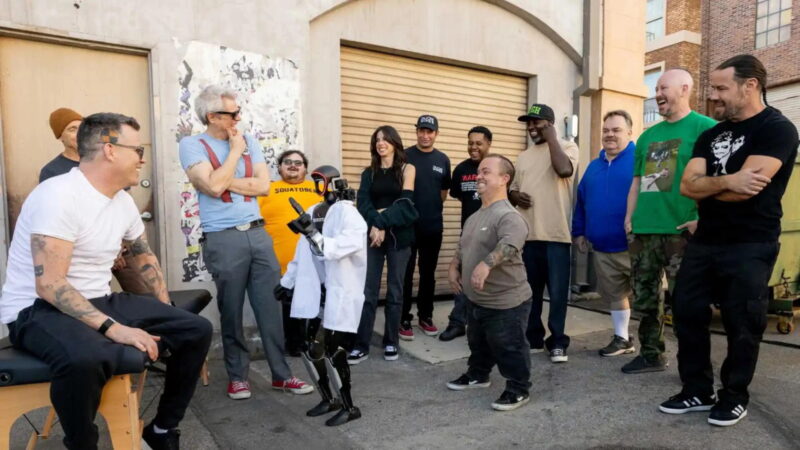
‘Jackass: Best and Last’ • Photo: Paramount Pictures.
“When I was younger, if you liked Jackass, you were a lower-class citizen. It was like media for dummies, for simpletons or the uneducated masses. Whereas now, a new Jackass movie is coming out, and people are like, ‘This is fucking cinema, baby!’ I’ve seen the attitude towards it change over time, and I think that’s a beautiful thing. It allows us all to feel joy for a couple of hours [with a film] that’s never trying to be something more than it is… the point of the movies is to be fun and not at the expense of someone else.”
Though the franchise is far from unproblematic, it doesn’t punch down. To steal a phrase from Stratis, “The only thing they’re punching down at is literally their own dicks when they’re putting them in a weird vice and playing fucking ping pong or whatever.”
Masculinity was handed to us in the early aughts as a language of hierarchy and domination, but the Jackass guys had a whole different discourse ready. They subverted the hegemony so hard they had a generation of straight skater boys touting a rainbow logo and cheering for the most erotically charged male bonding they’d ever seen. Gender performance is, after all, absurdity at its most ludicrous. Oh, and don’t forget queer camp legends John Waters and Rip Taylor were there, too.
On this queer-coded inclusion, Stratis notes, “It’s something that a lot of people in the culture at the time were really hesitant to do, and for [Jackass] to do it so earnestly and so openly, and never explain it or apologize; they just put it in. At the time, they weren’t like ‘we’re making a statement,’ they were just doing it, and it feels like a natural extension of them.”
When asked about the aspects of masculinity that they all found funny growing up, Knoxville says, “I always liked guys being aggressive and wanting to fight. It always entertained me; it’s so stupid but very entertaining.” His amusement gave us a legendary line in cinema history, spoken after getting his absolute ass whopped by super heavyweight fighter Butterbean. After waking up from a knockout, head wound visible, Knoxville drowsily quips, “Is Butterbean okay?”
“I just thought sports and jocks and stuff were hilarious,” says England. “A lot of them were homophobic, but also very homoerotic. It was a weird juxtaposition.”
McGhehey adds, “One of the best things is being able to take someone who wants to kick your ass and make them laugh.”
“There’s a lot of people who do what we do, and it seems like they make it about ‘being tough,’” says Knoxville. “None of us ever said we’re tough.” As he speaks, England and McGhehey bicker because England is playing with a Tech Deck. “We work because of friendship. They missed the whole point.”
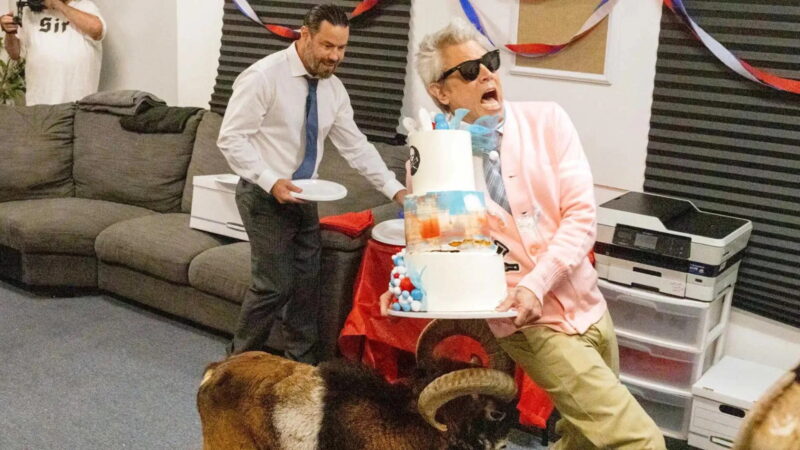
‘Jackass: Best and Last’ • Photo: Paramount Pictures.
I mean, everyone’s talking about the male loneliness epidemic, but nobody’s talking about the real problem with modern men: they aren’t getting shot out of cannons with their friends like they used to. In an era of optimized masculinity, therapy-speak, and hyper-curated digital selves, I sure do miss guys getting launched out of shopping carts by ramming them into inanimate objects.
As a 12-year-old girl, I wasn’t exactly the target Jackass demographic. I wasn’t a skater, I didn’t particularly enjoy watching people in pain or discomfort, and scatological humor was a tough sell. I also wasn’t a delinquent (yet), but I was undeniably thrashing just under the surface. I wasn’t the straight male audience for whom the men were ostensibly running around in thongs, but I was laughing my ass off anyway.
Jackass: Best and Last comes (heh) at the right time for many of us millennials, the generation to whom the guys are perhaps most indelibly tied because we’ve grown up alongside them. Fans have watched them age, get sober, relapse, get married, get married again, endure the absolutely devastating loss of Dunn, and somehow not lose their sense of humor in the process. Through recessions, wars, a pandemic, and fresh hells aplenty, their presence has remained a strange comfort as we’ve confronted our own mayhem.
I began each interview with the Jackass boys in a full-circle moment so surreal I had to script it, “Johnny has said that this final film is a love letter to your fans. When I’m done, this will be my love letter to you.”
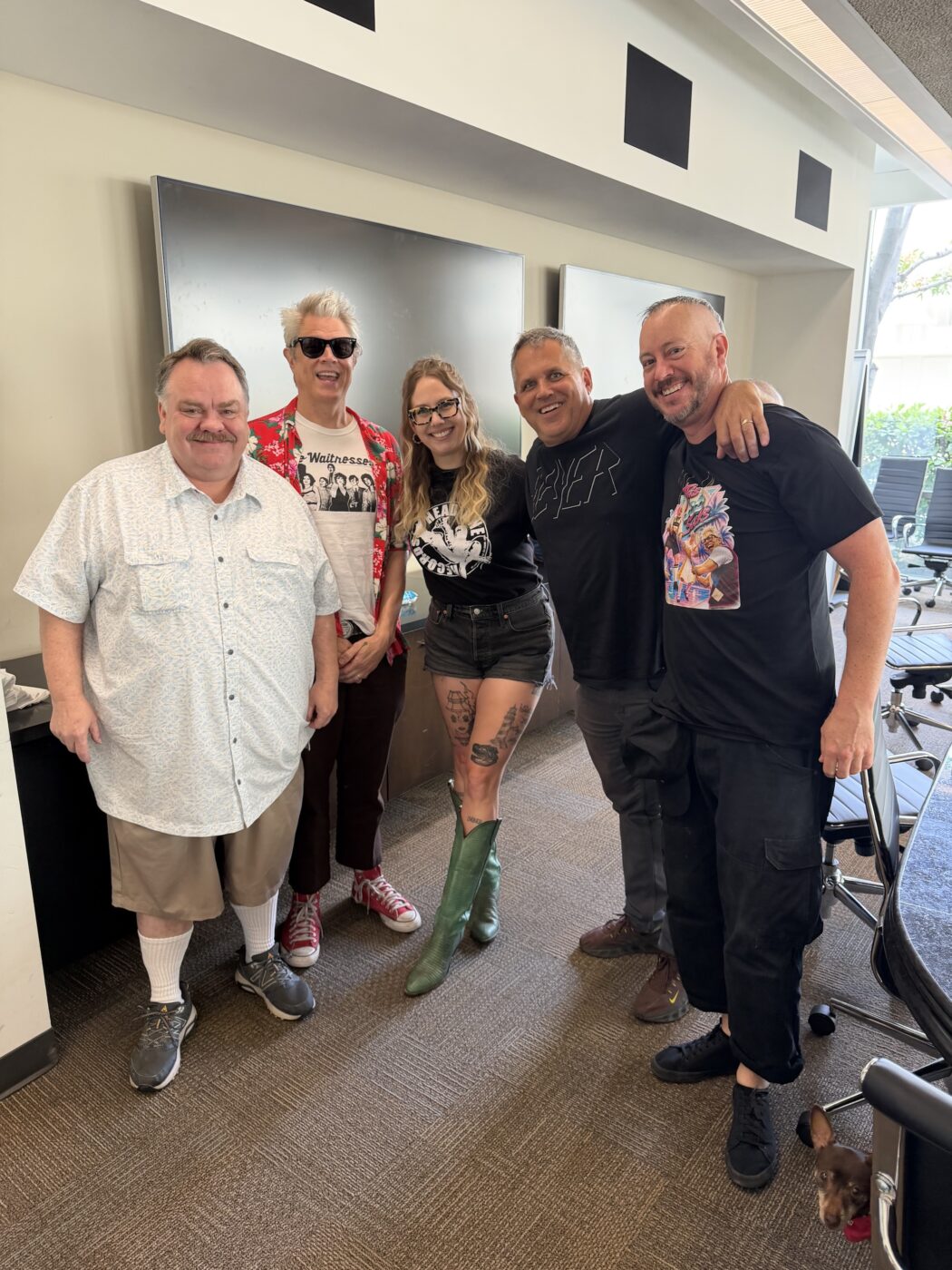
Contributor Melanie Robinson and the ‘gang’ on the Paramount lot • Photo: Ali Ivosevich.
So here it is.
Dear Johnny, Pontius, Steve-O, Dave, Bam, Dunn, Danger Ehren, Preston, Wee Man, Jeff, and Spike: thank you, and not just for the dicks and bare asses. Thank you for the decades of laughter and stupidity. You gave me permission to fail, to be ridiculous, to care most about making my friends laugh when the entire world is on fire.
You taught me that it’s good to be reckless within reason, and that reason is malleable and overrated regardless. Thank you for reminding me that I have a body, that it’s fallible and haphazard and funny and tough and capable of so much.
And perhaps most importantly, you taught me to be brave, how to let it hurt. Thank you for welcoming me into your world; mine has never been the same since.
Thank you, too, Niko, for writing about how the places that didn’t plan for us are exactly where we belong.
Pontius said it best: “The [new] film will remind them that things that matter are being with your friends and having fun, and not to take things so seriously. There are other people who can talk about love and romance. There are people who are good at science and will save us, but there need to be jackasses in the world.”
I’ve never been more grateful for the silly shit.