For years now, the girls have been saying they want a “gay little boyfriend” or a “fruity guy”, or my personal favorite, a “man written by a woman.” While all of these terms have subtle differences, they all seem to point to the same core desire: a man that truly responds to the “female gaze”. Borrowed from film studies and brought into the cultural zeitgeist (albeit a bit improperly), the term “female gaze” is rather fungible, but its colloquial use in regards to attraction often refers to depicting what women are actually attracted to as opposed to what heterosexual society has dictated they should be attracted to. The man’s man, as historically covered in Men’s Health magazine, is being moved to the left in favor of a new man.
This was first witnessed in the most recent batch of “white boys of the month,” with most of them playing softer, more feminine queer characters as their breakout roles. Call Me by Your Name had all of the girlies convinced that Timothee Chalamet was an enigmatic straight twink with all the depth that must come with a man so unique, though his subsequent brand has killed much of the feminine mystique. In fact, playing a queer character and/or depicting oneself as a bit “softer” seems to be one of the best ways to come up, if Harry Styles or Paul Mescal have anything to say. Though none of these men are particularly hyper feminine, they earned the “fruity” or “soft” label because of some perceived proximity to femininity or queerness.
Most recently, Heated Rivalry discourse has brought this conversation to a head, with the conventionally attractive androgyny of Connor Storrie leading many women to double down on the idea that the true female gaze simply prefers a man that has “a little sweetness to it,” as the Keke Palmer meme goes.
But this begs the question, in this new —or possibly more honest— iteration of the female gaze, is femininity really something embraced in men? Is a look that incorporates some semblance of androgyny truly the preference? And, if so, does that acceptance extend to men who are actually and openly queer?
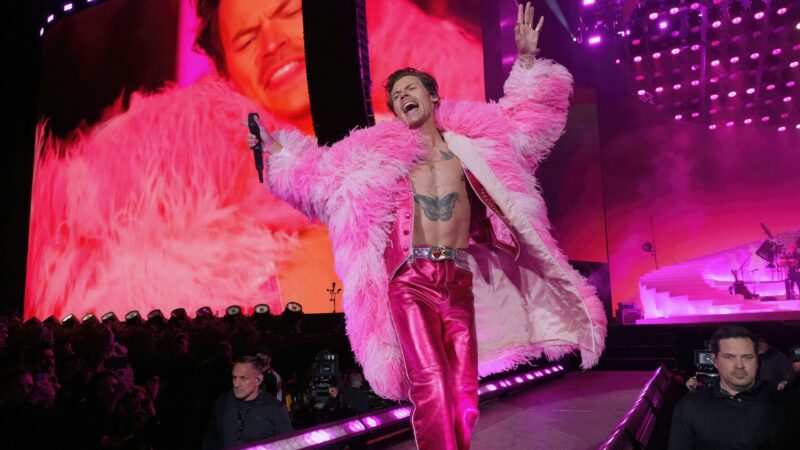
‘Harry Styles: Are You Curious?’ • Photo: Spritlevel/Album.
Though these conversations occur on social media, they aren’t always a reflection of reality; in fact, social media itself can often highlight the conflicting ideas within our dating culture. For example, while a desire for a “fruity man” is often expressed all over TikTok, phenomena like the “sassy man apocalypse” also went viral on the same app. While one trend illustrates an openness to some form of femininity, the other expresses displeasure at the ways some men have divested from traditional roles.
Thus, I interviewed 10 women anonymously about what they actually are attracted to physically in a man and if that truly incorporates a desire for a man who presents more femininely.
Many of the women I spoke with came to a similar conclusion, that they prefer a more traditionally masculine man in aesthetic and their desire for “femininity” falls more in the personality category. They aren’t looking for men in skirts or flamboyant eye shadow ala Hudson Williams at the 2026 Met Gala, but instead really just want a man they feel will listen to them. The gender divide has only widened in the US amidst rollbacks on women’s rights, and ultimately, many women feel misunderstood by the men they meet, they feel a depth is missing. This seems consistent with the social media preference for fruity, soft boys or men written by women: It’s many women’s way of saying they want a man who’s safe. One woman I interviewed, M., in describing her “feminine” boyfriend, says that he’s “very gentle, understanding, empathetic, a good listener and very thoughtful.” She then acknowledges that, while she knows these traits aren’t inherently “feminine,” she does tend to find them more often in women than she does in men. Thus, finding them in a man feels both refreshing and unique. In terms of appearance, she says she finds him non-traditional because he really cares about his style and keeping himself well groomed. In many ways, these phrases express a desire for … well … good hygiene. If the most generic depiction of a masculine man includes a man who hates showering, then … I guess we might see the argument here.
The desire for a man who’s safe, a man you can talk to, and the equation of that with some form of androgyny or femininity is perfectly illustrated by the rise of men like Tyriq Withers, or Jonathan Bailey or Pedro Pascal. Tyriq has been described on the internet as “so babygirl” and “so diva”, though he is quite conventionally attractive and not “feminine” in the slightest. He is perceived as a take on masculinity that is more goofy and playful. Similarly, Jonathan Bailey and Pedro Pascal, both masculine men, are perceived to be less toxically masculine.

‘Call Me by Your Name’ • Photo: Sony Pictures Classics.
In another example, a friend I interviewed, J., shared that she prefers a rather masculine man as well. However, her biggest celebrity crush was not only queer, but a man whose masculinity she perceives as a bit different than the standard she’s been used to, less toxic even: Colman Domingo.
While some women’s desire may not truly extend to a hyper feminine man, it certainly does seem to indicate that what masculinity means to women is shifting. Labeling one’s boyfriend in a certain way allows for women to tell other women that their guy is safe, different and maybe even better.
What about the women who absolutely did want a man who presented more femininely, women who would love a boyfriend who wore a skirt or eyeliner? An interesting observation is that many of these women identified as pansexual, queer or bisexual. Some even discussed preferring to date men who were queer themselves, feeling more connected to those men through that. Queer women are able to unpack their unique desires and put their non-traditional preferences to the forefront. Even further, for the first time, queer women are allowed to have their desires centered, they’re allowed to speak up about what they enjoy shamelessly and simply have more room to experiment. In a world where people are increasingly identifying as bisexual, it follows that the kinds of men that are celebrated might also align with that.
If anything, it’s obvious the “female gaze” is not a monolith. In reality, maybe it’s just that much of what has been considered desirable in a heteronormative society is dictated by social and cultural scripts that are now being questioned, if not rejected.