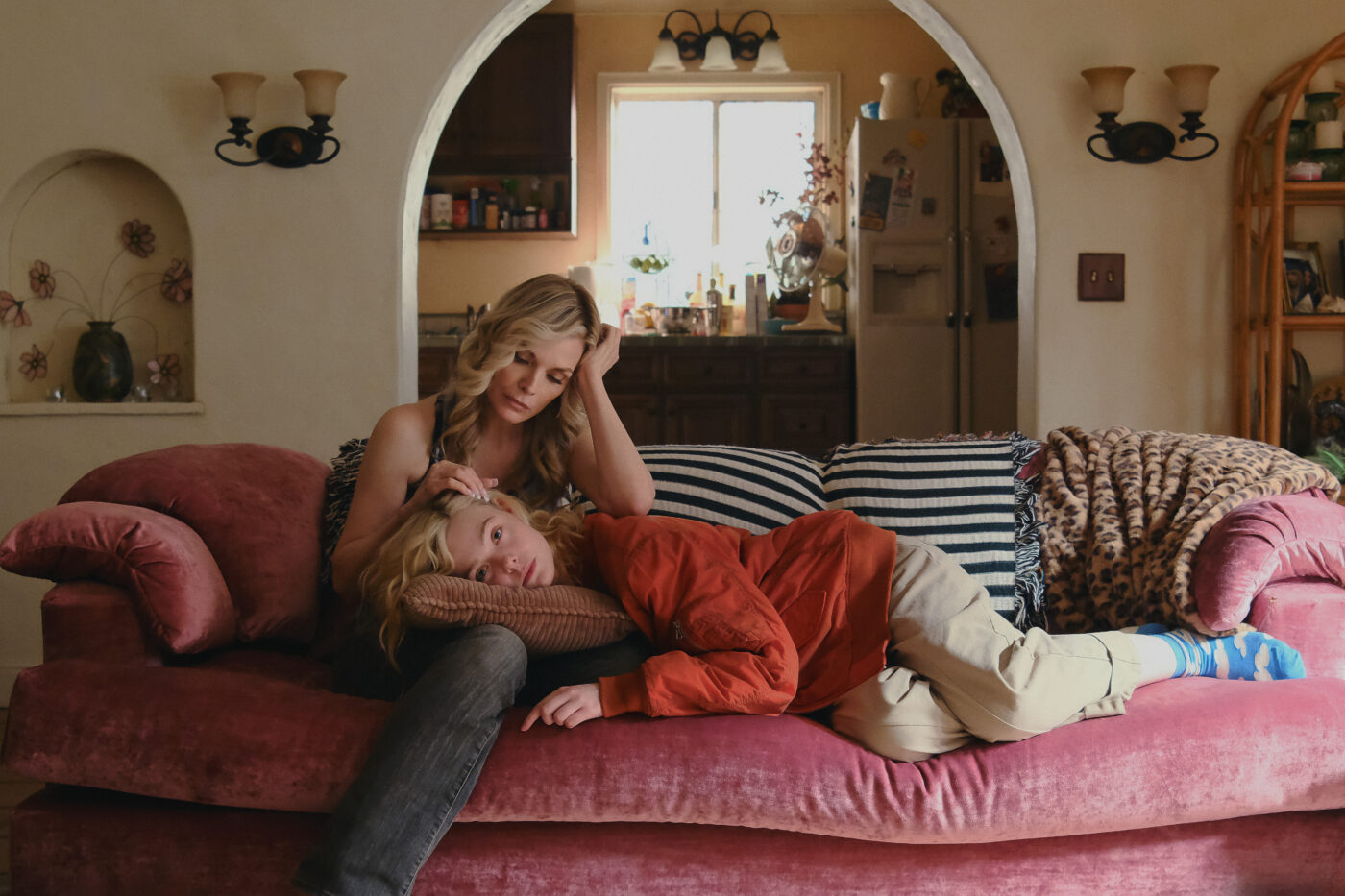
Rufi Thorpe, the author of Margo’s Got Money Troubles, prides herself on dreaming big. But when she was writing the novel during the pandemic, she never imagined it getting a Hollywood adaptation. In those days, it was a stretch for her to simply imagine that “someday I wouldn’t be living in my mother’s garage,” she quips.
A burst pipe and sinking foundation had forced Thorpe, her husband, their two young sons and their puppy to take refuge in the garage. Amongst all that chaos, she asks, “Who could dream Elle Fanning, Michelle Pfeiffer and David E. Kelly” would eventually produce, star in, and write the Apple TV version? “I mean, no one could dream that up.”
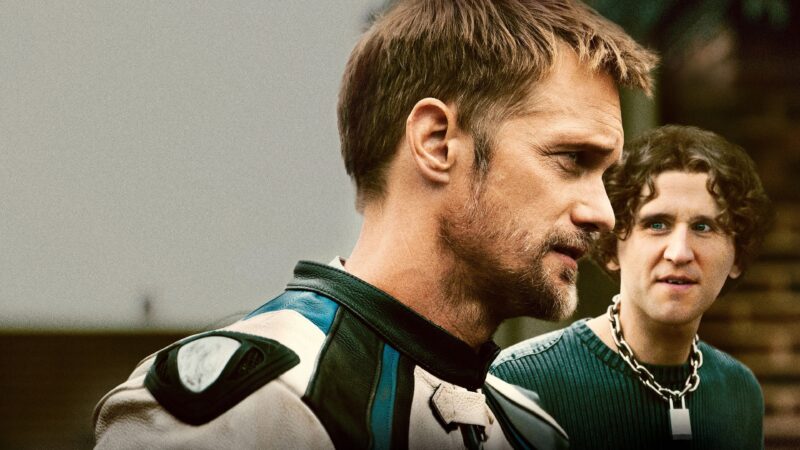
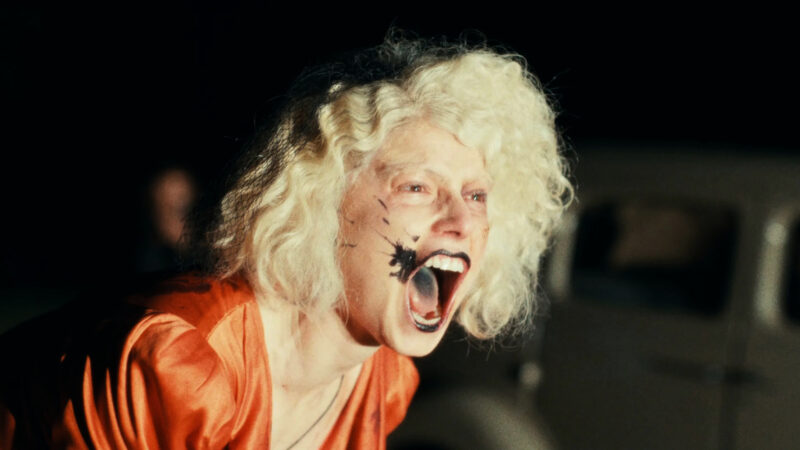
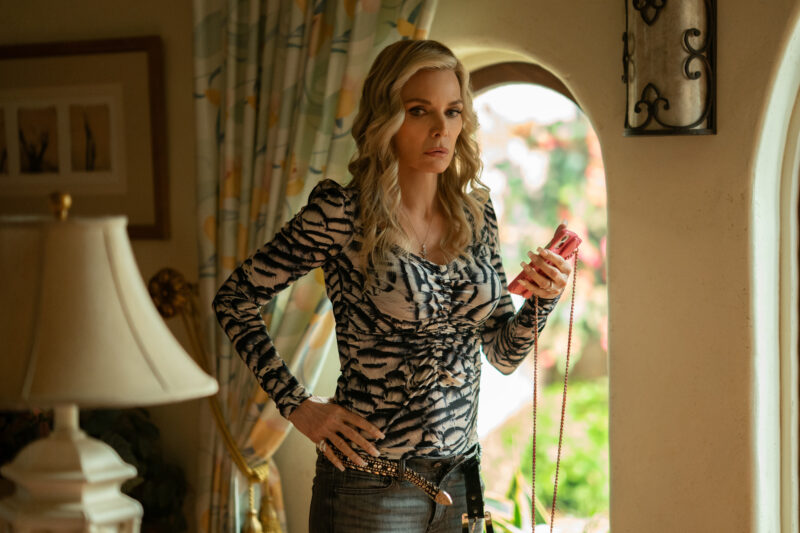
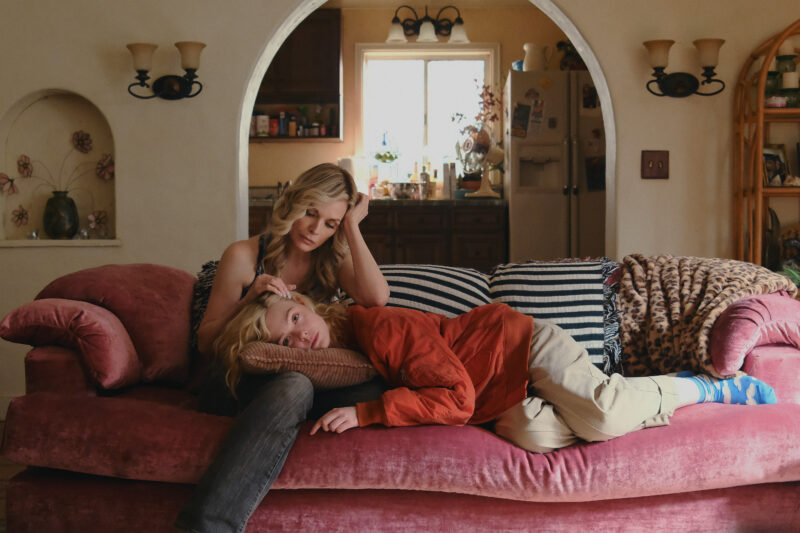
Their adaptation of Thorpe’s hit 2024 novel follows Margo (Fanning), a recent college dropout and aspiring writer, as she turns to performing on OnlyFans to support herself and her new baby. The “bold, heartwarming and comedic family drama,” as Apple describes it, co-stars Pfeiffer as her mother, Shyanne, an ex-Hooters waitress engaged to a minister, and Nick Offerman as her father, Jinx, an ex-pro wrestler with a drug addiction.
I sat down with Thorpe and Executive Producer Eva Anderson to discuss the hit series (which was renewed for a second season just days before our conversation), OnlyFans, human dignity, the creator economy and the very nature of performance.
Warning: This interview contains spoilers for ‘Margo’s Got Money Troubles.’
So amidst all that pandemic chaos, you were researching OnlyFans? What was that like?
RT: My husband was trying to work from home, and my son would be playing the recorder for Zoom music class, and it would make the puppy go insane, and my husband’s trying to have meetings, and everything was dim, it felt like we were in a cave. Researching OnlyFans made me still feel like a grown-up, you know? I was buried in little boys [her sons were six and four at the time], without the break of school where you’re like, “I’m an adult and no one’s touching me.” So, I would get up between four and six am and try to write before the kids woke up.
‘Margo’s Got Money Trouble’ • Photo: AppleTV.
Where did the interest come from?
RT: Some stand-up comics that I followed on Twitter, when they couldn’t do stand-up comedy anymore, started OnlyFans accounts. I noticed the cultural conversation about it was a little bit different, a little bit less judgmental than other forms of sex work, and so I got really interested in it. My husband and I definitely had to have budgetary conversations about how much money I was spending on OnlyFans.
Those tips for performers get expensive!
RT: I never did get to take it as a tax write-off, because it made my accountant too nervous. So that was just sunk cost. I did it for the love of the art.
EA: I wonder if I can, because I can prove that the show exists now.
RT: I bet you can. To my accountant, I’m just some strange woman, but I feel like you have more legitimacy than me.
EA: I have a lot of research accounts going right now. They’re stacking up.
On that note, Eva, what made you want to make this show?
EA: I came into the project a little bit later. David [E. Kelly] had already written the first three episodes, and they were looking for somebody to finish the season with him in the writer’s room and beyond.
So, I read those episodes, and I read the book in one day. When I got to the part where Jinx OD’d on heroin, I was at a bar, and I screamed and slammed my laptop shut because I was so upset. That was how moved I was by it. I had gotten so involved with these characters just in one day. So that was my signal that it was a really important job to try really hard to get.
I also had never seen the subject matter treated in such a human way, and with so little judgment. I did feel like in every way, Rufi, by just refusing to judge Margo, is really on the right side of things. She gives everyone a core of just raw humanity, and that makes it a really fun story to tell.
What was the writing process like?
EA: Rufi was so awesome to work with, because she came to the writers’ room right when we started and said, “Here’s all my research. Here are the OnlyFans models I worked with, or the ones I followed. This is who Margo is loosely based on, these are the wrestlers Jinx is based on.” She gave us just this wealth of riches and years of research that we got to use as our launch point.
At first, there were three women in the writers’ room, and we were all on our own OnlyFans accounts over Zoom, looking at photos. And you don’t want to harass the other people in the room, so before we could even describe what we were looking at, we’d be like, “Is it okay if I describe something?” And we kept doing that, but finally we were like, “This is stupid. Is everyone okay if we just start putting photos in the chat?”
It was so funny how we just kept tiptoeing closer and closer to that until everyone’s like, “What are we doing? This is wasting so much time.” Then we ended up with a collective OnlyFans account, which was really helpful.
‘Margo’s Got Money Trouble’ • Photo: AppleTV.
The book was originally set in 2018. Since you’ve been so tapped into the creator economy, whether that’s OnlyFans or TikTok, have you noticed any changes between 2018 and now in terms of how these people are making and monetizing content?
EA: Well, you don’t have to be viral for people to dox you these days. [Margo fails to keep her OnlyFans work anonymous.] You could basically be anyone, and people will just grab your identity and put it everywhere, because the world is terrible. So, Margo didn’t have to get as viral for the story to make sense.
RT: In internet years, 2018 is like historical fiction at this point. OnlyFans was a very different place, TikTok was a very different place, and the show had to figure out a way to make the story work in contemporary TikTok and OnlyFans world. And it’s just so much harder now to gain market share, basically, because the landscape is so crowded.
EA: The median OnlyFans model now makes $5,000 a year. The subreddits that we follow in the room that are for OnlyFans creators speak of a much more difficult path towards making actual money. Like everything, it gets chewed up and swallowed by capitalism.
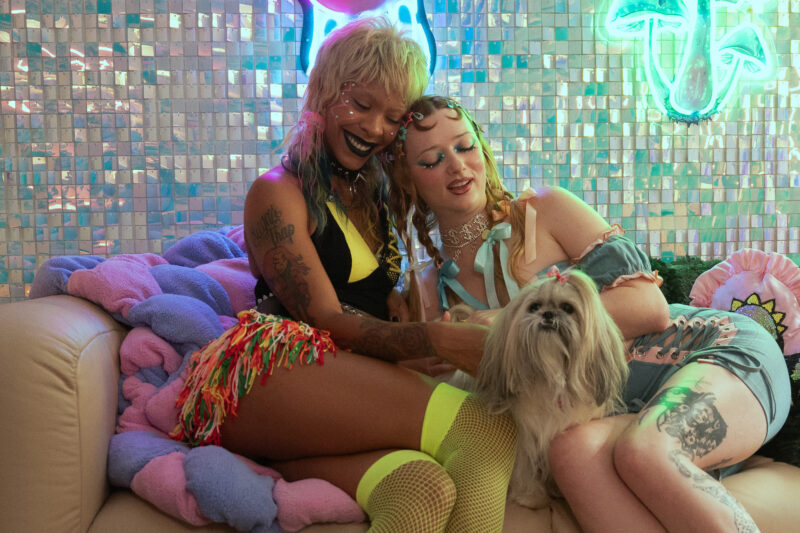
One of the things that was so cool about the show was the way that it bounces between media — you have montages with TikTok and OnlyFans content onscreen. I’m curious how you decided on the visual style for portraying those media.
RT: Early on we decided to be as realistic as possible of what was going on on Margo’s laptop or on her phone. We used the actual aspect ratios to signal what we’re looking at and when. We wanted them to look as accurate as possible.
EA: We also wanted things to feel dynamic, so you know, every TikTok and OnlyFans was somebody that we cast and photographed ourselves.
In [director] Alice Seabright’s episode, the TikTok episode, we were creating our own sort of dynamic emojis that would bounce around just to let you know from Margo’s POV how she was experiencing them. [A dance that Margo does in a TikTok video goes semi-viral, leading to a super fun TikTok montage.] That was a little bit more crazy and dynamic, because you’re really in Margo’s experience at that point. So yeah, it was about realism, but enough non-realism to make it feel fun.
It DOES all feel really fun — but of course, there’s a dark side of OnlyFans too, as Margo sees from the way people judge her for using her sexuality. Was there any sort of message you wanted people to take away about female sexuality and womanhood?
RT: I think that I have a personal, almost allergic fear of having a ‘message’ — it comes from the trauma of reading Ayn Rand as a teenager! I’m very afraid of any fiction purporting to support a rhetorical position, because fiction is a rigged game. You can have the good guy triumph and the bad guy lose, so it’s dangerous to me to be too didactic in fiction.
But what I did want to leave people with was a feeling, and that feeling was, “You can be a badass. Your life is yours, and you should do whatever the fuck you want with it.”
I also wanted people to leave feeling like these characters really love each other. Y’know, you don’t get to ask for a new dad because yours has really bad problems, you have to work with the dad that you have, for example.
So, there’s this warmth between the characters that I find really hopeful and inspiring about a way to love people even when they hurt you, even when they’re not perfect, even when you wish that they could behave otherwise.
‘Margo’s Got Money Trouble’ • Photo: AppleTV.
That’s beautiful.
EA: I love that, Rufi. I also think that fiction can model, not a message, but an attitude. The show and the book have an attitude that’s about laying off people. That sex work is work, and you know, like Rose says, it’s art too.
RT: An attitude of human dignity!
One of the most beautiful scenes in the show was the conversation between Margo and Shyanne about shame, so I’m curious how that theme factors into the story.
EA: The characters that get into the worst situations are the ones who are completely driven by shame. And they all have an opportunity to turn that around. We hope for the best for Jinx, and for Mark [the spineless father of Margo’s baby, played by Michael Angarano] and for Shyanne, who make decisions based on shame.
But Margo models a person who doesn’t. She isn’t driven by shame and refuses to shame other people. She makes decisions, she does what she wants, and she deals with those consequences. I feel like the show models that as a way to live your life, without fear and without shame.
Another theme that comes up a lot is performance. Jinx talks to Margo about how everyone’s putting on a show, and it’s true of almost every character. Everyone’s performing something. In 2026 everyone’s a content creator, right?
EA: Yes.
In an ideal future, how much of a performance do these characters put on? Is there a way to “put on a show” and still be authentic?
EA: I feel like Margo would never want to be a top ten OnlyFans model. She uses OnlyFans as an outlet and a way to find a community and to make money. Money is like the first thing Margo worries about, but it’s the last thing she cares about.
I think there’s a difference between being a “Content Creator” in that “capital C” sense and wanting to really put something out in the world that’s come from you. Jinx is the same way, and so is Susie [Margo’s quirky roommate, played by Thaddea Graham] with her cosplay. The characters that are really putting on a show in this story are the ones who just can’t help themselves, and just have to say something.
RT: When I was writing it, I realized that performance was going to be a theme in the book, especially with how wrestling and OnlyFans both feature this idea of making a persona. And y’know, I realized that I was also putting on the persona of Margo. I was talking in first person and putting on the Margo mask.
Mask making is a really interesting and very ancient human behavior — and what a weird thing to do! To carve a piece of wood into another face and be like, “Now I’m the moon!” “Now I’m the god of war!” There’s a magic that can happen when you play pretend, and all of theater and poetry are based on that. The book is, in many ways, a celebration of the artificial, of pretense itself. I think that the secret is to make sure that you’re the one doing the pretending, in a way that empowers you, as opposed to getting trapped behind a mask. Shyanne, for instance, is pretending she’s someone she’s not to Kenny [her minister husband, played by Greg Kinnear].
You can also be trapped by wanting to maintain the illusion of propriety to other people, and not really letting them close because you don’t want them to know how bad things in your life are getting. I hope the show continues to explore the double-edged sword that is performance, because it is this big, powerful ancient thing, and it can also be gross and petty.
How do we, as human beings, navigate that line? The best things in our lives come from social connection, and also the most pain that we ever experience comes from caring about other people.
You mentioned that there are things you want the show to keep exploring — now that it’s officially picked up for a second season, can you tease anything?
EA: We’re writing it as we speak.
RT: If you read the book, there might be an Easter egg in the last scene on Margo’s computer.
EA: That’s something we might be exploring.
For those who haven’t read it yet, Margo ends the book with the beginnings of a plan to become an “ethical pimp” by starting a consulting agency for OnlyFans performers. Consider us teased, Rufi and Eva!