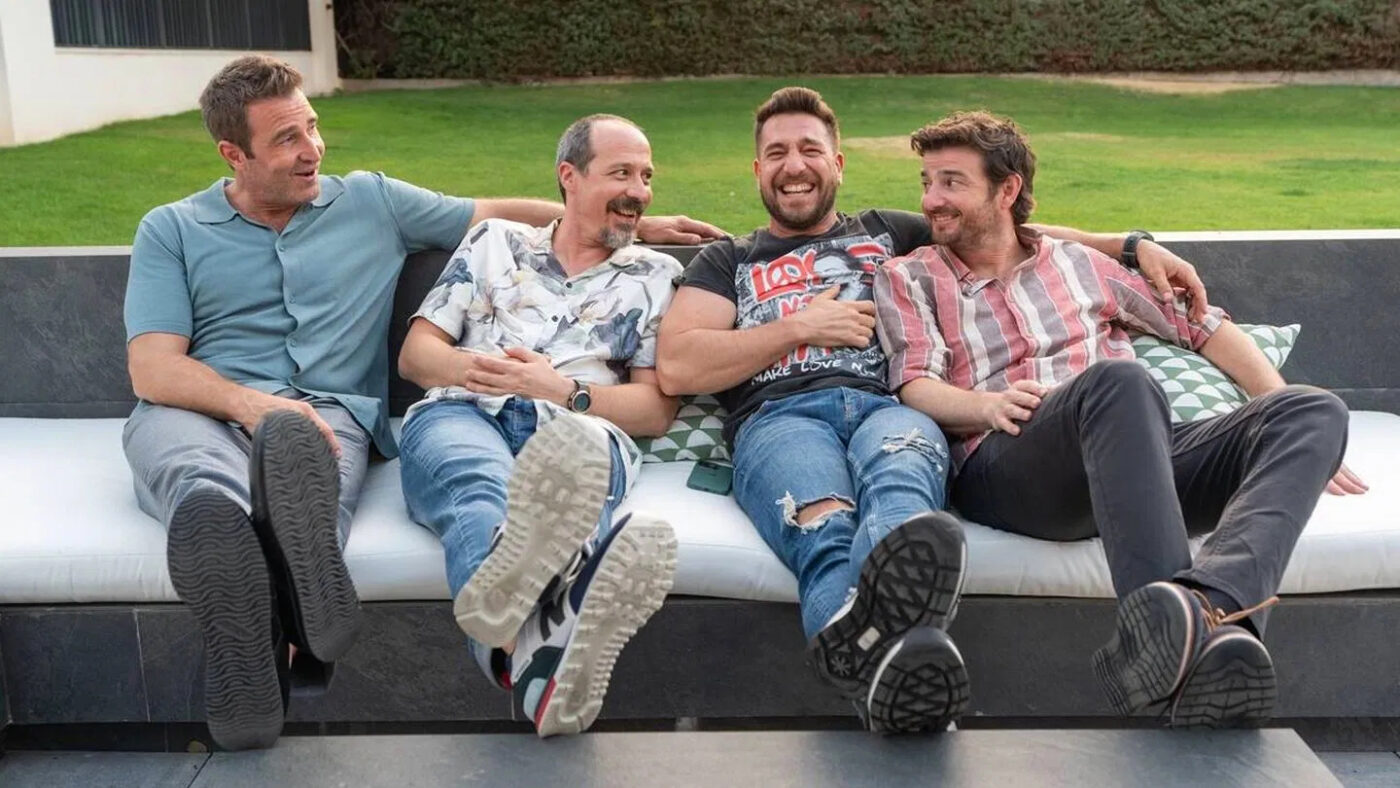
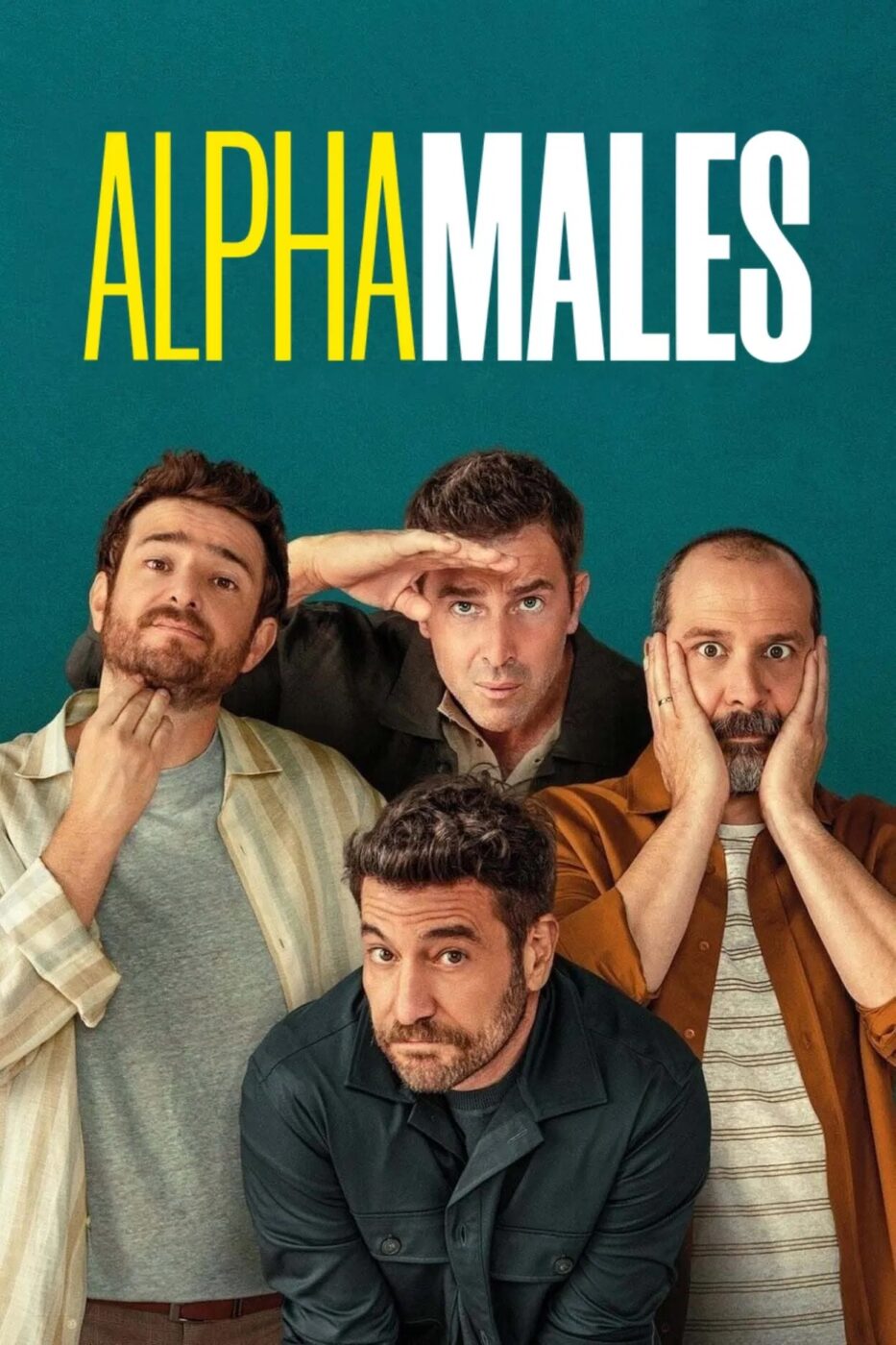
Spanish series Alpha Males (Machos Alfa) could have easily been a one-note joke: a foursome of middle-aged friends, lost in a world of stereotypes and machismo sentiments, try to reclaim their “rightful” place at the top of the food chain. On the surface, it is a show about the changing of the guard. Beneath the cringe-worthy double dates and disastrous polyamory experiments lies a sharp, surprisingly tender exploration of what happens when the rulebook for masculinity is thrown out the window.
The series does not just mock fragile egos; it dissects four distinct types of masculinity, each crumbling under the weight of its own contradictions. Through Pedro, Luis, Raúl, and Santi, Alpha Males argues that the “alpha” ideal is no longer relevant and modern men are clamoring to figure out what’s next.
The Provider: Pedro and the Trap of Success
Pedro (Fernando Gil) is the archetypal patriarch. He is the successful businessman, the breadwinner, the rock. His masculinity is defined by utility: he provides, therefore, he’s the boss. When his wife begins a successful career and asks for an open marriage, Pedro’s world shatters.
His masculine angle is the Stoic Provider. He believes emotion is weak and is an assault on traditional manhood. His journey is painful because he cannot articulate his loneliness or fear of being considered obsolete without hearing it as failure. Through Pedro, Alpha Males asks: If a man stops being the sole financial provider, what is he worth? The answer, which Pedro slowly learns, is that vulnerability is not the opposite of strength—it is the foundation for intimacy. His storyline is death to the strong, silent type.
‘Alpha Males’ • Netflix.
The New Age Beta: Luis and the Performance of Wokeness
If Pedro is the past, Luis (Kiti Mánver) is the complicated present. He desperately wants to be a “modern man.” He uses new age therapy talk, supports his wife’s ambitions, and tries to be a sensitive feminist ally. However, Luis makes a crucial error: he treats equality as a transaction.
His masculine angle is Performative Progressive. He doesn’t internalize change; he performs it for a gold star. When his wife earns more than him or his daughter rejects his “cool dad” routine, Luis short-circuits. He realizes that he swallowed the aesthetics of modern masculinity without digesting the substance. His comedic pain comes from the gap between who he wants to be (evolved) and who he is (insecure). The show’s brilliant twist is that Luis’s wokeness is just another ego trip—a beta wolf wearing a sheep’s clothing, still obsessed with hierarchy.
The Lothario: Raúl and the Emptiness of Conquest
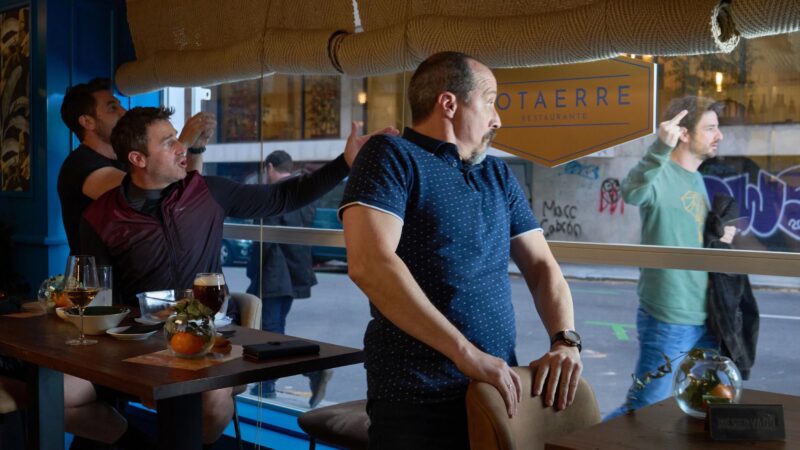
Raúl (Gorka Otxoa) is the character the title warns you about. He is the classic Alpha: sexually promiscuous, emotionally detached, and proud of his “hit-and-run” lifestyle. His masculinity is measured in notches on a bedpost and the tears of women he refuses to commit to.
But Alpha Males refuses to glorify him. Instead, it exposes his angle: the Predator in Disguise. Raúl isn’t confident; he’s running from intimacy. His constant conquests are an unrelenting ritual to avoid facing a simple fear: That without the chase, there’s no meaning to his existence. The show’s most radical moment is forcing Raúl into a real relationship. Watching him fumble with honesty, jealousy, and monogamy is to watch a man realize that being an “alpha” in the street makes you a ghost at home. His libido is not his power; it’s his crutch.
‘Alpha Males’ • Photo: Netflix.
The Invisible Man: Santi and the Violence of Erasure
Last but not least, there is Santi (Raúl Tejón). He is the most laid-back of the foursome, and in many ways, the most heartbreaking. He is a stay-at-home father, sensitive, artistic, and utterly invisible to the traditional markers of manhood. He doesn’t want to conquer or provide; he wants to be seen.
Santi’s masculine angle is Eclipsed Masculinity—the man who never fit the mold and was punished for it. His wife emasculates him; his friends pity him. When he tries to assert himself, it comes out as clumsy or pathetic. Yet, ironically, Santi is the only one who starts with what modern masculinity claims to want: emotional intelligence and nurturing instincts. The show’s cruelty is that those traits earn him zero respect. His storyline asks a painful question: If you reject the alpha game entirely, does society simply erase you?
The Verdict: No More Wolves, Just Humans
What makes Alpha Males brilliant is its refusal to offer a hero. Pedro remains stubborn, Luis remains a mess, Raúl struggles to be faithful, and Santi struggles to be heard. The show does not argue for the return of the caveman nor the arrival of the neutered, nice guy.
Instead, it suggests that the very concept of the “alpha” is a myth designed to keep men lonely and confused. Real maturity, the series proposes, is not about being exalted by the brotherhood. It is about the courage to be multifaceted: to provide and feel, to be strong and scared, to pursue and commit, to exist and be seen.
Alpha Males works because it loves its flawed, fumbling characters. It laughs at their posturing, but cries for their pain. In the end, the show’s central argument is radical for a comedy: the only man who is totally free is the one who stops trying to be a type—and finally allows himself to be a person.
Alpha Males, season 5, is currently streaming on Netflix