There comes a moment in everyone’s life when you look in the mirror and are met with a reflection you don’t quite recognize. Confusion quickly turns to a sense of estrangement, or even dissonance, where your internal sense of self doesn’t quite line up with the face you see. Psychologists or philosophers would liken this mirror moment to “self-alienation” or “temporal dissonance” because time, ever the cruel mistress, is playing a little Jedi-mind trick on you. In reality, that moment of reckoning is just called “aging.”
We’ve turned aging into some kind of cultural cordyceps infection that is feared, stigmatized, and something to outrun at all costs. So, it makes sense that an already image-obsessed Hollywood would react to the first sign of creped skin by undergoing extreme transformations with Death Becomes Her-level results, each new uncanny valley girl popping up on a red-carpet looking CGI smoothed within an inch of their life. Thankfully there are always nonconformists in this sea of time-fearing lemmings, women who aren’t interested in outrunning age so much as outgrowing the expectations around it.
One such maverick is actress and comedian Amy Sedaris, who just celebrated her 65th birthday at the end of March. I had to do a double take when I saw her birthday post, not because 65 is old, but because she doesn’t resemble what we’ve been conditioned to believe 65 looks or acts like. There’s this quiet assumption that aging inevitably makes people less funny, as if joy and humor deplete over time like collagen. Yet, her social media is full of wigs, crafts, and clips of the trademark Sedaris absurdity she built her career on. She’s not shrinking or trying to be palatable, if anything her silliness feels almost defiant. Sedaris is fully, weirdly, authentically herself.
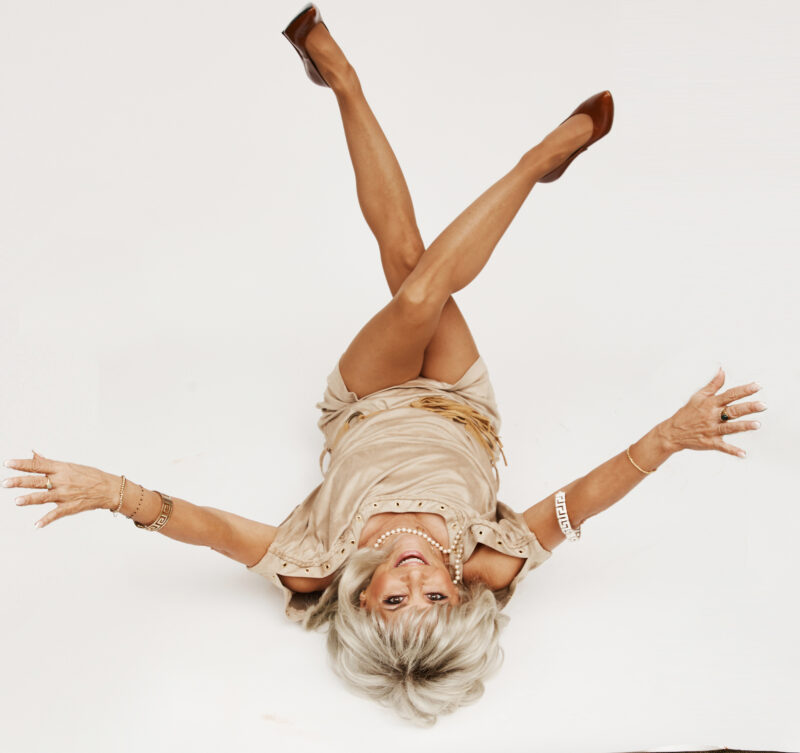
Amy Sedaris • Photo: Danielle St. Laurent.
And she isn’t alone. Women like Betty White built entire legacies out of the idea that humor doesn’t age out. In fact, her life and experience only sharpened her wit, allowing her to deliver some of her most subversive performances from the disarming package of a “sweet looking” senior citizen.
Then there’s Joan Rivers, who, for all the conversations around her appearance, never lost the thing that made her iconic to begin with; her dangerous wit. During an appearance on the Graham Norton show, she launched into an unfiltered rant about the reality of aging and the challenges of working in youth-obsessed Hollywood that left Johnny Knoxville visibly at a loss for words. The moment serves as a reminder that the real discomfort isn’t aging, it’s older women who refuse to be polite about it.
If humor is supposed to fade with age, then desire is supposed to disappear completely. And yet, Martha Stewart exists (on the cover of Sports Illustrated at 81). Emma Thompson exists (Good Luck to You, Leo Grande), Helen Mirren exists. Even before the pictures of her 78-year-old bikini-clad body broke the internet, she’s spent the better part of the last decade dismantling the assumption that sexiness fades, doing so on red carpets all over the world. Mirren has always been in full possession of her age, and that alone has only made her more compelling.
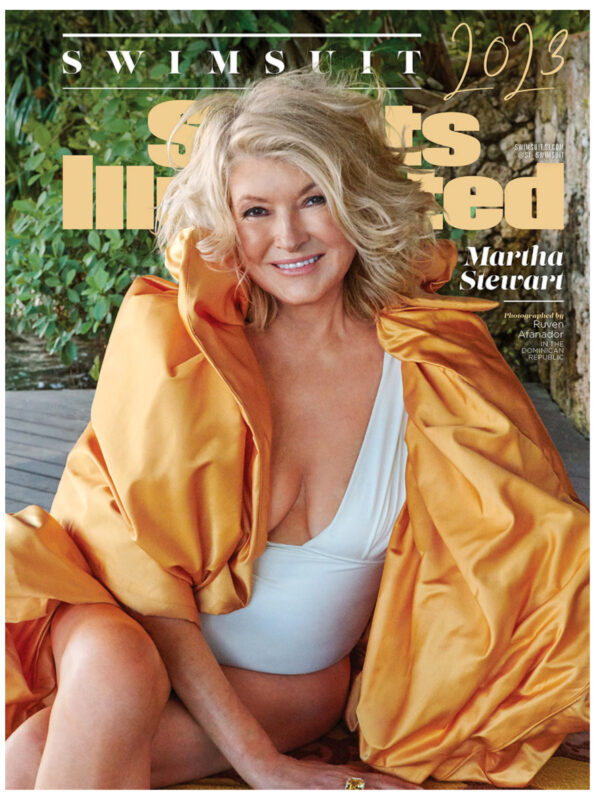
Martha Stewart • Sports Illustrated.
This is, after all, a woman that proudly rocks Pleasers, literal stripper heels, without a hint of irony. Not as a gimmick. Not as a stunt. But because she wants to. Because she can. Because the idea that confidence, sexuality, or self-expression has an expiration date is, frankly, absurd.
Then there’s Halle Berry, who takes the conversation a step further by refusing to treat aging, and particularly menopause, as something to be quietly endured. Berry has been candid about her experiences, speaking openly about sex, confidence, and navigating a stage of life still treated as a cultural disappearing act. In doing so, she’s helping lead a growing wave of women bringing menopause into the open, while also advocating for legislation at the state and federal level to increase funding for menopause research and healthcare provider training. She is proof that what starts as a stigma doesn’t just shape perception. It shapes policy.
We’re told that with age comes some kind of softening. That we’re expected to quietly fade into the background, diminished both in size and presence. Respectfully, fuck that. There’s a growing number of women proving that aging isn’t meant to make women smaller, quieter, or easier to overlook.
When Linda Hamilton returned to the Terminator franchise, she didn’t come back as some diminished version of her former self at 62. She showed up stronger, weathered, and real with a physique that could rival any male action star’s. Which, if you’ve been paying attention, isn’t new. From the start, her body was criticized for being too muscular, too severe. She was deemed “too manly” for a lead actress on the big screen. But that’s always been the point. Hamilton never fit the mold, and she never tried to.

Linda Hamilton in ‘Terminator: Dark Fate’ • Photo: Paramount Pictures.
Even now, Hamilton has been candid about aging on her own terms, refusing cosmetic intervention and describing her face as one she has “earned”. Her perspective prioritizes joy over the pursuit of youth. She’s a constant reminder that the standard was never the truth. It’s just a limitation.
She’s not the only one. Michelle Yeoh built her career on the same kind of physical command, long before Hollywood knew what to do with her. She’s been just as direct about aging, even shutting down the idea of women being “past their prime” and not letting age limit their capabilities during her 2023 Oscar speech. If anything, she’s described feeling more in tune with her body and deliberate in how she shows up.
Aging isn’t the problem. The story we’ve been told about it is. Because what if the lines, the changes, aren’t signs of something going wrong, but proof of everything we’ve lived through? The laughter that carved itself into the face. Not from being a punch line, but being in on the joke. The desire that didn’t disappear, it just stopped asking permission. The strength that didn’t soften, but settled deeper into the body.
All these feared “signs of aging” are really just a record. A map of a life fully lived. Not something to erase or correct, but to read. Not aging gracefully. Just not asking permission.