Before there was the manosphere and countless subreddits dedicated to dark plots of femicide, there was Alana. The mononymous creator of Alana’s Involuntary Celibacy Project launched the online community in 1997 as an inclusive way for people of similar experience to connect. At the time, it was specifically a forum for late bloomers to talk about loneliness, social awkwardness, and their unfulfilled desires to connect with a romantic partner. Alana first abbreviated “involuntarily celibate” to “invcel,” until someone in the community’s chat group suggested “incel” had a more easeful ring to it. And so, that’s what they went on to call themselves.
Around the millennium, Alana was starting to make strides in her personal dating life. Her community was thriving and she felt comfortable stepping away. 15 years later, she recalled in an interview with the BBC, Alana read about Elliot Rodger, a 22-year-old, who went on a shooting and stabbing spree near the University of Southern California, Santa Barbara, during which he killed six people before taking his own life.
Rodger left behind a 141-page manifesto that detailed his hatred of women, which was rooted in an overwhelming frustration surrounding his virginity. Not long after this unsettling incident, in April of 2018, Alek Minassian took to Facebook to call Rodger a “Supreme Gentleman.” In an alarming battle cry, he said, “The Incel Rebellion has already begun,” referencing Rodger’s violent acts before going on to drive a van into a crowd of people, killing 10 and injuring 16.
The welcoming space that Alana thoughtfully cultivated in the nineties had been taken over by a hateful subculture of men, who blamed women for their sexual and/or romantic shortcomings and sought violent retribution for their inability to get laid. As news coverage of these hate crimes spread, Alana saw how her friendly project had undergone a malevolent transformation and devolved into something heinous and unrecognizable. “I’ve asked myself,” said Alana, ‘Should I feel guilty?’ Friends have reassured me that no, I did my best back in 1997 to create a healthy and positive movement.” This takeover was beyond Alana’s control.
From the peptide-injecting followers of appearance-obsessed influencers like Clavicular, who preaches the gospel of looksmaxxing, to the redpilled set who feel that the new world order favors women, the incel community has transcended the dark underbelly of the internet and now proliferates in the light of day with a lexicon that has gone mainstream. And then, there’s the femcel. At first blush, one might think of her as the feminine mirror to the incel, but it’s more complicated than that. While they share an origin story of experiencing involuntary celibacy, the two simply don’t equate in the contemporary milieu. As Dee Salmin puts it, one is enabled by the patriarchy, and the other is a reaction to it. But even in their actions, there is one crucial difference: femcels tend to turn inward, while incels externalize their pain by terrorizing others.
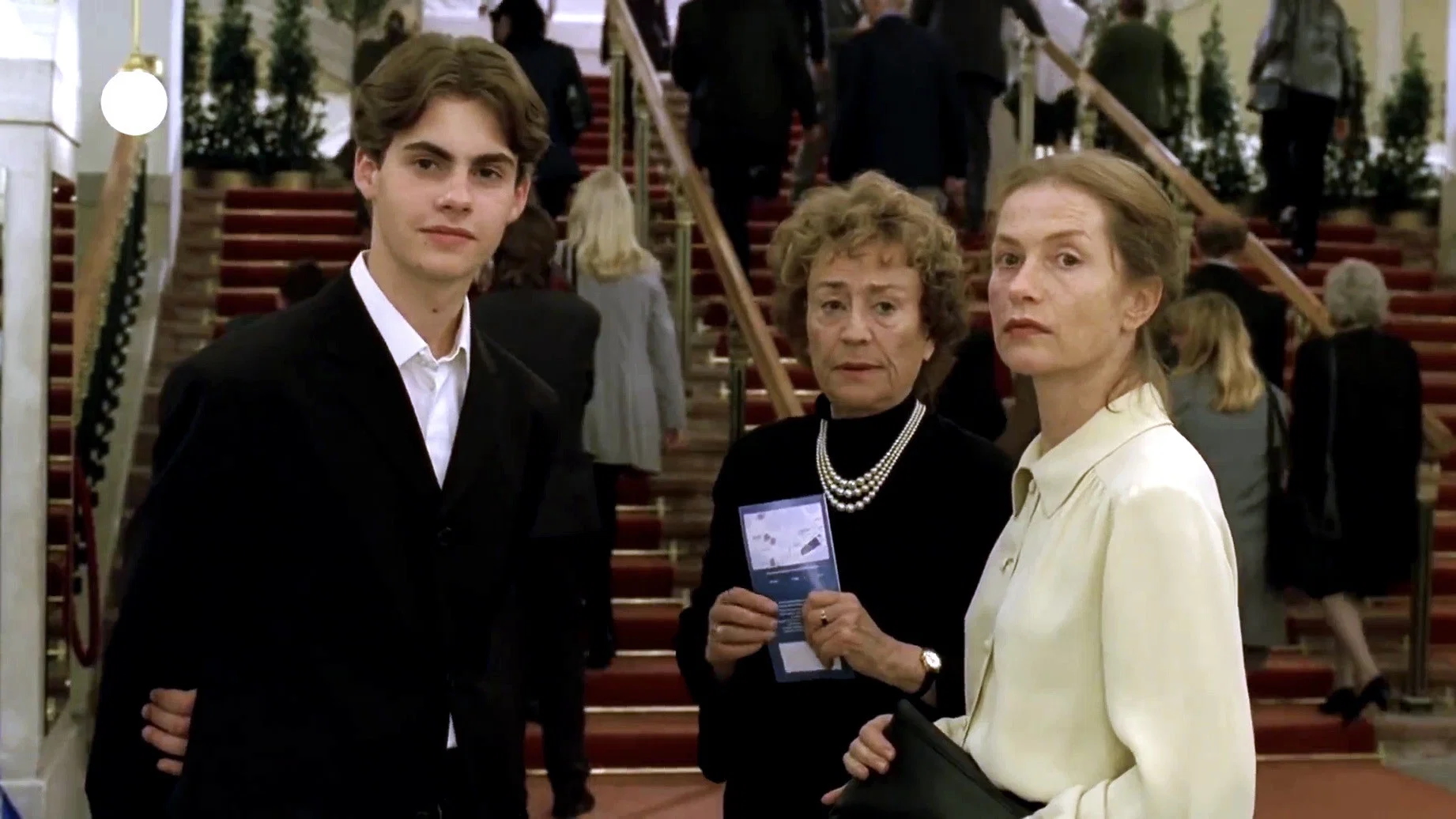
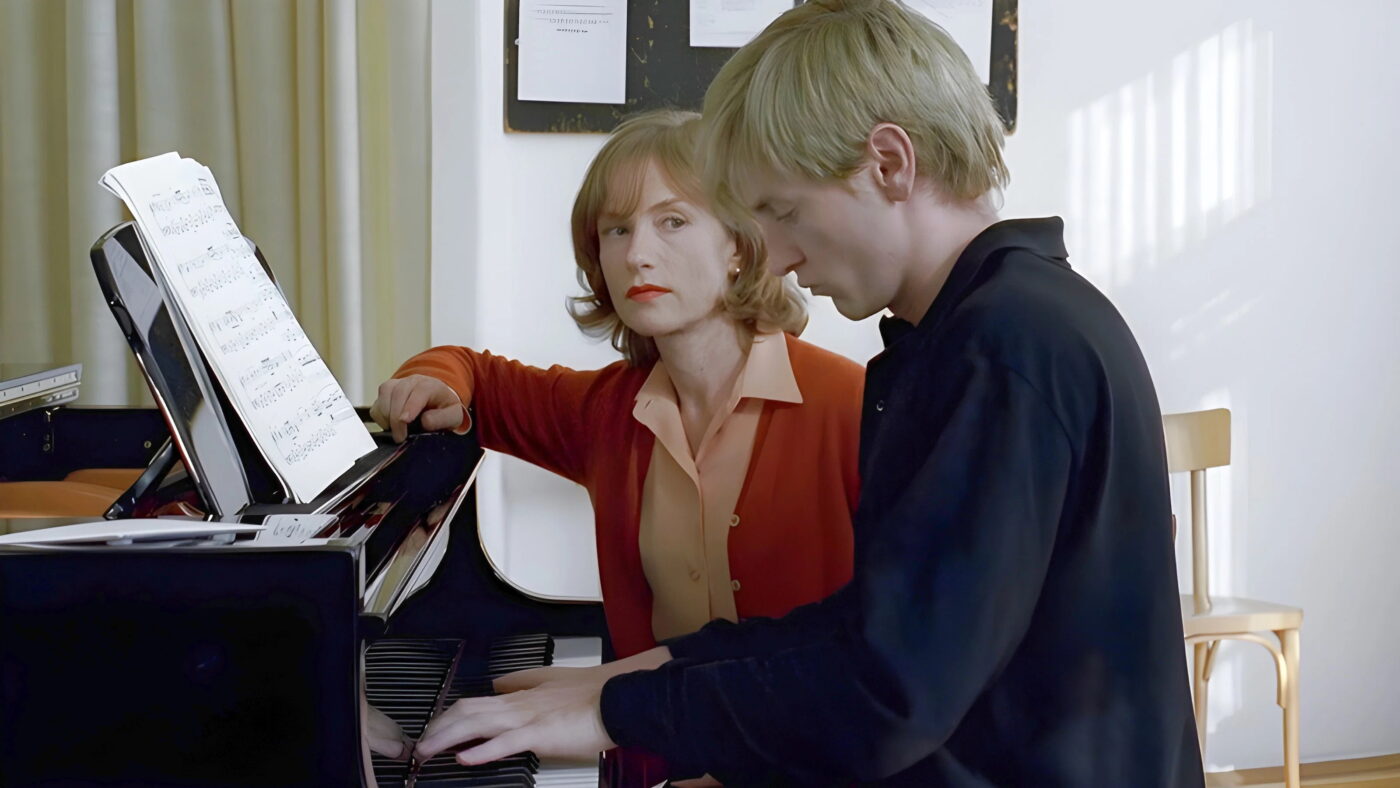
Isabelle Huppert in ‘The Piano Teacher’
The femcel has traditionally been characterized by self-loathing or a withdrawn disposition that usually stems from internalized misogyny. Femcels haven’t historically flocked to the title with pride, but it’s one that society has bestowed upon them after experiencing the discomfort of being in their chilling presence. That is, until now. In recent years, the word has taken on new life and is even worn as a badge of honor by disaffected teens and women online, who’ve grown disenchanted with the hazards of modern dating, otherwise known as heteronihilism. For others, it’s more of a general hopelessness in their outlook on life.
Type the phrase ‘Femcelcore’ into Tiktok or Pinterest and you’ll be flooded with videos and memes of the “aesthetic” du jour. A departure from the once utterly unnerving, self-hating archetype, this new iteration of the femcel has quickly become synonymous with the broader, less intense subculture of the “Sad Girls,” who film themselves crying to Lana Del Rey, burn witchy candles that often serve as the single light source in their messy rooms, post man-repelling outfits, and peacefully revel in their self-described off-putting behavior. The operative word being peace here. They’ve transcended to a place of apathetic boredom when it comes to the male gaze. Less limerence and more concern for the self.
In a video essay, the anonymous Swedish narrator of antiheroines notes that all of these recent labels surrounding the femcel lead to the same conclusion. “What women are drawn to,” she says, “is unpolished female representation.” Sad girls want to feel seen. Maybe the abstraction of the archetype makes it more approachable for self-identification. But really, in a time when social inhibition plagues even the most well-adjusted among us, its appropriation seems to be elevating an ultimately innocuous community of women finding collective solace in their gloomy personalities.
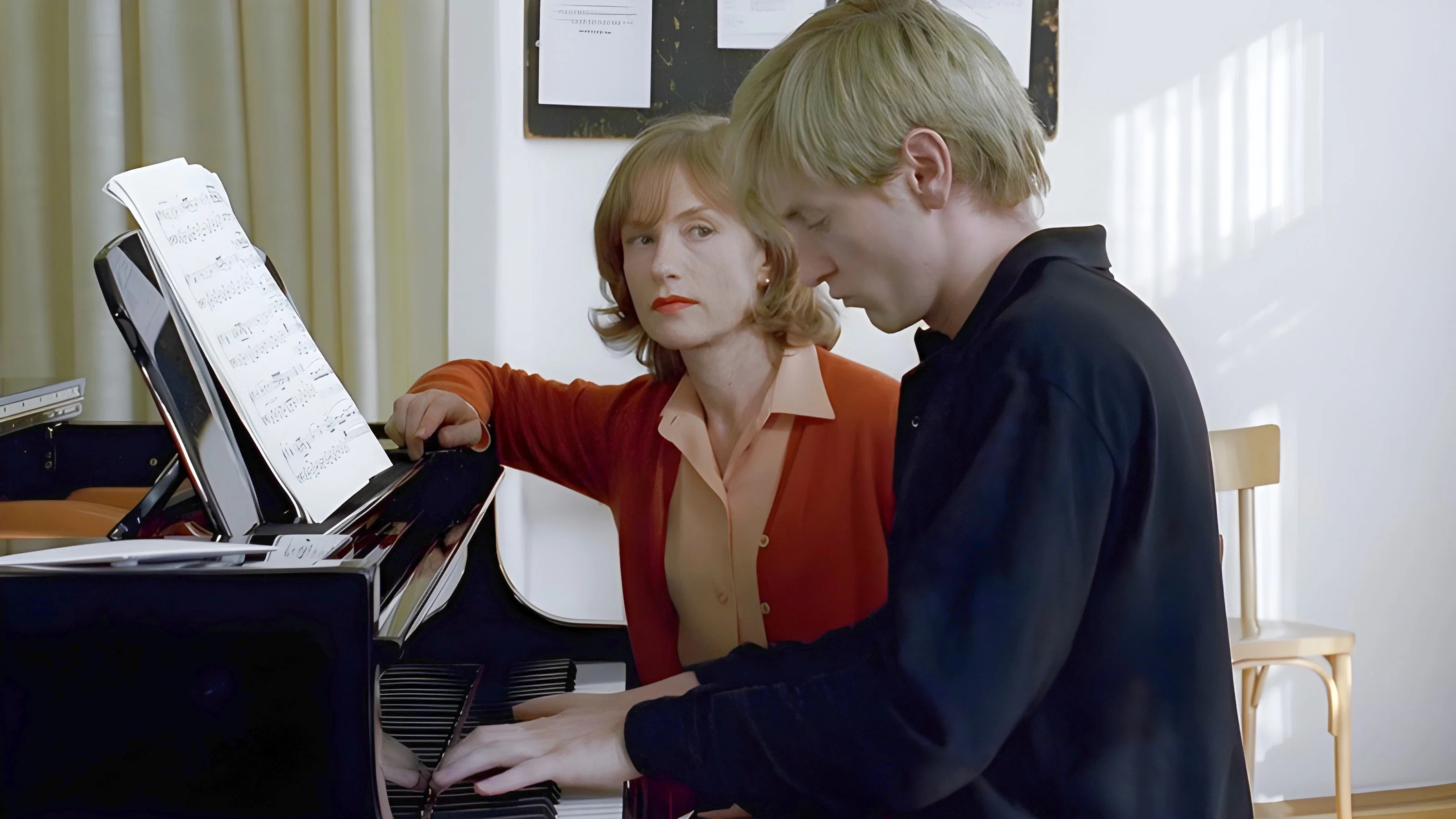
But that’s not to say the word has been completely sanitized. Stick around these online communities long enough and your algorithm will inevitably lead you to fancams of Isabelle Huppert that stitch together startling clips from Michael Haneke’s The Piano Teacher (2001) as Korn’s “Freak on a Leash” plays in the background. In the film, which endures in its polarizing effect 25 years later (for the record: I’m in the camp that has a place in their heart for it), Huppert plays Erika Kohut, who is argued to be the femcel blueprint. Or at the very least, the most depraved variant of the archetype. If the incels have Travis Bickle (Robert DeNiro) from Martin Scorsese’s Taxi Driver (1976) as their corrupt mascot, then the femcels have Erika as the most extreme among them.
Huppert’s Erika is a painfully repressed piano instructor at a conservatory in Vienna. A failed classical musician, she lives with her domineering mother in a hostile domicile of unrelenting maternal torment. While she has a refined sartorial aesthetic of chic Burberry trenches, smartly tailored skirting, minimalist blouses in muted pastels, and the exquisite austerity of a silk scarf tied around her head, this single middle-aged woman’s elegance stops at her appearance.
Erika engages in grotesque, sado-masochistic behavior involving genital mutilation, perverse voyeurism (e.g. sniffing discarded tissues at a seedy porno cinema), and troubling sexual dynamics with her underage male student, Walter Klemmer. At first, Walter is drawn to Erika’s aloof sophistication, but what started as a shared love of composers Schumann and Schubert, takes a disturbing turn when Erika pushes the boundaries of her own subjugation.
Erika’s shocking actions are ripe for debate fodder around what constitutes femceldom, but they’re just a drastic response to repression—a psychological defense mechanism that almost every woman has contended with at some point in her life. At the end of the day, it’s Isabelle Huppert herself who possesses a more grounded persona to aspire to. Erika is just one character among a string of disturbed women Huppert has personified with great commitment over the years. From a vengeful video game CEO who goes after her rapist in Elle (2016) to a mentally unstable widow who entraps an unsuspecting young woman in Greta (2018), morally bankrupt protagonists are the award-winning French actress’ calling card. But it’s her pragmatic nonchalance about being thrust into these horrific cinematic worlds that never fails to intrigue and confound her fans in equal parts.
‘The Piano Teacher’
Huppert’s seemingly effortless ability to detach from her harrowing film roles shocks journalists to no end. “When it’s over, it’s over, she says in a roundtable with The Hollywood Reporter, “it doesn’t follow me.” Or when she’s feeling cheeky, she refers to her guilty pleasure of imagining herself as “a sadistic and manipulative murderer, like something out of a book by Agatha Christie.” Sure this might sound disconcerting, but it only makes her all the more alluring to women who wish to ascend to her level of casual detachment. Such admirers include Chelsea Fairless and Lauren Garroni, who regularly reference Huppert in their popular fashion and pop culture podcast Every Outfit as a shorthand for aspirational women of taste.
In one episode of Every Outfit, Fairless and Garroni marvel at Huppert’s unbothered temperament, even in the face of volatile male directors. Garroni makes reference to the tumultuous set of David O. Russell’s I Heart Huckabees (2004), in particular. “There are two incidents,” she says, “but one takes place in a car with Isabelle Huppert in between actress Lily Tomlin, who’s getting screamed at by the director, and actor Dustin Hoffman, who is trying to mitigate the situation.” As the story goes, Huppert just sat there going about her own business, totally unfazed by O. Russell’s rage. “Putting on makeup, reapplying lipstick,” says Fairless, “a true icon.”
While some self-identifying femcels of today strive towards an approximation of Huppert’s hard-boiled demeanor in real life, they also blow off steam by living vicariously through the toxic femininity of antiheroines in films like David Fincher’s Gone Girl (2014) or Abel Ferrara’s Ms. 45 (1981). Each film sees its protagonist spill over with a deep-seated feminine rage that bubbles up and manifests in violent vengeance. These revenge fantasies are not a directive for femcels, but instead, an escapist way of breathing through the suffocating feeling of living in a patriarchal society.
Film historian and prolific merch designer Margot Stacy of Misc-En-Scène has an entire t-shirt collection dedicated to notorious femcels of the aforementioned films as well as others like Mildred Pierce (1945), and Fat Girl (2001). “Femcels are divine creatures sent to show us the paths of suffering, the true world as revealed in a hatred of the male, and the ultraviolence or anti-violence it takes to rid the universe of pain,” she says, “we feel pain to mitigate it for others.”
Stacy’s sentiment is one of sharp clarity that gets at the heart of the femcel resurgence. There’s a universal desire to feel even in the most shallow associations with the archetype. This benign form of digital tribalism makes room for girls and women to cope in community, which was Alana’s hope all along when she launched her online project in 1997.
Today’s world, almost 30 years later, is more isolating than ever and profound loneliness is no longer the fringe experience it once was. Everyone is online 24/7 en masse and the immediacy of human connection is now most reliable when mitigated through a screen. There is a tremendous amount of lack that extends past involuntary celibacy. We’ve numbed ourselves to better brace for the fresh horrors our black mirrors greet us with each morning, but long periods of this steeling has led to loss of self. We float around like flotsam and jetsam amidst a sinking society and no longer feel as situated in our personal identities and relationships. The term femcel has possibly been distorted beyond recognition by now, but if a self-diagnosis leads to a flicker of feeling alive with others, then maybe that’s not so bad.