
When it comes to sexual messages, social, economic, and political pressure defines and constrains us in ways we aren’t always conscious of. What would happen to us, and for us, if we became more aware of their influence on our erotic choices?
That’s the question posed in the fascinatingly thought-provoking new book Sex in Public: The Transformative Social Power of Our Erotic Lives. In their book, sociologist Angela Jones writes about how systems of power, our status in the world, and many other sociocultural influences make, or break, our sexuality. Their message is clear: It’s time to get conscious about the ways we interact with sex so we can see and feel pleasure as fundamental to the path to freedom.
Our beliefs about desire, sex, identities, relationships and communities are shaped by our families, religion, culture, social class, peers, and media. From a young age, we learn what kinds of relationships are acceptable, whose desires matter, and what behaviors are rewarded or punished.
Over time, these messages become so embedded that they can feel natural or inevitable. We often move through the world believing our sexual values are entirely our own when they have been shaped by countless social forces operating beneath our awareness.
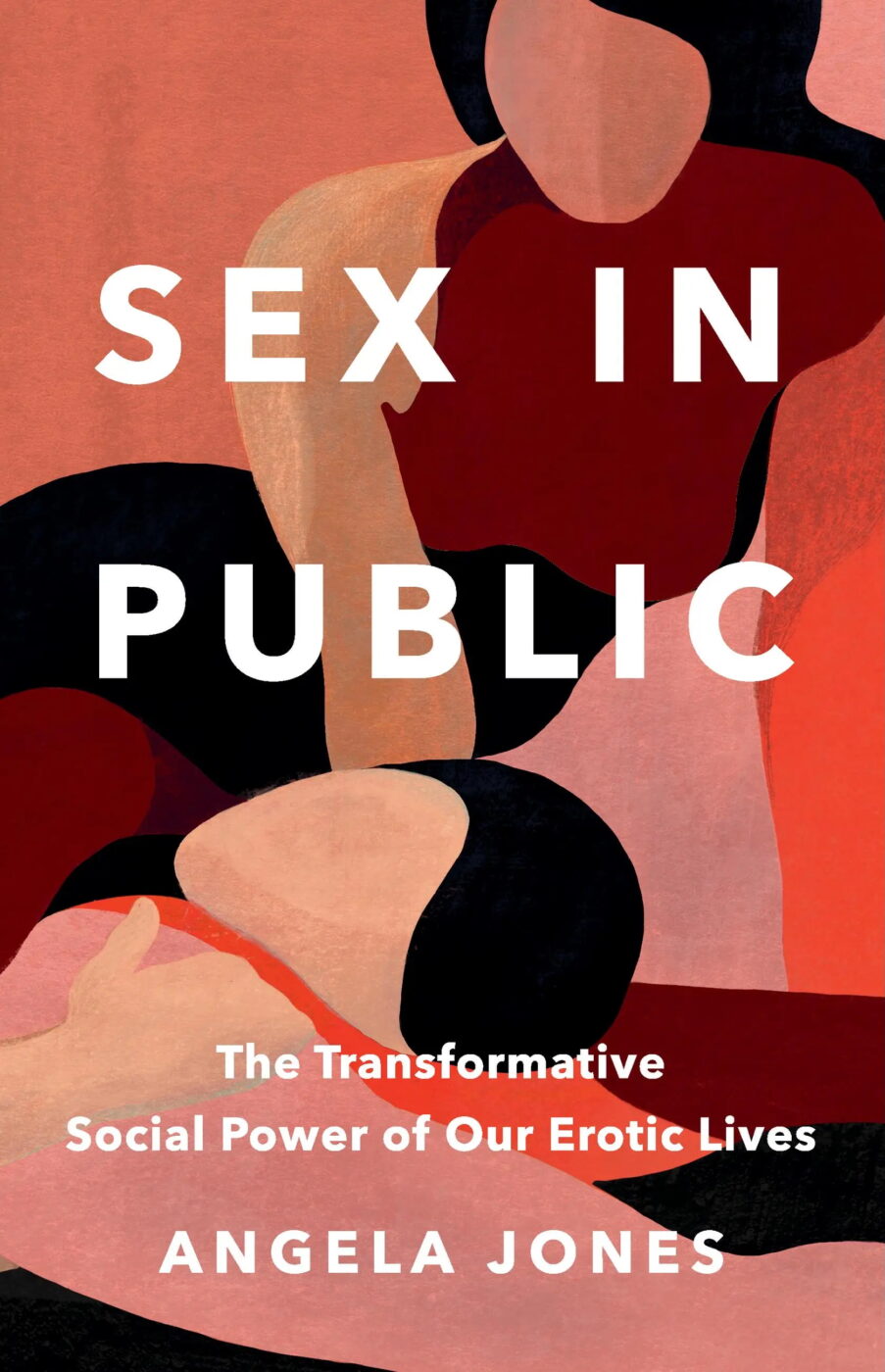
Angela Jones • ‘Sex in Public: The Transformative Social Power of Our Erotic Lives’
We are fed a myriad ideas about sex that we accept as the norm. Stereotypes about what genders and ethnicities are more sexual, what kinds of men have larger penises and what is deemed as desirable, are all out there and easy to spot. Consumerism tells us how we can be better at certain types of sex and avoid other types of less romantic sex. Becoming conscious of the forces that influence our thinking around pleasure may be one of the most powerful acts of sexual liberation available to us.
If becoming conscious is the goal then, we must acknowledge, as Jones writes, that sex is both pleasure and danger. We talk a lot about sex in terms of pleasure, but sex is, in many ways, inherently dangerous as well. There is a disciplinary power that can be applied to sex, and it drives conformity to sexual rules. How we choose to defy those rules, and feel into ourselves, can make defiance feel pleasurable.
It takes time to unlearn or rethink our assumptions around sex, especially since many of us are raised within a heteronormative society. While sex is something we have been told happens in private, the idea of pleasure as a collective, experience —a space in which we can all feel powerful in our choices and play along as we would like— is radical.
Erotic resistance is revolutionary. Sex outside procreation is the norm. Researchers Cindy Meston and David Buss confirmed this in their research on the 237 reasons humans have sex. Pleasure, connection, curiosity, affirmation, exploration, stress relief, intimacy, and joy all exist alongside reproduction, yet many of our cultural conversations continue to reduce sex to a far narrower purpose. Jones begs us to open the discussion around sexuality and take it from private to public.
Every time we question a rule about desire, intimacy, gender, or pleasure, we create space for a more authentic version of ourselves to emerge: It is this practice of choosing ourselves over conditioning, curiosity over conformity, and pleasure over shame. In a world determined to tell us who we should be, there is something profoundly liberating about deciding for ourselves.
Jamye Waxman, PhD is a sex and couples therapist based out of Los Angeles, CA.