In an episode of the sitcom How I Met Your Mother, protagonist Ted Mosby proposes a theory of attraction: the Dobler-Dahmer paradigm. If two people are equally interested in each other, a grand romantic gesture is endearing, but if one party is not invested, the same gesture comes off as unsettling. Much of Ted’s “lovestruck” behavior in the 2000s reads as creepy today. Ted was branded the ultimate “Nice Guy,” a symbol of how quickly romance descends into horror when personal boundaries are crossed.
The 2026 horror smash hit Obsession ratchets up this dynamic, chronicling the downfall of a boy named Bear, who wishes on a novelty toy that his friend Nikki loved him “more than anyone else in the fucking world.”
Unlike traditional Monkey’s Paw fables, the novelty toy is not a cursed object but a neutral one, and Bear is not an innocent victim of circumstance but the accidental instigator whose choices drive the story—it is his selfishness and entitlement that makes for the terrifying core premise. Bear is not in love with Nikki; he is in love at her, and for all of her objectively insane theatrics (making a sandwich out the remains of his dead cat, duct-taping his front door shut, smashing their friend’s head into a brick in a fit of jealousy), it is Bear, not Nikki, that is the true obsessive: he refuses to let his dream girl go, no matter the cost.
“The film’s most unnerving tension comes from … watching [Bear] convince himself, again and again, that his feelings deserve to take up more space than anyone else’s. Even if it strips someone of their autonomy,” writes Stardust Magazine. “All I did when playing Bear was think about the mentality of, This is just the one thing. If I get this thing, it’s going to change my whole life,” actor Michael Johnston said in an interview with Men’s Health.
Obsession is the latest entry in an emerging subgenre: Nice Guy horror, in which the horror element is not the supernatural, but the dehumanization committed by men who see themselves as heroes. Other films in the canon include Bryan Forbes’ The Stepford Wives (1975), Alex Garland’s Ex Machina (2015), Olivia Wilde’s Don’t Worry Darling (2022), Zoe Kravitz’s Blink Twice (2024), and Drew Hancock’s Companion (2025). Some people have branded it “incel horror” because the men embrace incel logic—the idea that men “deserve” affection from women simply for being nice.
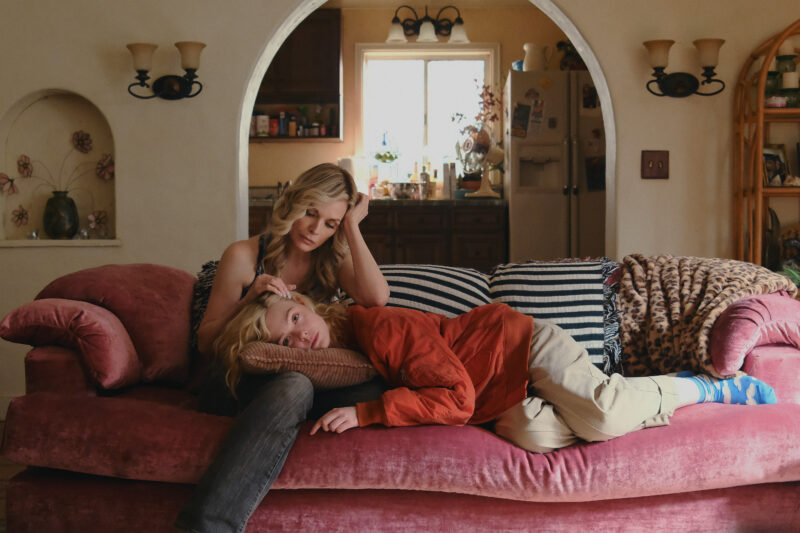
“I’m a good guy. I’m decent. And what do I have to show for it? A cramped, one-bedroom apartment and a robot girlfriend. I don’t even own you for Chrissakes. You’re a fucking rental,” spits Josh in Companion when his “girlfriend” Iris realizes that she’s a robot programmed to cater to his whims.

‘Companion’ • Photo: New Line Cinema.
The threat of female autonomy is the engine of The Stepford Wives (1975), one of the earliest examples of “satirical feminist horror” on film. It takes place in the idyllic Stepford community run by a mysterious Men’s Association, which is secretly replacing the housewives in the neighborhood with flawless, subservient robots. The 2004 reboot clarifies the men’s grievances: “We married wonder women. Supergirls. Amazon queens … We’re the wuss. The wind beneath your wings. Your support system. We’re the girl.” In other words: “a man would rather kill his wife and replace her with a robot than commit to equality and recognize her as a whole person.”
Barker has noted that Obsession is shot from Bear’s perspective, a deliberate choice that makes Nikki’s unpredictability effective as horror, but falls short of true subversion. The woman-gone-crazy trope in horror is a perversion of traditionally feminine archetypes of gentle, nurturing, submissive women. But for women, men violating their boundaries is a reality to which they are not only accustomed but gaslit into. Indoctrination begins in childhood (“boys are mean to you because they like you”) and continues throughout a woman’s life (the “asking for it” rhetoric around sexual assault).
Following one of Nikki’s violent outbursts, Bear asks if the “real” Nikki—the one underneath the enchantment—truly loves him. The hypocrisy is palpable; Bear doesn’t even love the real Nikki, because he doesn’t know the real Nikki. In the opening scene, he confesses that he has kept his feelings secret for fear of losing her. Later, when Wish Nikki is dormant, the real Nikki begs Bear to kill her out of mercy and he refuses. “What’s so bad about being with me?” She responds, “I’ve never been with you, Bear.”
The idea that women exist to be won—to be conquered, outsmarted, or manipulated—is one that underpins incel ideology; it’s a total disregard for consent, or at least consent freely given. But Nice Guy horror reveals the counterintuitive truth: that in validating the twisted machinations and funhouse physics of the manosphere, everyone loses. Rather than doing the work of understanding women as real, flawed, and complex, Nice Guys project their desires onto idealized versions formed through porn and forum discussions; a refutation of these fantasies feels like betrayal. If love is a game to be won, these men want a cheat code. It’s telling that Bear does not wish for self-improvement but unconditional love.
Obsession and other Nice Guy horror movies are meeting a cultural moment, one in which American women witness their rights being stripped away piecemeal and daily life has become what Dazed calls a “tech consent crisis”; every movement is tracked and every choice (pop-ups, cookies, location information) is clearly coercive: “The risk is not only overt misuse, such as covert sexualized recording or upskirting-type practices. It is the broader normalization of ambient scrutiny, where being visually present increasingly means being legible to machine systems you did not consent to enter.” When constant surveillance is the norm, women are disproportionately harmed by inventions like smart glasses.
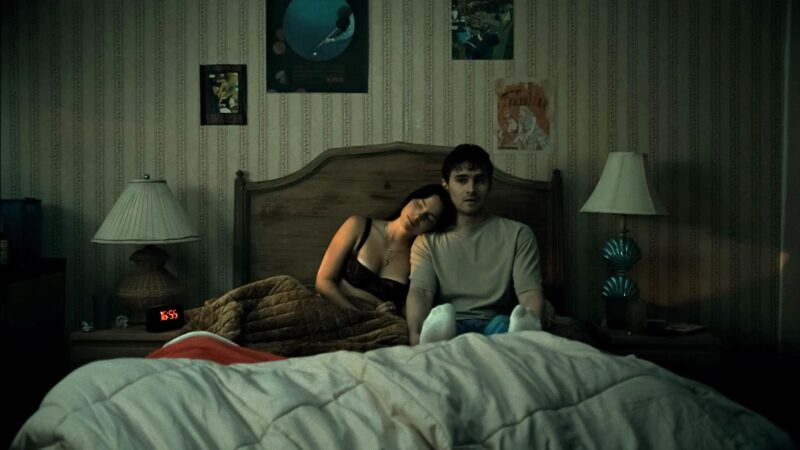
‘Obsession’ • Photo: Focus Features.
If modern horror wields the absence of consent as a weapon, modern romance offers escapism, and for women traumatized by intrusion, the hottest fantasy is respect. According to Publishing Perspectives, romance and romantasy were the biggest drivers of adult fiction sales early last year, which strategist Rachel Lowenstein describes as “a market correction in the economy of pleasure … where women’s desire has the benefit of being one of agency, autonomy, and self-directed pleasure.”
The mainstreaming of the #MeToo movement made consent a key focus of contemporary sexual politics—women were newly equipped with language to parse the social pressures and consequences of sexual interactions that had once been bifurcated into “good” and “bad.” Yet mentions of consent in broad cultural discourse fail to adequately engage with the spectrum of sexual harassment to sexual assault, flattening it into cheap jokes and reductive logic. How does consent need to be given? How many times? Can it be rescinded?
The “bodice-ripper” trope in literature, of women needing to be persuaded or pressured into sex, stems from ideas of women’s chastity requiring protection and women’s sexual agency as unseemly. A Natural History of the Romance Novel by Pamela Regis explains that prior to the women’s rights movement, publishers believed that readers would only accept premarital sex if the heroine was coerced. But Rebecca Traister points out that even modern sexual dynamics treat female pleasure as secondary—consensual sex, she argues, should not be the aspiration but the bare minimum. Playgirl contributor Julia Rittenberg suggests that the key to literary sex that feels well-earned and emotionally resonant is to focus on female desire.
Case in point: the two buzziest hockey-centric TV shows of the moment, Heated Rivalry (2025) and Off Campus (2026), have garnered praise from a female audience specifically for their expressions of consent and healthy masculinity. Both shows have been classified as “smut,” but more remarkable than the explicit nudity is the explicit pleasure—the understanding that consent is not just a yes but an enthusiastic yes.
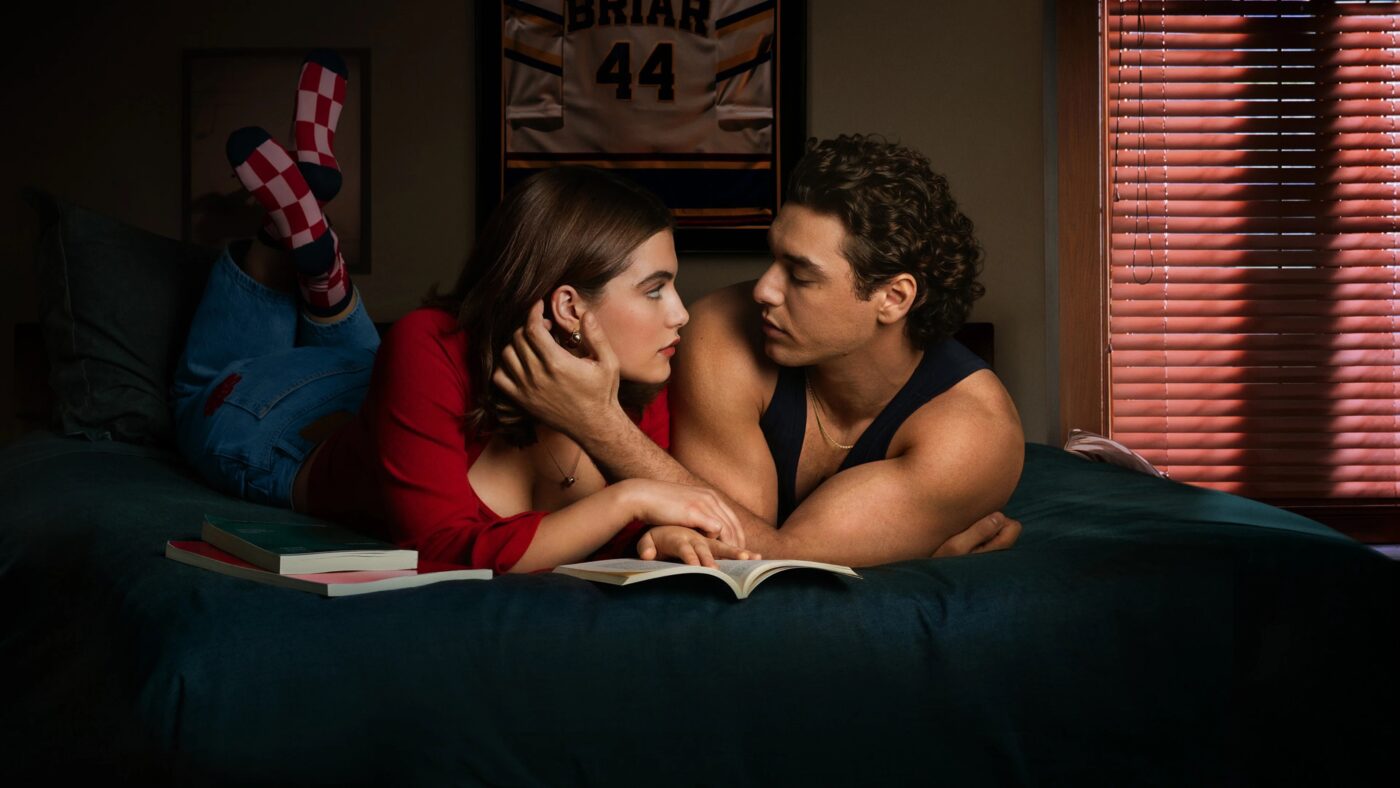
Despite Hannah initiating sex in Off Campus, Garrett recognizes her discomfort and gently suggests masturbating together instead of intercourse, giving her full control of her pleasure. Another player on the team extols making a girl “feel completely safe” as the secret to getting her to orgasm. Sophie Gilbert of The Atlantic notes that Garrett, “brooding, burly, but also improbably tender—seems like a response to 2026’s sexually abusive chatbots and manosphere influencers. His character is absolutely pandering to women … as though simply being able to conceive of such evolved avatars of masculinity might help power them into existence.”
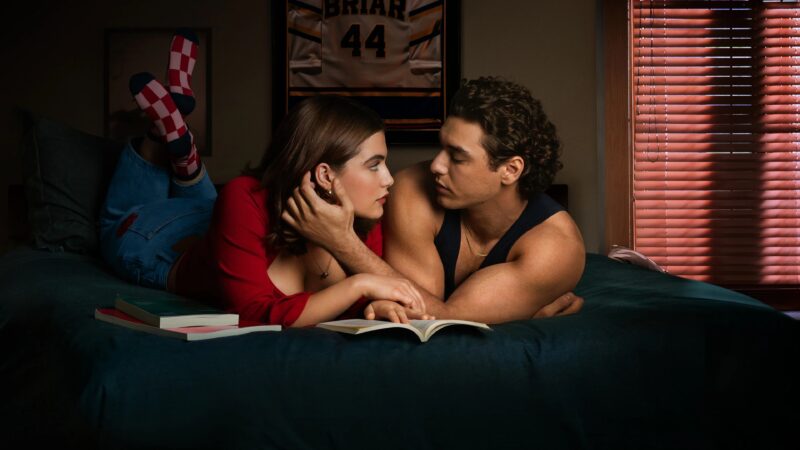
‘Off Campus’ • Photo: Liane Hentscher/Prime Video.
The allure of Heated Rivalry is a fantasy that feels grounded in humanity, and the swoonworthy moments are not grand gestures but small considerations. Of the two men, Ilya is the more sexually experienced and assumes responsibility for Shane’s comfort and pleasure, repeatedly checking in with Shane throughout their encounters. Consent is just the foreplay—the intimacy and enjoyment is what feels truly radical.
Stories of people reevaluating their relationships post-Heated Rivalry have been treated as punchlines, proof of impossible standards. But it’s less about lust for imaginary hockey players than it is about the melting of glacial cynicism permeating contemporary romance media. The desire to be truly known and loved and understood is the most deeply human impulse, one which romance indulges and horror denies.