I dare you to pick up any article or book on motherhood in the last few years without getting the message loud and clear: There is serious discontent in the maternal waters. A dangerous perfect storm affecting maternal happiness, sense of identity, mental health, and, dare I say, sexual satisfaction has been brewing across the world.
Torn in multiple directions, too many modern mothers are worn out mentally and physically, buried under the cultural pressures to be perfect for everyone and in every way. Amy Westervelt, author of Forget “Having it All”: How America Messed Up Motherhood—And How to Fix It, hits one of the culturally duplicitous and pervasive sentiments on its head: “We expect women to work like they don’t have children and raise children as if they don’t work.” Suffering from impossible expectations and every sociological gap possible—stress gaps, pay gaps, and even orgasm gaps (more on this later)—modern maternal identities are reeling, and their intimate relationships are strained. Individual mothers and their sex lives are suffering under the weight of the systems that simply aren’t working.
All these factors raise some important questions: How has the “perfect mother myth” (a venerated version of what a mother should be, handed down through socio-cultural-historical-familial narratives) constructed maternal sexuality as a black mark against good mother status? And why, in a society that fashionably talks about bondage, sex toys, and open relationships, is there still such a strong cultural taboo around mentioning the procreative sex that makes us mothers, as well as the subsequent sex that gives mothers pleasure and release?
Even in our self-empowered generation, and despite the feminist beliefs held by so many, why does motherhood still so often feel in conflict with a woman’s sense of self, sexuality, and sexual satisfaction? Why is mama sex the black hole of our feminine education? With a twinkle of hope, I also invite this question: How can we evolve in a way where the significant identity formation of motherhood can also be applauded as an amazing opportunity for the empowerment and liberation of a woman’s relationship with her body, her sensuality, her sexuality, and her pursuit of pleasure? As questions like these exist more in the forefront of our minds, the facts point to one thing: Motherhood is on the brink of a sexual revolution.
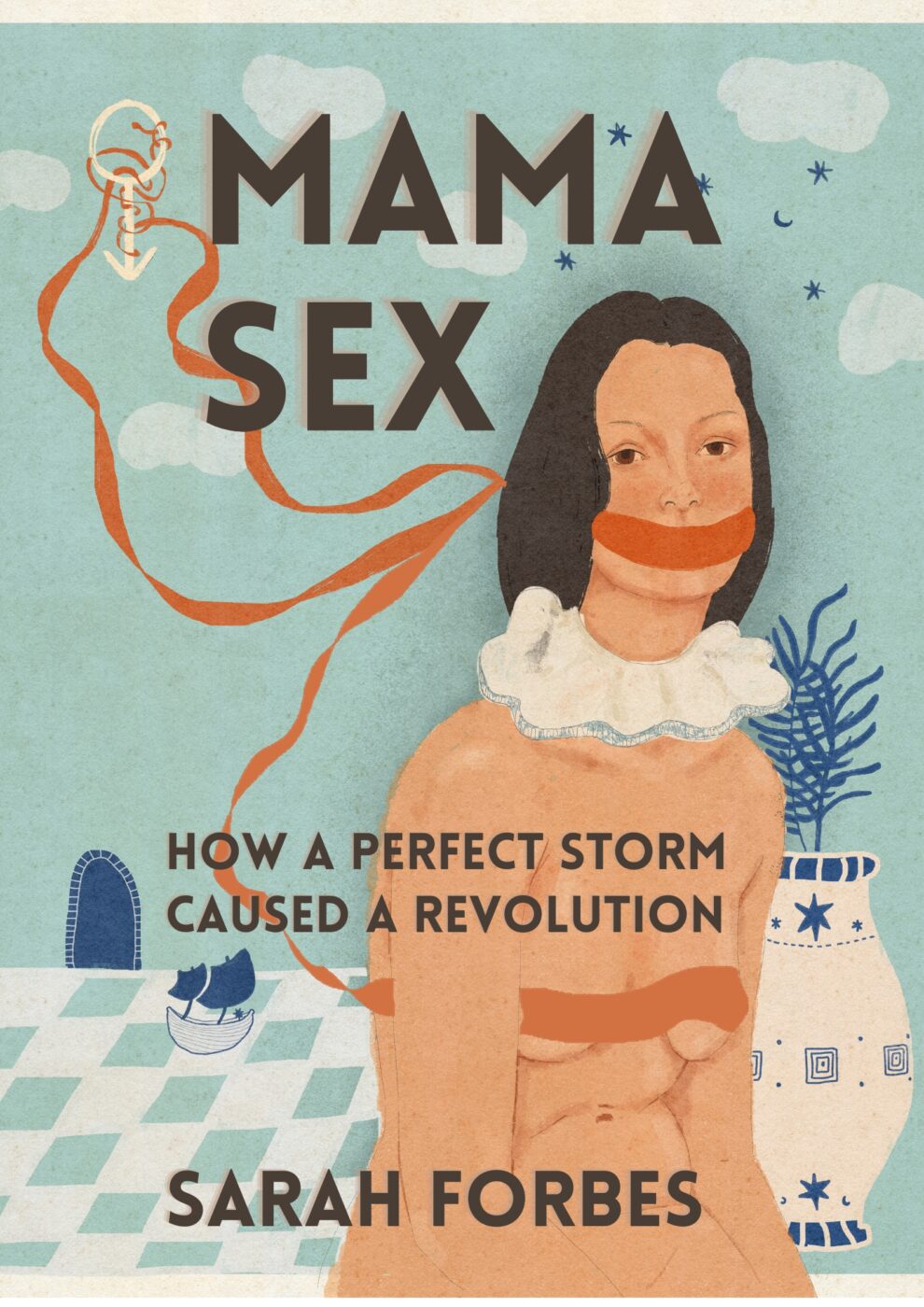
Sarah Forbes • ‘Mama Sex’
Feeling Seen and Finding Our Voice
Any mother of young children knows what it means to be soulfully exhausted. That time in life when we would all just kill to have a single shower where we get to wash all parts of our body without a small invader rushing in. And we all know how that feeling when your partner (if you have one) isn’t helping out as much as you’d like is pretty much akin to them gifting you a chastity belt.
While a mama might ideologically love the idea of physical intimacy, the thought is often in conflict with that “touched out” feeling from being constantly grabbed at by little hands without consent. For a generation raised on bodily autonomy (and often happening concurrently while feeling crushed under the weight of a big mental load), this sensation can make the additional touch of a partner feel like an unsanctioned and aggressive system overload.
And while blaring Instagram and TikTok reels draw attention to all the reasons sex has changed since motherhood, helping us feel seen and assuring us we are not alone, this digital deluge also highlights a daunting mix of resentment, loss of independence, exhaustion, and overall stress that has arguably intensified for our generation. Surprise, surprise, nothing in this mix is setting the foundations for a satisfactory sex life.
Excerpt from the introduction to Mama Sex: How a Perfect Storm Caused a Revolution, Demeter Press. Reprinted by permission of the Author