In 2009, Jennifer’s Body, a sharp satire about a cheerleader-turned-succubus that goes on a boy-killing spree, turned out a box office failure. Screenwriter Diablo Cody and director Karyn Kusama had set out to make a movie for teenage girls about latent female rage, but the studio executives had a different idea: capitalize on star Megan Fox to market to teen boys, including playing up a girl-on-girl kiss between her and costar Amanda Seyfried and suggesting that Fox host chats on an amateur porn site. Cody described the “sickening” feeling she got at the chilly reception to the film’s Toronto International Film Festival premiere: “I realized in that moment that nobody got it.”
After decades of cultural reappraisal, the film’s legacy lives on as a feminist cult classic. And seventeen years later, Cody acts as producer to its spiritual successor, Forbidden Fruits (2026), a stylish candy-colored slasher lauded as “Mean Girls (2004) meets The Craft (1996)” that warns of the dangers of “performative sisterhood” and a relentless thirst for power.
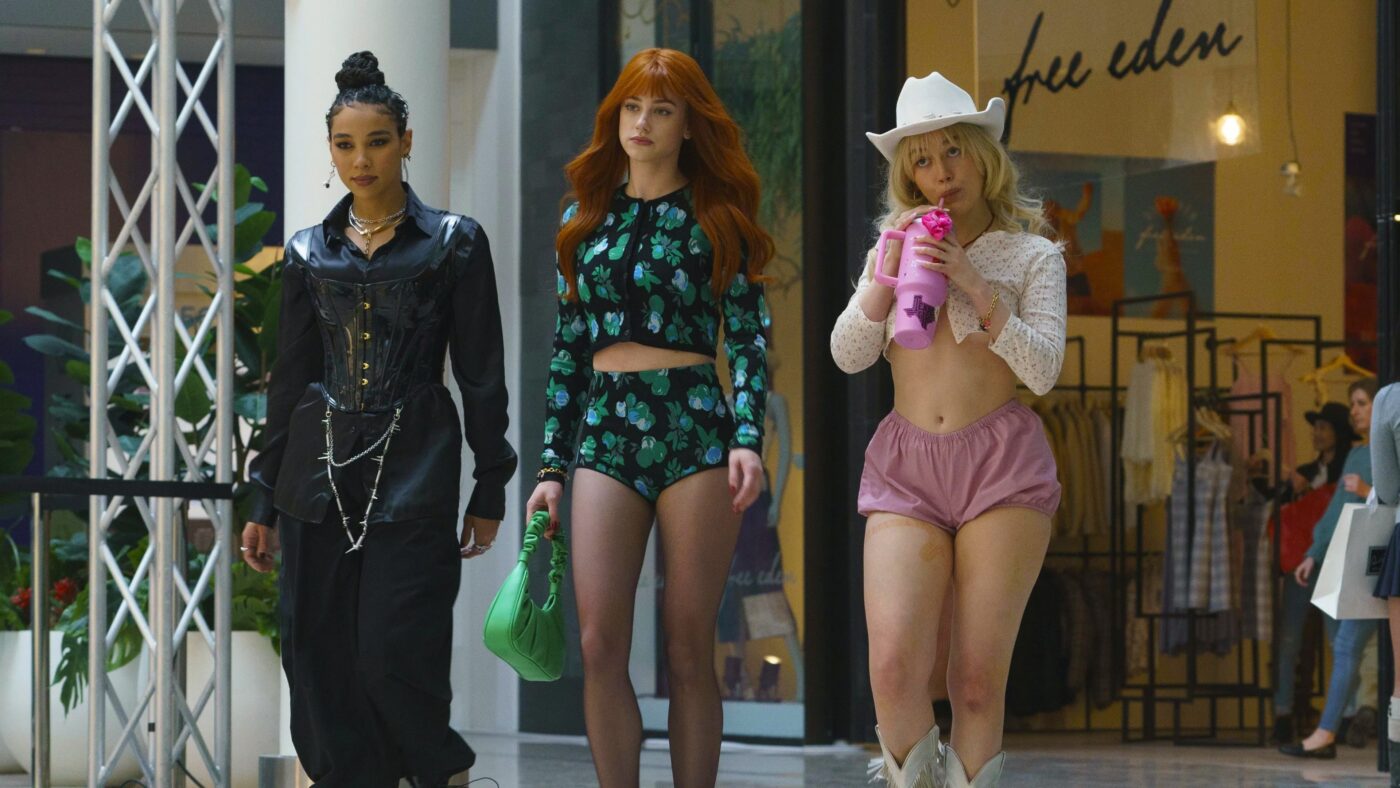
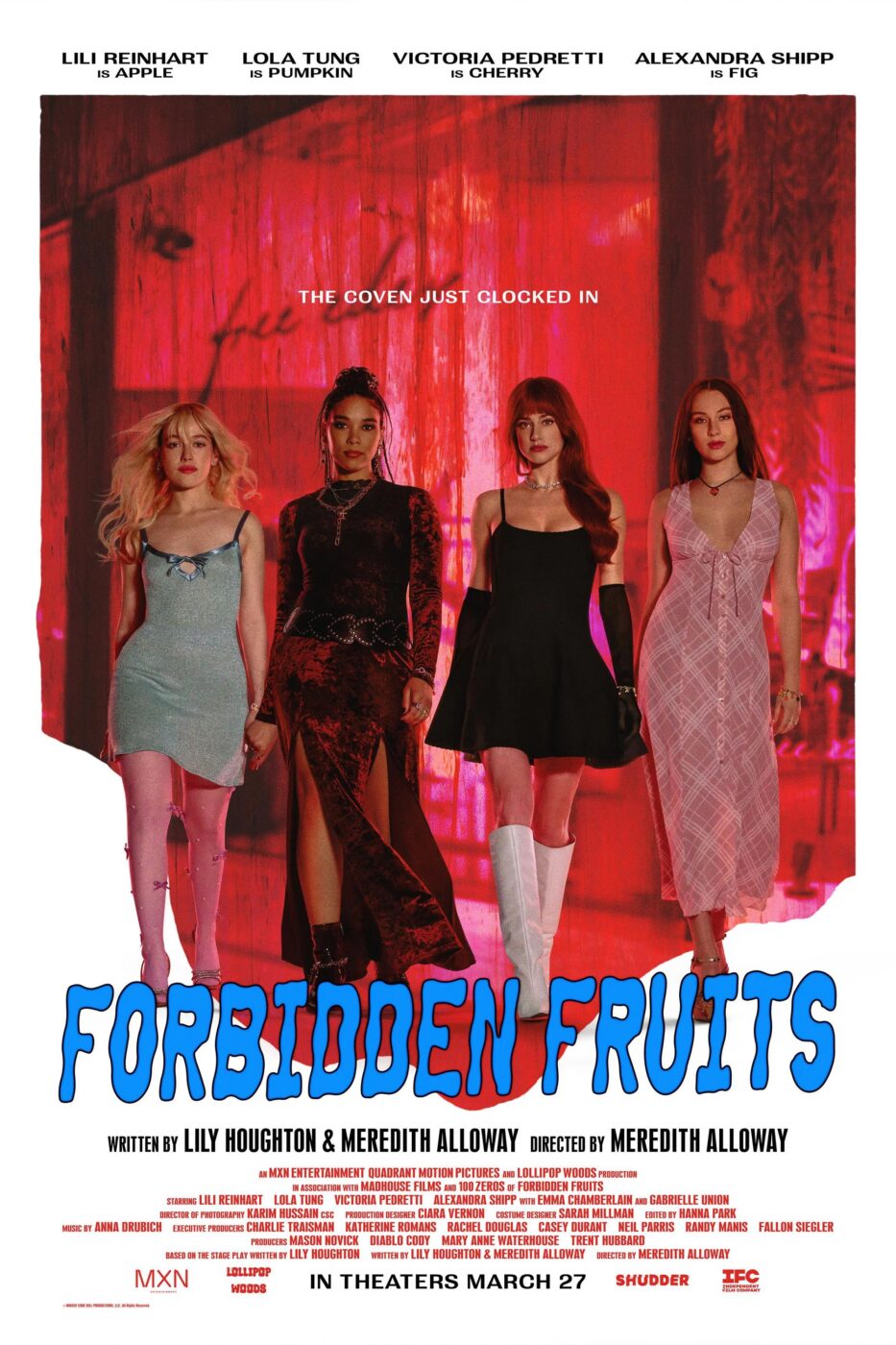
The debut feature of director Meredith Alloway and starring Lili Reinhart as Apple, Victoria Pedretti as Cherry, Alexandra Shipp as Fig, and Lola Tung as Pumpkin, Forbidden Fruits possesses a sly self-awareness that lacked articulation in the 2000s. The tone of the film is immediately established in the opening shot: A woman’s hand resting on a hot pink Stanley tumbler decorated with astrological stickers, the nails painted sparkly candy-apple red, the index and middle finger nails cut short. A film for the girls, the gays, and the theys.
Autostraddle praised it as “a throwback to a bygone era of cunty girl cinema,” a canon featuring bitchy, hyperfeminine main characters that includes Heathers, Basic Instinct, and The Devil Wears Prada. Reinhart specifically requested the two short nails to play Apple, the coven’s icy queen bee, and has been photographed at various press events in Y2K-esque graphic t-shirts with slogans like “I support a man’s right to shut the fuck up.”
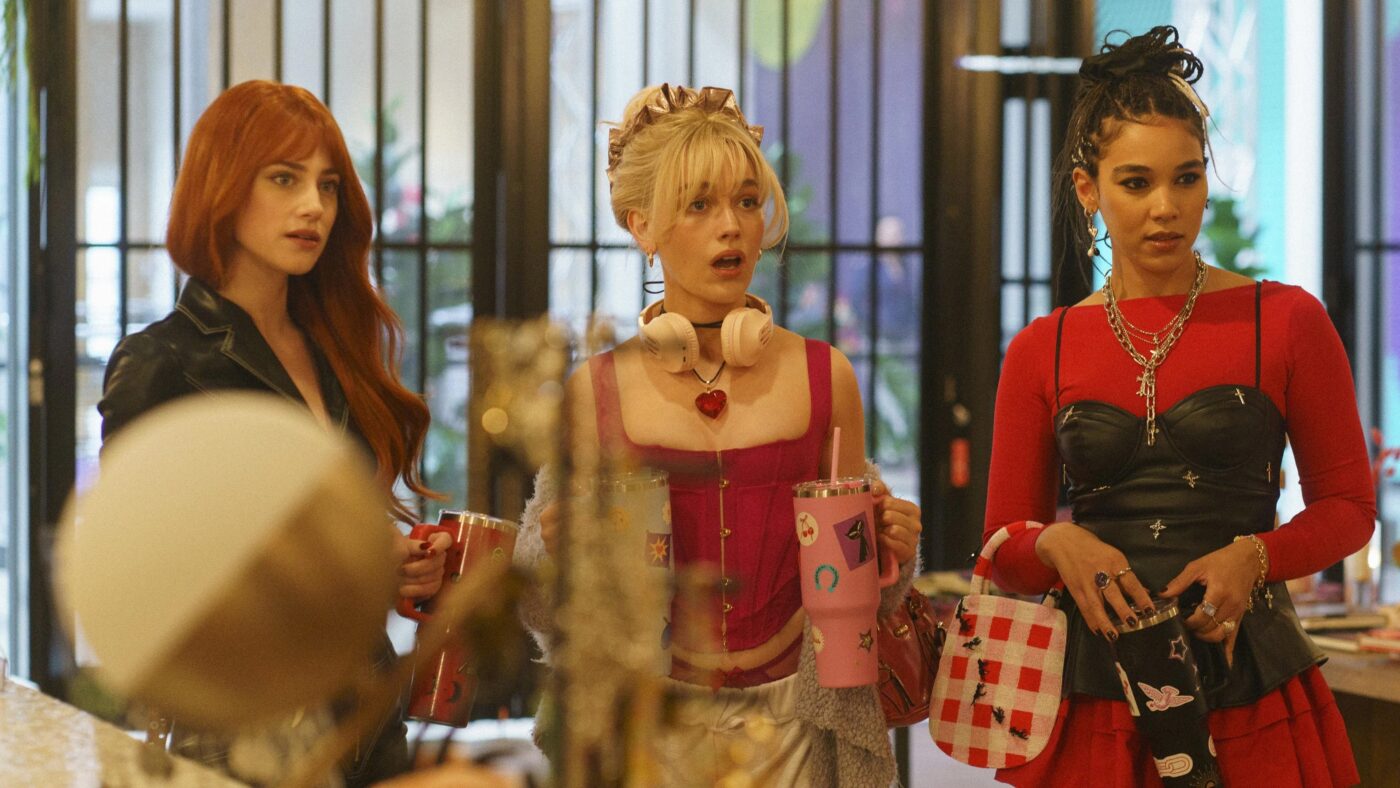
‘Forbidden Fruits’ • Photo: IFC.
This overtly feminine, quasi-misandrist attitude is central to the ethos of the group, an acknowledgment of both contemporary sexual politics and women’s power within them. “Our magic isn’t some Witchtok ripoff, fluffy bunny bullshit,” Apple tells Pumpkin during the induction ritual. “To put it simply: Our magic is the mundane shit you would’ve been executed for in Salem. Being a witch is being a sister. And we all need sisterhood to survive.”
It’s this solidarity that has historically been maligned and feared as a threat to male power—the gorgons in Greek mythology, the witches in Macbeth, the Heathers in Heathers. Covens were spiritual sisterhoods, markers of belonging, communities born out of necessity. It’s easy to understand the appeal of witchcraft for women both past and present: control and connection in a world that structurally antagonizes them, a power fantasy with a built-in support system.
And yet no actual magic is shown in the film—no doors slamming of their own volition or candle flames mysteriously dissipating. The power is in its suggestion, and the crux of the film is not the mystique of the occult but the intrinsic tension of self-policing that often underpins womanhood and female friendships. For the Fruits, being a witch is whatever they need it to be, but it’s also destructive in its fulfillment, to a bloody end.
The coven’s dysfunction is the result of feminism twisted from political movement into toxic codependence and “girl’s girl”-ism—the idea that supporting both women’s rights and women’s wrongs is inherently feminist, which Apple exploits to maintain her iron grip of control. “I’m sorry, Cherry, do you actually fucking hate women?” she snaps when Cherry questions her leadership.
‘Forbidden Fruits’ • IFC.
If Jennifer’s Body was about seeking revenge on a system that fails women, Forbidden Fruits is about seeking connection within the system, no matter how fragile and toxic. The film explores the ways in which expectations of communal womanhood often demand dehumanization, giving up pieces of yourself in service of a promised salvation that may or may not exist.
In their mandatory “confessionals,” the girls confess their sins to their anointed deity: Marilyn Monroe, extolled as “the ultimate femme martyr.” “No man could control her, not even the president,” Apple says. “And we honor that sacrifice.”
But perhaps the real reason Apple chooses Monroe as her muse is the resonance of the myriad of contradictions inherent to Monroe’s persona: beautiful and deeply insecure, charmed and tragic, adored and lonely, indomitable and doomed, iconic and utterly human.
While the premise of the film sets it up as an incisive critique of toxic female friendships, it begins unraveling as the girls do and never seems to decide on what kind of movie it wants to be. Forbidden Fruits emulates the aesthetic hallmarks of its “cunty girl cinema” predecessors, but lacks some of the bite or inflection points that made them famous, instead descending into bloody chaos in the last 20 minutes. It’s just as messy as the Fruits’ relationships, but maybe that’s the point.