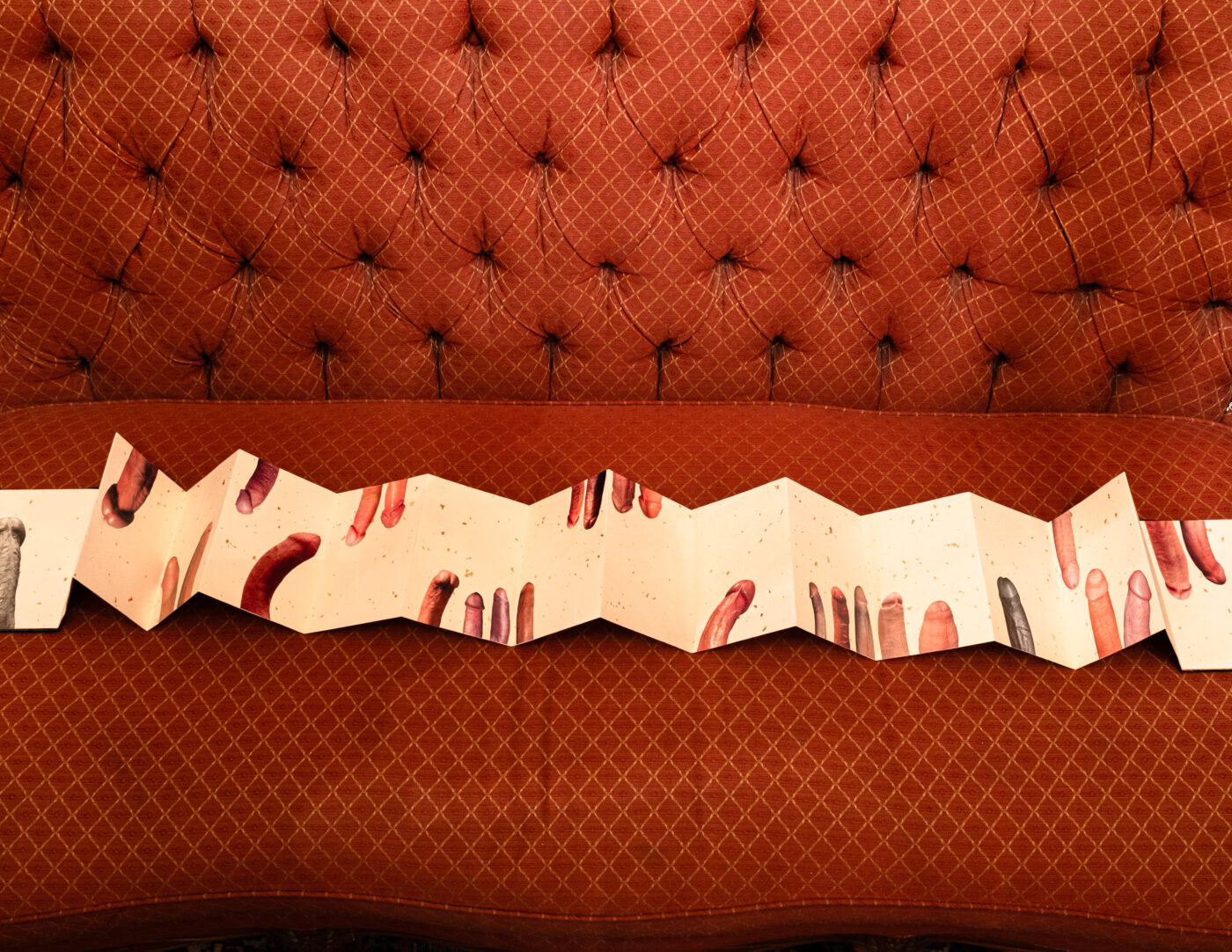
Walk all the way up Manhattan’s Fifth avenue, and you’ll find yourself on a quiet block of brownstones. Nestled among them is your final destination: a private home, owned by two entrepreneurs. Here, you’ll be greeted by a tall, dark, handsome man. This is Christopher Jones, one half of the couple that lives here, and he’s your guide to the phallic kingdom inside.
“There’s something about phallus,” says Christopher of the collection of paintings, sculptures and books you’ll see. “And not just the phallus, but the black phallus, that’s restorative. It’s healing. It’s not just about Western capitalistic pornographic consumption – it’s about reverence.”
And revere guests do.
From 1982 to 2022, thousands of visitors made an annual pilgrimage to this home during the New York City Marathon. Hosted by Michael Roberts and Michael Johnson, runners, neighbors and friends would descend on the brownstone to cheer on the marathon. They came for the race, but they stayed for the space: a five story Victorian home, sumptuously decorated with priceless furniture, fixtures and an art collection centered on the penis.
“It’s a house full of dicks,” concedes Christopher. “But it’s classical art. I think more than anything, the ‘Michaels’ wanted to expose people to certain images and normalize it. This is like a museum, but they don’t want this to be treated as such or remembered in that way.”
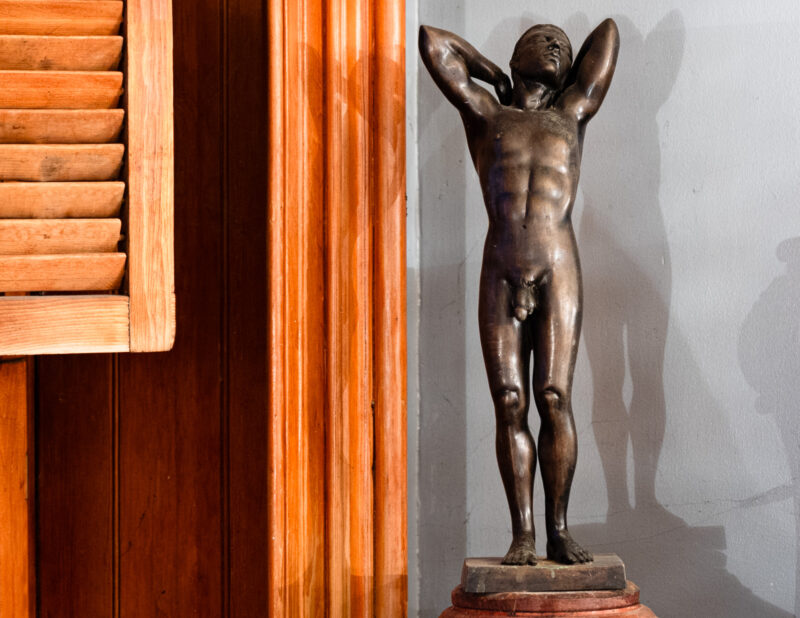
Bronze statue sourced from New Mexico.
Today Michael Roberts is gone. But Michael Johnson remains. He oversees the house and the collection, along with his now partner, Christopher. Together, they continue to grow a 40 plus-year portfolio of phallic art that will make any viewer stand at attention.
But how did it start? What inspired it? And where does it go?
For that story, we sit with the remaining Michael, Mr. Johnson, to discover the thrust and trajectory of this unique collection.
It feels overwhelming –in the best way– taking in all this art. How does it feel for you, as the owner?
It feels normal to me because I live with it and we commissioned and curated it all. This house was built in 1868 and we tried to bring it back as close to the original layout as possible. It’s a very pleasant place –and I like looking at pretty things.
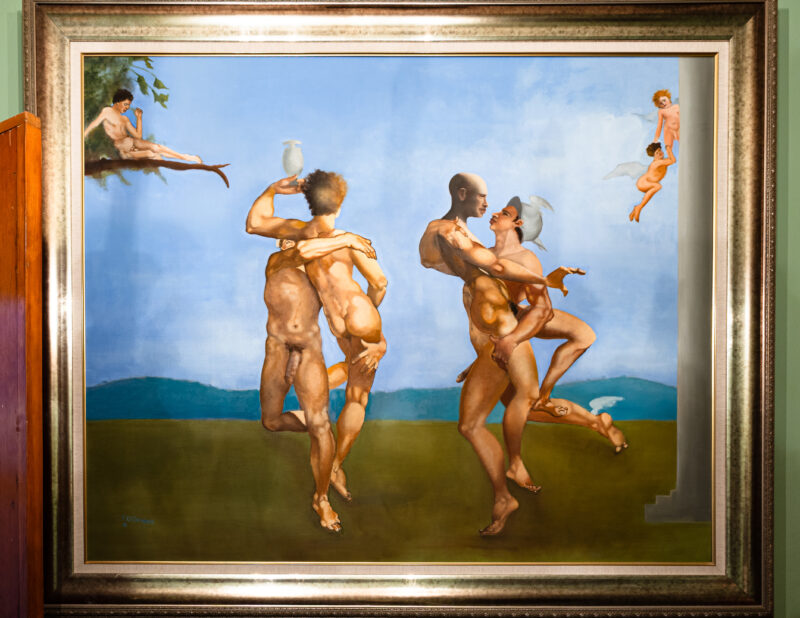
Special commission oil painting by Tricia O’Donell.
So, can we talk about the plethora of penises? Was that intentional?
Yes, it was intentional. I’m an artist as well. But I think the fascination occurred because I’m also a man.
How did you begin building it?
It started one object at a time. Then I realized, as I’m looking for these objects, they’re harder to come by. So, it became a search. And over time I started finding them and as I found them –or we found them– we bought them.
What feeling came over you –or comes over you– when you find a piece?
That didn’t make it to the dumpster!
What do you mean?
I mean, tastes change over time. And sometimes people have things and they’re embarrassed about it. They don’t understand it. So, they want to hide it or throw it away. And timing is everything. As time goes on, collections like this will also disappear. And that’s why I tell every young person to collect things that you like, not because they are of great value. Sometimes they become valuable over time. Sometimes not. But the most important thing is to remember that you have to live with it every day. So, you buy things that you can actually live with.
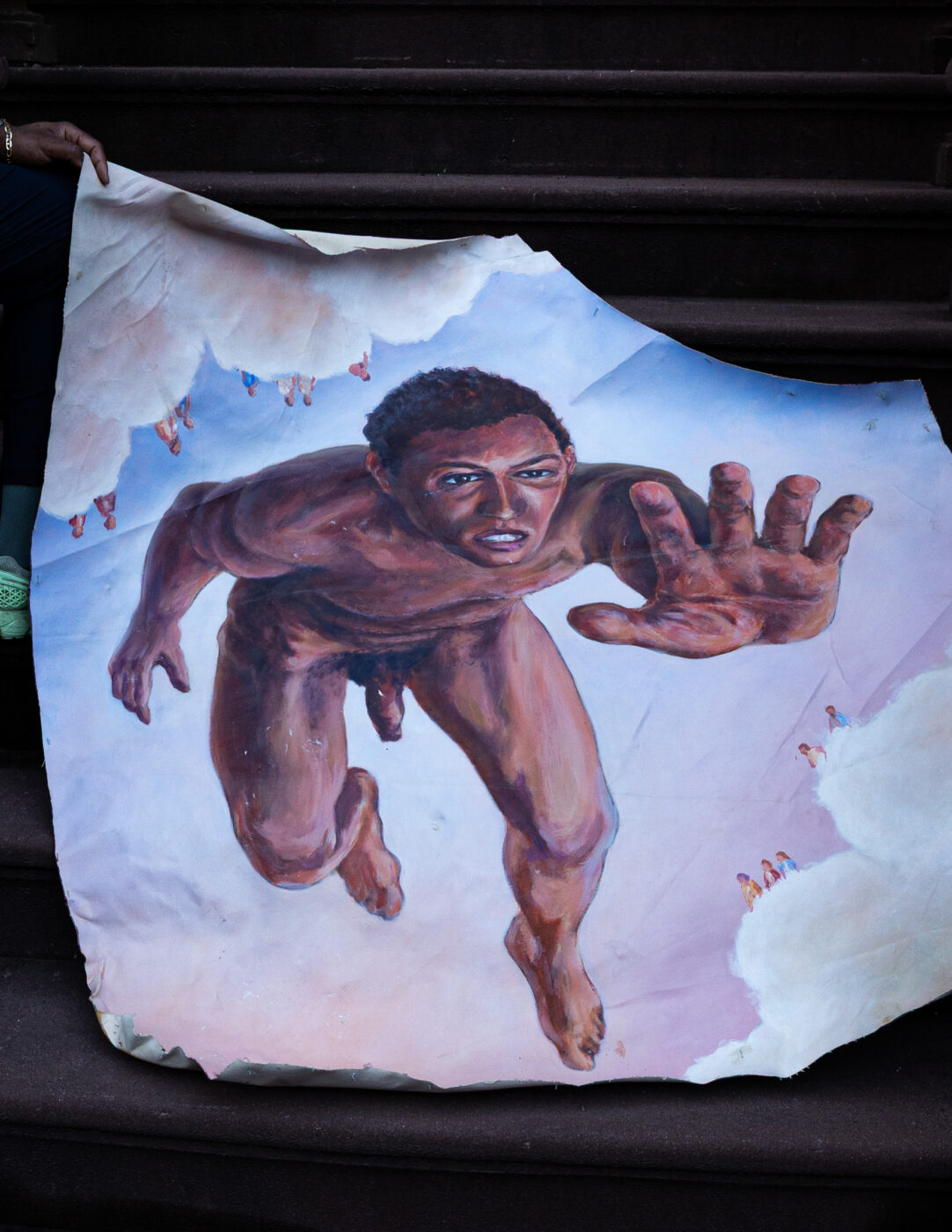
“Cathias: The Fallen Vulcan” • Special commission from Charles Foster Hall.
How long did it take to build your current collection?
Part of collecting is finding it, as you see it. And I would say that I’ve been collecting things for over 40 years now. I started when I was in my early twenties. When you had $2 left over, you saw something, a piece of art or a magazine or a sculpture that you thought you really couldn’t afford, but you saved your little pennies until you got it and you bought it.
What inspired you to start?
Art. And the body. As an artist, having to draw nudes in art class, I learned to appreciate the form. And Black men at the time were always accused of being over sexed and everything else. And so, with the magazines that I collected or found along the way, I just put them away because a lot of them are older than I am.
-
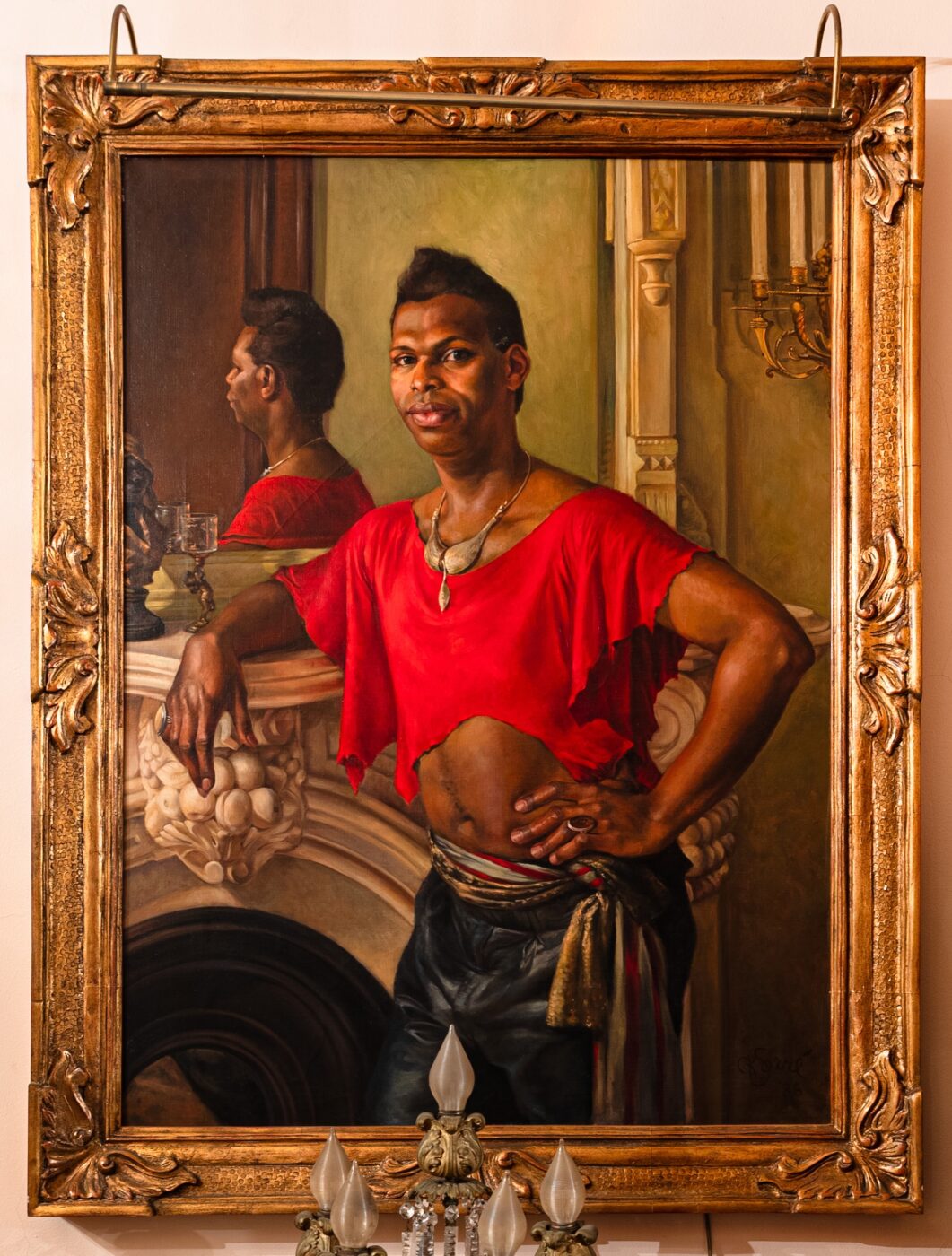
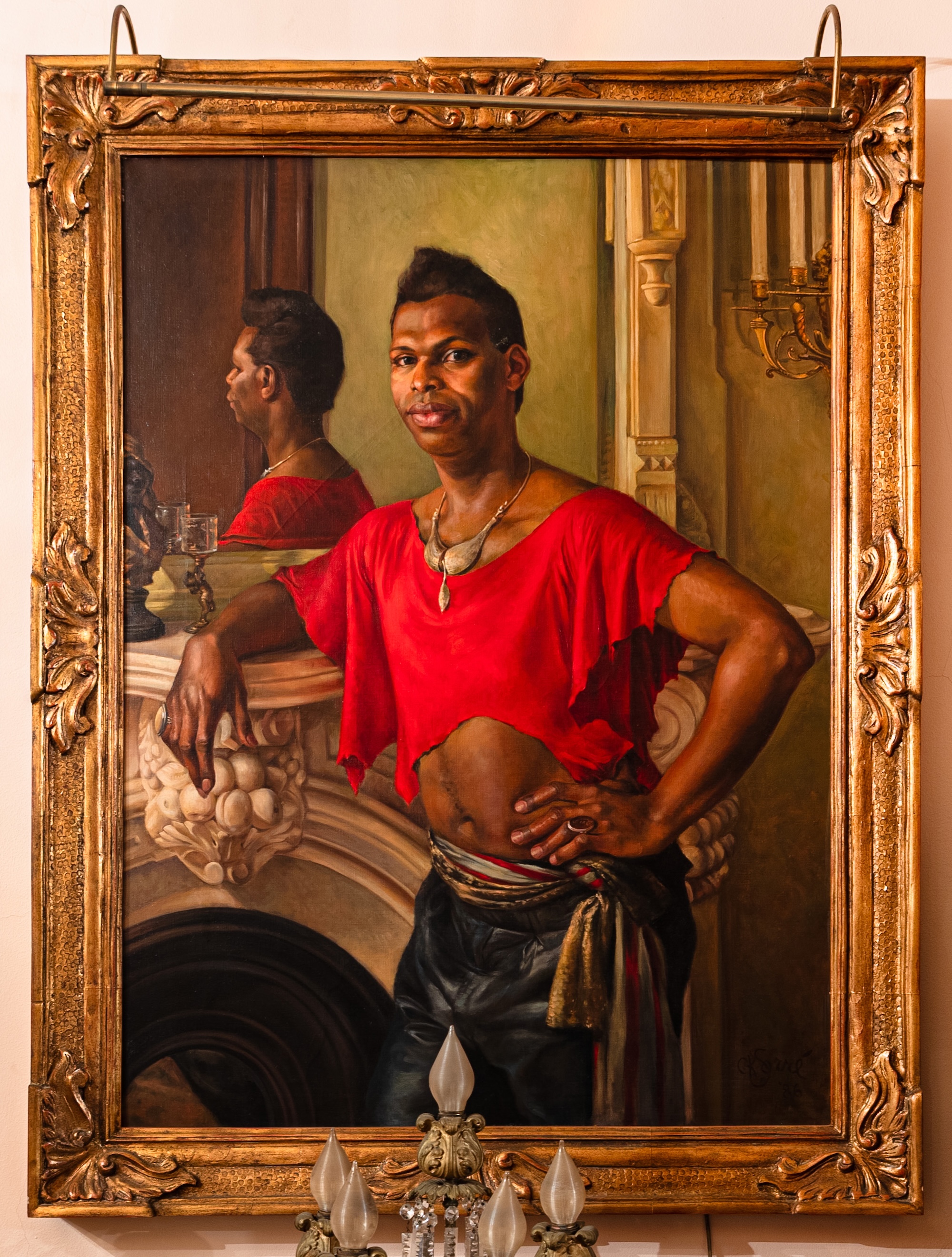
- “The Two Michaels” • Portraits by Charlotte Sorre.
-
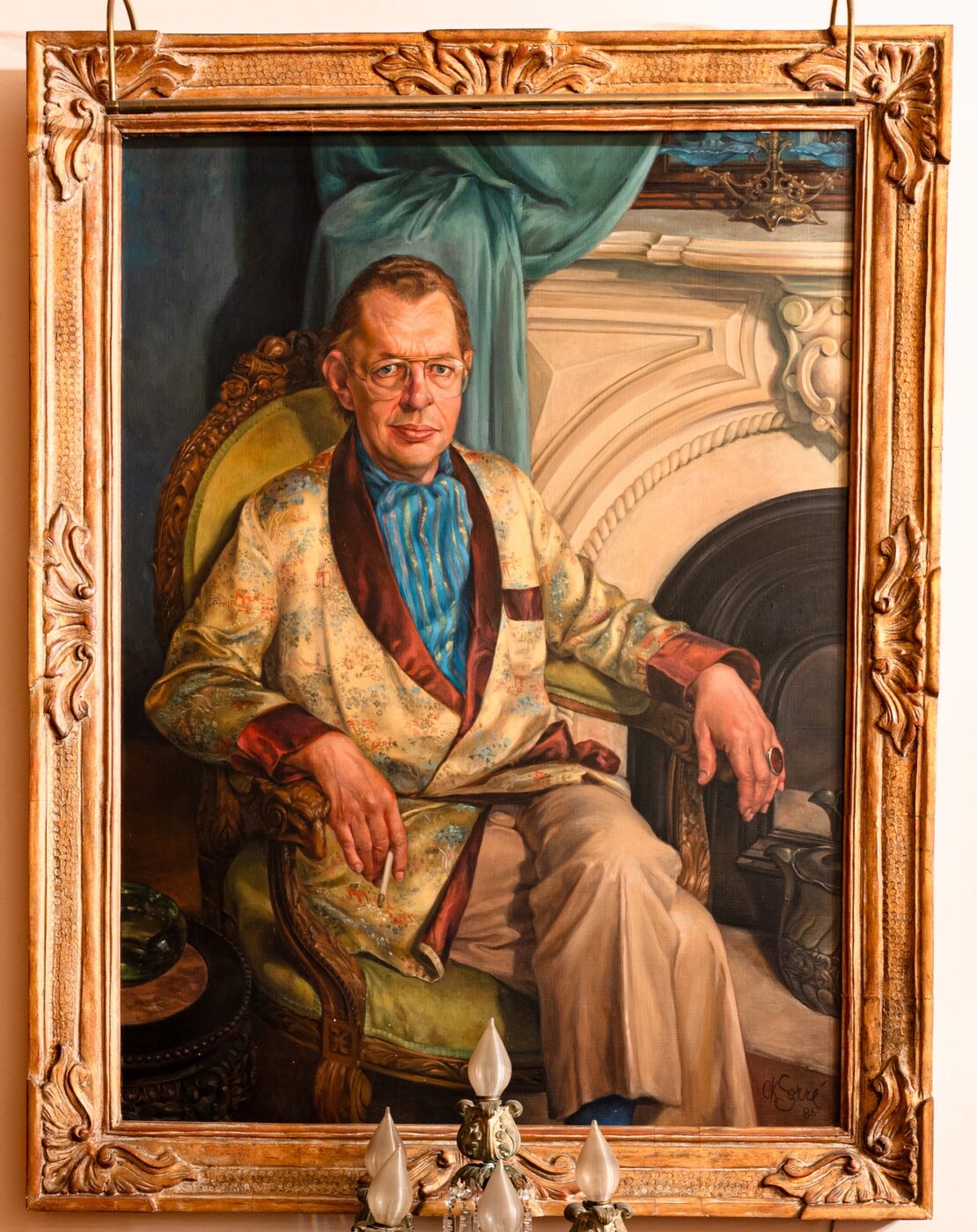
- “The Two Michaels” • Portraits by Charlotte Sorre.
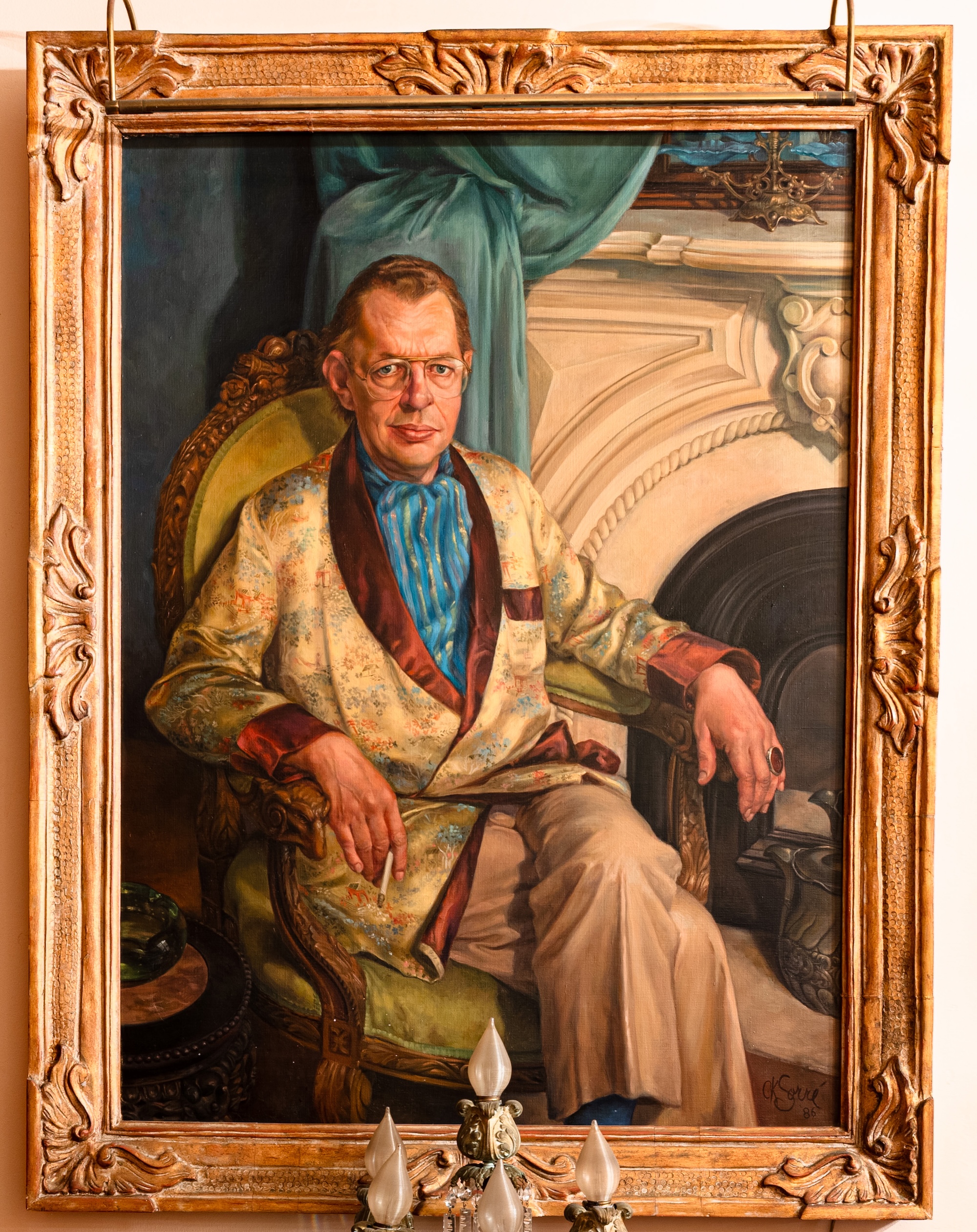
Now, I have to ask you because on the walls are the two Michaels, right? How did the other Michael feel about this collection?
We created it together. See our paintings over there?
Yes.
That’s an interesting thing because this is the front parlor of the house. And normally in a front parlor, you would have a portrait or a great photograph of wedding pictures, husband on one side, the wife on the other. So, we decided at that time, why not have two men? It’s always shocking when people come in here and they see two men on either side of the wall. And these paintings were done live. I stood at that mantel right behind you. And Michael sat in this chair here, in the back parlor.
After decades of collecting, how has the collection changed over the years, both with Michael and without Michael?
Well, I’m now collecting with Christopher, so it’s easy. But it’s different. And things are more difficult to come by. That’s why I keep saying timing is so important. I feel that I’m just a custodian of art for a while. And everything I’m living with has been held by somebody else. So, I’m just holding it for a little bit longer until the next person comes along and holds it a little bit longer.
As the custodian, what does collecting do for you?
It stimulates me. When I walk around my home, wherever my eye rests, I like to catch interesting and unusual things. And we were fortunate enough to have the resources to do it.
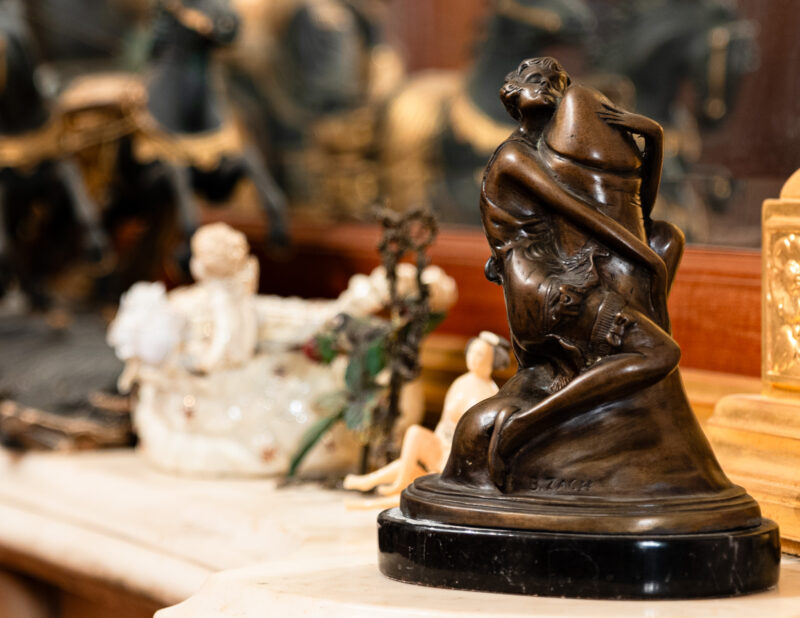
Bronze sculpture by B. Zach.
What would you say is the dollar value of this collection?
I have no idea. I did not buy it for the value. I bought it for the aesthetics. I bought it just to hold onto it for a little bit longer to pass on to somebody else. But putting it together would take a lot of time.
As a man what does it mean to see the phallus and to have your home surrounded with dicks?
I feel the manliness. And I also think now I am more interested in how my guests feel and react to the visuals as opposed to myself. When people come in, they’re shocked. And that gives me pleasure looking at their eyes for the shock. I often think that I should have a camera because the immediate response is really sort of jarring. But for me, it’s just a natural thing. And as my partner said, if you’ve seen one penis, you’ve seen them all. They’re just different shapes and sizes, but it’s all the same thing.
Do you think there’s something about staring a penis in the face that forces the viewer to celebrate the male form?
Yes. I’m also surprised at how women also enjoy it. More women enjoy it than men. When they come into this house, they say, ‘Oh! I see men finally on display!” So, it creates a totally different conversation with your guests, because you were used to seeing nude women in paintings. And nobody says a thing about it.
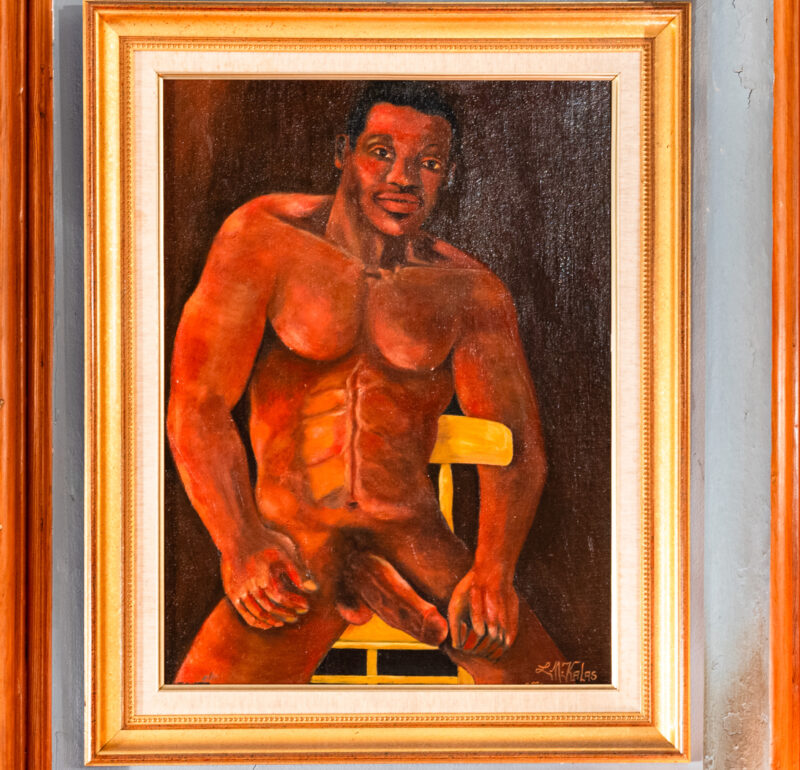
Special commission from Leon Nicholas Kalas.
How have you and Michael and Christopher managed to have so much full-frontal nudity on display –without making it all garish?
I think because the house is Victorian and most of the furniture is period. And I think with the male nudes and the sculptures and things around, it’s such a juxtaposition –it adds a quirkiness to a Victorian home. You don’t expect it. So, it’s not garish. Because it’s not displayed on a plain wall necessarily. But it’s part of an enchanted space. So much wood is here. The wood is breathing. It’s alive. And that’s really what people are feeling.
What were the marathon days like? What was the vibe?
There are multiple floors here. And upstairs, I don’t have it set up that way any longer, but during the Marathon Day, we would have pornography films showing in the back parlor with the doors closed.Y ou can drink in the house, but you can only eat downstairs. So, they would have all kinds of conversations. And as you notice, the way the house is arranged, there are chairs everywhere, because I like to create circles for people to sit down and have conversations. And so, as a host, I just walk around and see if everybody’s fine.
What’s been one of the interesting things you’ve learned with building this collection?
Go through any magazine or through any museum, you’d be shocked to find a black male nude painting.
Why?
Because of the history of how black men were viewed: over-sexualized. The way racism in America set it up is that every black man wanted to rape a white woman and every white woman wanted a big Mandingo. In fact, I have a magazine called Mandingo.
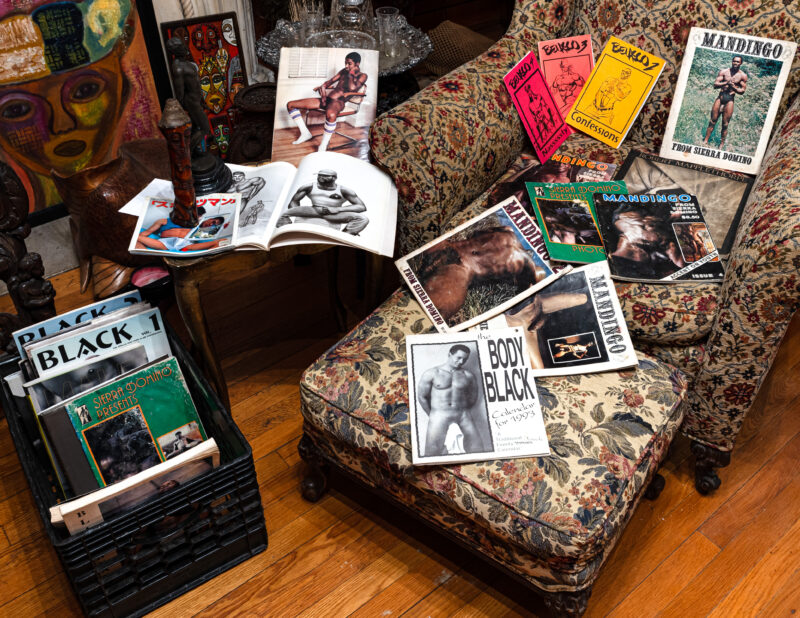
Rare vintage magazines.
So then, is there then some sort of statement being made in this collection about color?
There is. That’s why you see all these black things on the wall. “We Serve Colors Only” signage at the back, and slavery auction posters, and all the things you really haven’t noticed in the hallway. All I’m saying is that, yes, it’s intentional.
With items being difficult to find, did you ever want to give up collecting?
No. All those paintings were commissioned. They’re not paintings I just bought from a museum. Every painting on the walls was commissioned for that wall size. That’s why it fits so perfectly. The bathroom and the bedroom, those paintings were commissioned. That’s why you can’t find them. And they were all painted by a female. A white lesbian. My former partner was also white, some of them are interracial paintings together, which is also unusual. So, the paintings were intentional. Everything in this house is intentional.
Do you think that as a woman, there was something that she imbued to the painting of male nudes?
Yes. That’s why she was so good at painting.
Why do you think collections like this are not more common in private or public spaces?
I think a lot of it is just fear. And I think, whether you’re gay, straight, or whatever you are, it’s the fear. Because the male nude, especially the black nude, even though it’s desirable, evokes fear.
Do you think you’d have been able to amass a collection like this any other time?
The answer is no, because people are afraid. I recall the conversation I had with a buddy of mine, he’s long dead, asking me to come to his apartment to dispose of photographs and art of black male nudes. He was fading out and he didn’t want his family to see his collection of things that he had. So therefore, that’s why I say timing is everything. I was able to see and help dispose of things. Things are disappearing in a sense that they’re not available. The periodicals that you’re looking at now, you can’t go buy anywhere.
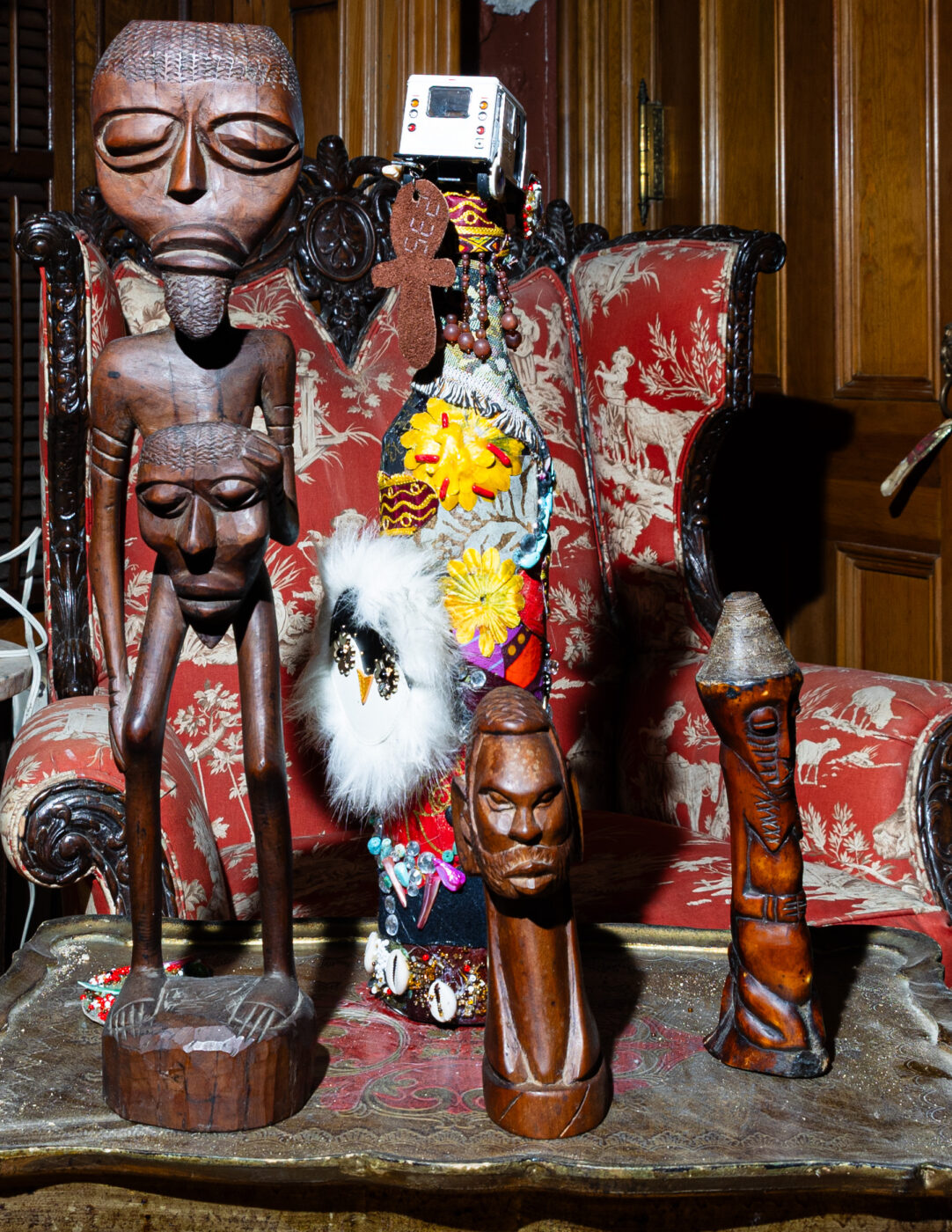
Select African phallic statues flank a special multi-media phallic work by Ramani Edmondson.
Do you think that social media have made the male nude too ubiquitous?
These photographs are posed. They’re not just somebody standing up and taking a picture of themselves and then posting them. These pictures are posed by a photographer with lighting for a particular time, a particular period. And if you look at them, you will be able to see the change in the clothing and the change in the attitude of the models as they go through life. With your phone, people have thousands of pictures, paying attention to none of them. With the magazine, you hold it in your hand, and you can linger on one photo. And you can think. You can go back and revisit it.
It almost makes gazing upon the male form a sacred act, in a way.
It is. Some people go to the right, some to the left. We laugh, but they do, actually. And I think if we really studied penises enough, they probably all have their own fingerprint and identity. Because they all look alike but they all look different. I assume the vaginas are the same.
What’s the story behind the ceiling panels?
While the house was under restoration, those four panels were all white plaster. So, I’m sitting back there with Michael, and I said, ‘What can I do with this ceiling that’s unusual?’ And I said something with a Black theme. Then we went to Greek mythology, which turns out to really be African mythology. And that’s how I conceptualized the custom murals of Casper and Pollux, Achilles and Zeus and Swan. That’s all connected. And it’s Black people, not slaves. Because Black bodies in most paintings, especially older paintings, are displayed as servants. And I wanted something that was not a servant. And through mythology, you can breathe and tell another story. And therefore: Black Gods on my ceiling.
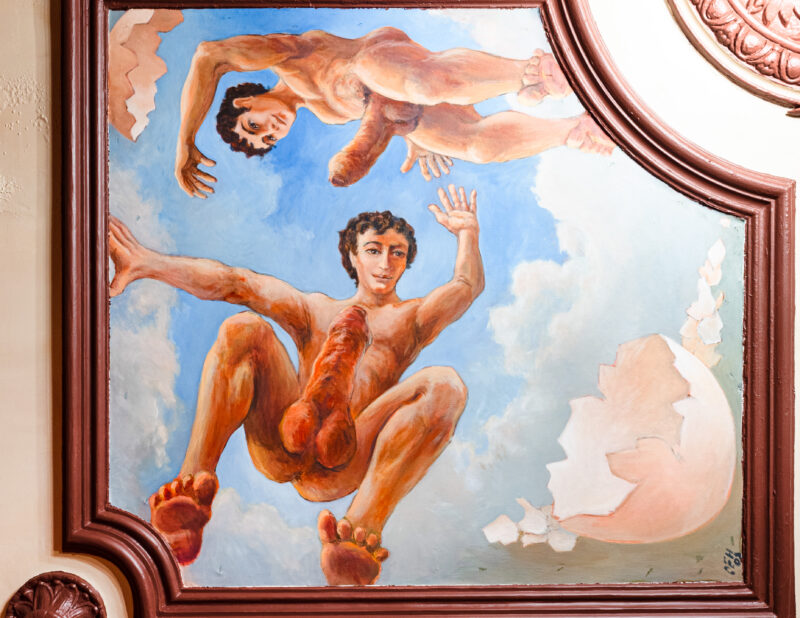
‘Castor and Pollux’ • Special commission ceiling fresco from Charles Foster-Hall
Would you say that love is the frame for the collection as well?
Of course it is.
How so?
The whole house is love. That’s the warmth of it all. And two people coming together with one mind and creating something together. And I get another chance with Christopher –to create something together. And most people will never have that experience once –let alone twice. Every piece of furniture, every object in here has a story. How it came into your life. How it came into the house. Where did it come from? And I still can remember everything.
Do you have any advice to give the readers about collecting?
Collect what you like. And once you collect what you like, you look for it. Don’t buy it for value.
Why?
Because certain art pieces over time depreciate in value. Everybody thinks everything goes up forever now. And then you’re stuck with a piece of art you overpaid for, and you don’t like anyway.
Final question. Silly one! Is it okay to stare at a penis?
Absolutely. Why not? And touch it.