
Everyone on Netflix’s newest reality series Age of Attraction insists they can’t tell how old their dates are, as they go rafting and mountain biking in a lush, Eden-like resort. I’d be more likely to believe them if the contestants—40 singles between the ages of 22 and 60—didn’t dabble in fillers or Botox or use Touch of Gray or feel the near overwhelming need to discuss Taylor Swift, but then again, that isn’t the point. Age of Attraction asks contestants and viewers alike to believe in the old adage that age is just a number, something that can be ignored in the pursuit of, as hosts and real-life age-gap relationship couple Nick Viall and Natalie Joy put it, “the connection of [their] dreams” built on “attraction, compatibility, and chemistry.”
I’m no stranger to age-gap relationships. I’ve dated men 10, 16, and in one case, 20 years older than me, with mixed outcomes. But despite seeing myself in some of these couples, like 22-year-old Libby and 38-year-old Andrew, they weren’t the ones that held my attention. It was the older women in their forties and fifties finding love with younger men that I found more compelling. Watching them go on dates, chat with the other women about who they were interested in, and embrace the attention they were getting felt far more revealing than Age of Attraction’s central premise. Are we finally seeing the normalization of older woman–younger man pairings, both on TV (Netflix’s Deceitful Love) and in real life? What if “older” women were still allowed to be openly pursued and desired without being reduced to MILF stereotypes? Age of Attraction challenges the idea that female desirability has an expiration date, something Viall and Joy are excited to be part of.

‘Age of Attraction’ • Photo courtesy of Netflix.
“When we see an older guy with a younger woman, we might make jokes and there might be some snarky remarks, but we’re also simultaneously still used to seeing it,” Viall tells Playgirl. He and Joy, who have an 18-year age gap themselves, introduce that fact to the contestants early on in the series to normalize the idea of dating outside typical age ranges. “I feel like our society doesn’t give women that same grace.”
“You watch [these women] start to feel so empowered and come into their own and really start to be like, ‘Wait, no—I can do this. I want to do this. Why can’t I do this?’” says Joy. “I really hope that this starts to make women not feel ashamed of who they’re attracted to, who they’re compatible with, who they have fun with, and who they ultimately want to go out in public with.”
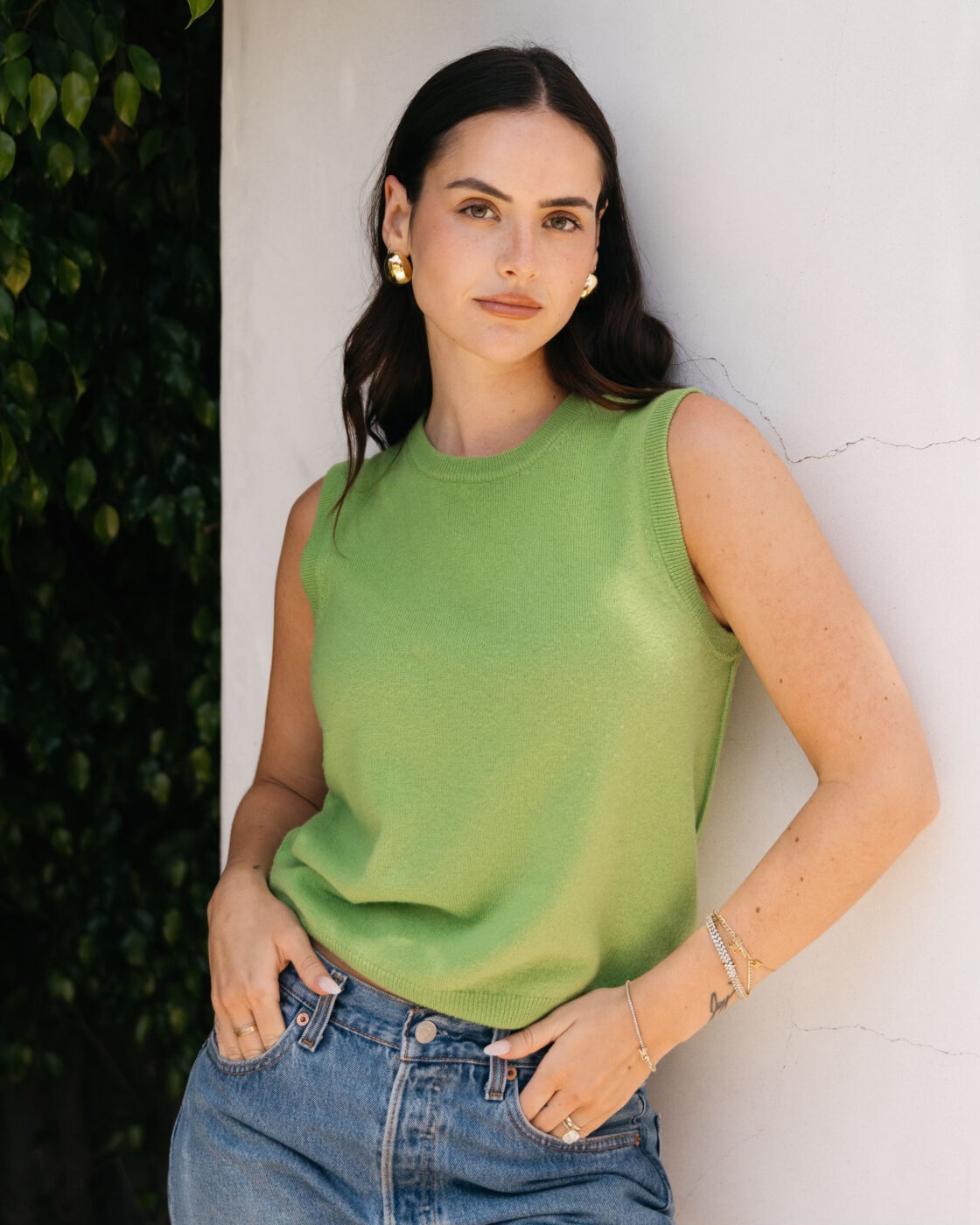
Natalie Joy.
One of Age of Attraction’s most talked about contestants is 54-year-old Theresa, a stunning blonde whose chemistry with 27-year-old John—who is just two years younger than her eldest son—gives her a noticeable and contagious rush, even as she worries about how their relationship might be perceived by their friends and family outside the resort.
Viall believes that women like Theresa deserve the opportunity to navigate these relationships, even if there’s a chance they don’t work out. Just like older men, he argues that older women “are entitled” to enjoy relationships that let them “feel a little more vibrant” and reignite their passion and sexuality.

‘Age of Attraction’ • Photo courtesy of Netflix.
Case in point: 41-year-old Leah’s sexy but intense relationship with 26-year-old Chris. Although their relationship is (spoiler alert!) short-lived, viewers get to see Leah, a confident, energetic woman enthusiastically and openly enjoy connection and intimacy (“How do you want me?” she asks Chris as he carries her to the bedroom) without ever questioning whether or not she deserves it or if this is her “forever person.”
Stories like Theresa’s and Leah’s feel part of a larger conversation about women, aging, and the question of who gets to feel wanted after a certain age, something the men on the show don’t seem to stress over as much (see: 60-year-old Jorge, who moves with the confidence and energy of a man half his age). Across film and television, older women pursuing younger men are appearing more frequently and with far more nuance than before (Jennifer Coolidge as Stifler’s mom, anyone?). Around the same time as Age of Attraction’s premiere this past March, Netflix released Vladimir, a series adapted from the 2022 novel of the same name by Julia May Jonas that follows Rachel Weisz as a middle-aged creative writing professor drawn to a younger married colleague. In Babygirl, one of 2024’s most talked-about films, Nicole Kidman plays an ambitious tech CEO who begins a kinky affair with a baby-faced intern. And in 2025’s Marty Supreme, Gwyneth Paltrow plays a former actress who has an affair with an aspiring table tennis champion, played by the forever boyish Timothée Chalamet.

‘Age of Attraction’ • Photo courtesy of Netflix.
It’s interesting that these stories of older women navigating these kinds of relationships are emerging at the same time as our cultural anxiety around aging seems to be intensifying. Online, there’s increased speculation about which 30-something-year-old celebrities have secretly had facelifts. “Redpill” accounts continue to obsess over women “hitting the wall.” On TikTok, influencers shill anti-aging products to their viewers, many of whom are too young to even benefit from skincare in the first place (possibly in response to this, actress-turned-entrepreneur Shay Mitchell launched a skincare line for children ages three and up with the goal of turning skincare into an opportunity for bonding and exploration). When the cast of HBO’s Euphoria hit the red carpet for the series’ season three premiere, fans were quick to comment on how “good” 35-year-old Alexa Demie “looks for her age.”

Natalie Joy and Nick Viall in ‘Age of Attraction’ • Photo courtesy of Netflix.
It sounds bleak, but that’s exactly why Age of Attraction is, despite its shaky premise, so refreshing. The series might not definitively prove that age isn’t a factor in relationships, but it’s satisfying to see women over 30 as the object of desire, especially in a culture that constantly warns women about aging out of relevance.
“There’s power in having that lack of fear in relationships,” says Viall. “Don’t let outside voices or your own internal fear stop you from exploring what feels like a great and healthy connection.” After years of being conditioned to worry about aging, youth, timelines and desirability, that might just be exactly what women need.
Age of Attraction is currently streaming on Netflix