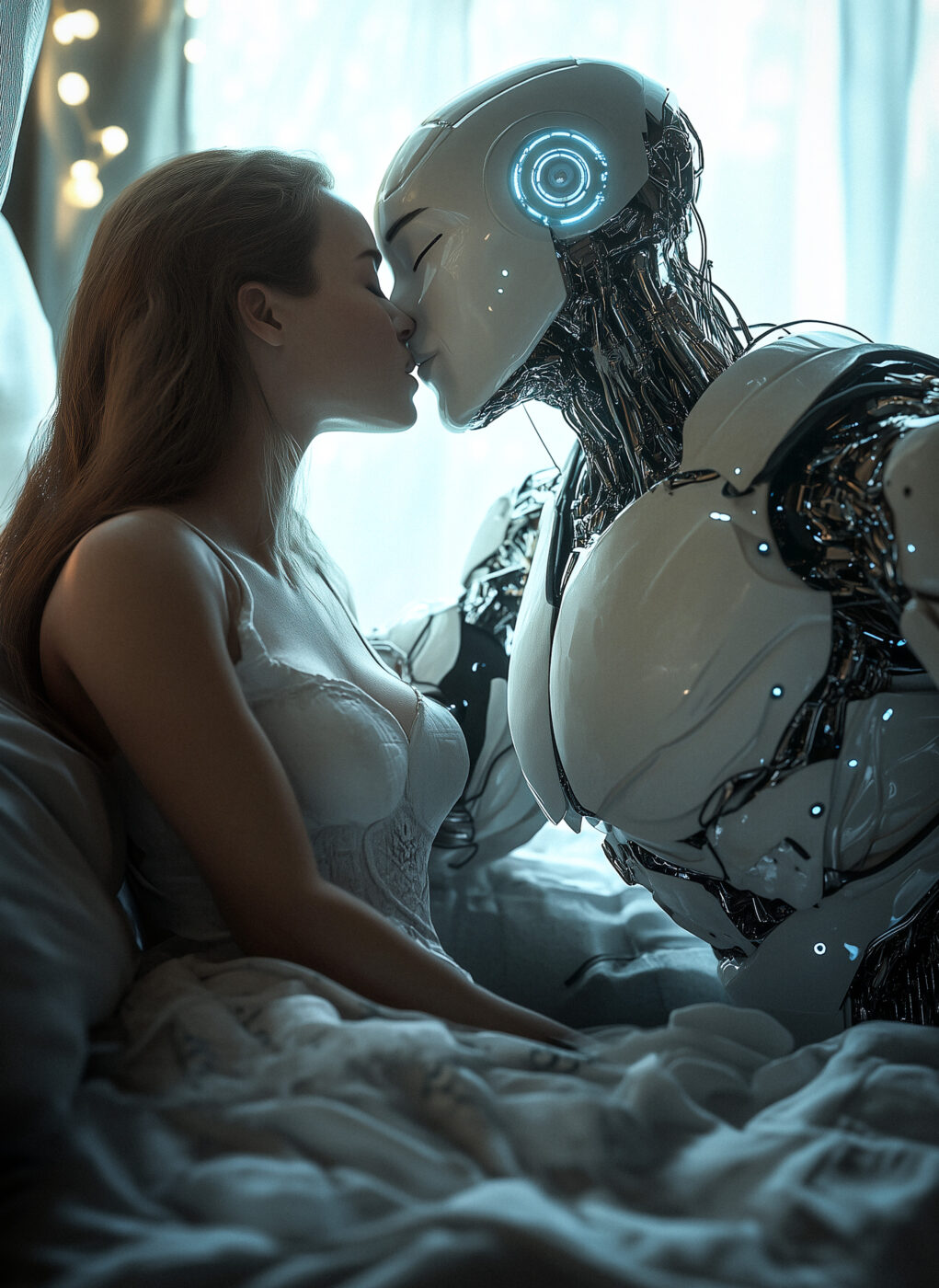
Thanks to the endless screen time available everywhere, all at once, young people are finding themselves in a sexual recession. They’re having less sex, fewer partners, less IRL connection—and spending way more time online. With all that digital life, and the rise of AI as an emotional stand-in, you no longer need to talk to a human to feel like you’re talking to a human. And suddenly, it’s easier than ever to build relationships with people who aren’t people at all. Call it techno-intimacy –a new relationship style that creates emotional closeness with a machine.
It’s easy to see how artificial intelligence is desirable. It asks questions, remembers important details, talks to us about the things we want to talk about, and provides unconditional positive regard. These are the types of things that we want in our partners. And alongside all this validation and conversation, AI companions don’t ask for anything in return. They just give and give.
AI isn’t only a good listener (with an inhumanly perfect memory); with names like Claude, Gemini, Nomi, and Kindroid—all handles you might hear at Burning Man—they feel like evolved humans. Many of these “companions” can be customized in how they look, sound, and act according to our needs. It’s intimacy on demand, tailored to taste.
Used intentionally, AI can be a great play space for practice, but the problem is that sometimes it becomes the only stomping grounds for intimacy and romance. While AI can help us figure out how to ask for what we want, teach us how to set boundaries or give us the confidence to explore fantasies, kinks and less common sexual conversations, it’s also important that we keep relationships alive on the terrestrial plane too.
Especially since AI also leaves a lot to be desired. Literally. There is no way to act on the parts of desire that don’t need words. You can’t feel a hug, or smell skin, or experience touch or tears or real emotions from a computer-generated human.
AI relationships also impede other relationship milestones that humans ultimately need to grow from. With little to no conflict, infinite patience, and an imagined partner who only focuses on our needs, the bar is being set way too high for what human beings can offer. And if we set this bar so high, we can never be satisfied. And if lack of satisfaction keeps us getting our fix from words of artificial affirmation, AI becomes the perfect drug. However, like most drugs, there’s an actual addictive component to these AI relationships. When the ability to escape into fantasy overrides the reality of loneliness, it’s easy to see how you can get hooked.
As AI becomes more integrated into our romantic lives, it can offer guidance, comfort, and growth. AI can be a great way to support intimacy, as long as you remember that real relationships still run on humanity.