A billboard in light-drenched Times Square. A man—shirtless, a snake tattoo encircling his muscular shoulders, sculpted abs fully on display—smirking into a mirror. A message, scrawled with red lipstick on the glass: MAC IS AT SEPHORA.
Rob Rausch, a straight-presenting, Alabama-born snake-catcher-turned-reality-star who rose to fame after competing on Love Island and winning The Traitors, feels like an unexpected choice for a messenger. The cosmetics brand has built a reputation for artistry and experimentation, often showcasing stars that favor more exaggerated makeup looks like Lady Gaga, Chappell Roan, and the drag and Broadway communities.
At first glance, the ad feels like the inverse of the Carl’s Jr. ads of the 2000s, which featured lithe women in bikinis gyrating on mechanical bulls. But over the past few decades, men have carved out their own space in the beauty (or “personal care”) market.
Despite cosmetic body art being one of the earliest forms of human ritual, with traces throughout history in tribal expression, aristocratic dress, and rock n’ roll, makeup is still not conventional for men. Instead, it’s usually found in the margins—according to Warpaint: Male Makeup and Identity Through Time by Josh Sims, “…members of the gay and trans communities could paint their faces not simply as a means of facial decoration but as an expression of identity, protest, and resistance. Much as women today might choose to break enforced beauty standards by choosing not to wear makeup … so, historically, could the queer community kick against the system by wearing it.”
But at least in the mainstream cultural imagination, male cosmetics are less self-expression and more a necessary means of self-preservation. Attempts to popularize makeup for men have always been aggressively masculinized—brands like “War Paint,” “Stryx,” “Man Glaze” or perhaps the explicitly named “Formen.” Makeup was marketed to men as functional, not vanity. Men’s Health encouraged their readers to “think of [makeup] as camo for your face.”
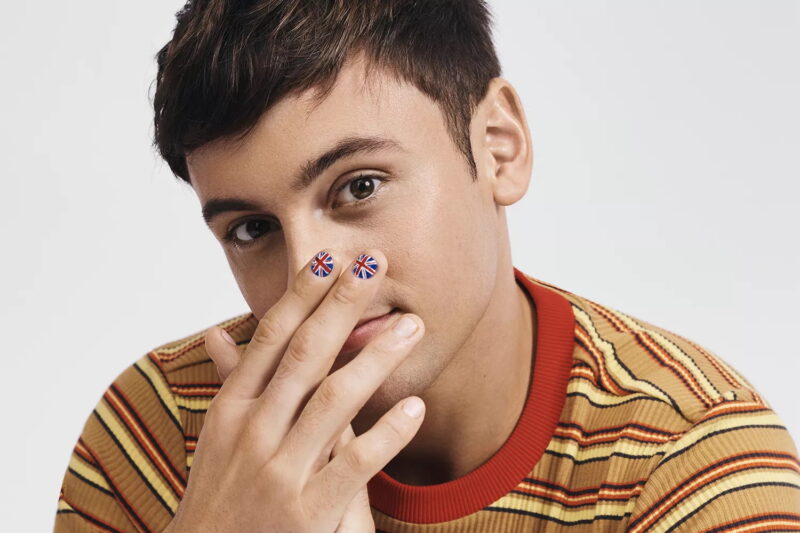
Tom Daley for Rimmel • Photo: Benedikt Frank.
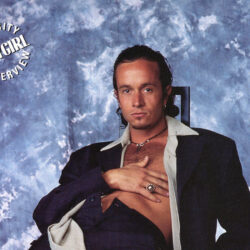
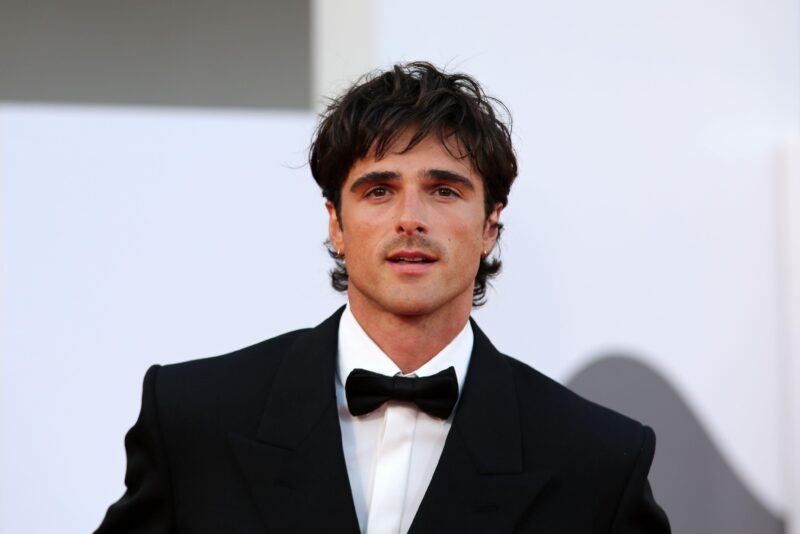
Men have typically fronted for cosmetic brands as a sign of inclusivity: YouTube beauty guru James Charles for COVERGIRL in 2016, Olympian Tom Daley for Rimmel London in 2022, Harris Dickinson for Rhode in 2025.
“I really, really want Rhode to just feel like a world that’s open to anybody who gravitates towards it and just wants great skin care with great packaging, storytelling and imagery. That’s why I like bringing a male face into it because I want everybody to see themselves in the brand and in the imagery at different points,” [founder Hailey] Bieber explained.
Women’s Wear Daily calls this “heartthrob marketing,” the idea that consumers also feel seen when their desires are represented: “You get this mix of entertainment, fandom and social media virality all in one: people want to talk about it, share it and meme it.” Beauty brands know that certain faces break through the noise of a saturated media landscape more than others—at the 2026 Golden Globes, Milk Makeup used Heated Rivalry star Connor Storrie’s appearance on the red carpet as a teaser for an unreleased complexion product.
The surface-level read here is that sex sells. Using men to advertise to women is not new, but they have generally functioned purely as avatars of sexual desire. Now, they’re “internet boyfriends,” more than the sum of their perfectly formed parts. Rausch’s shirtless selfie and pouting lips may be the hook, but it’s just one part of a constructed image as a man that not only desires but understands women. In a Page Six interview about his partnership with cosmetics brand Kosas for its Lip Pulse lip plumper, Rausch admits that he was previously unaware of both the brand and the product, but was encouraged to participate by his girlfriend. “She was excited about it, so I got excited too,” he says.
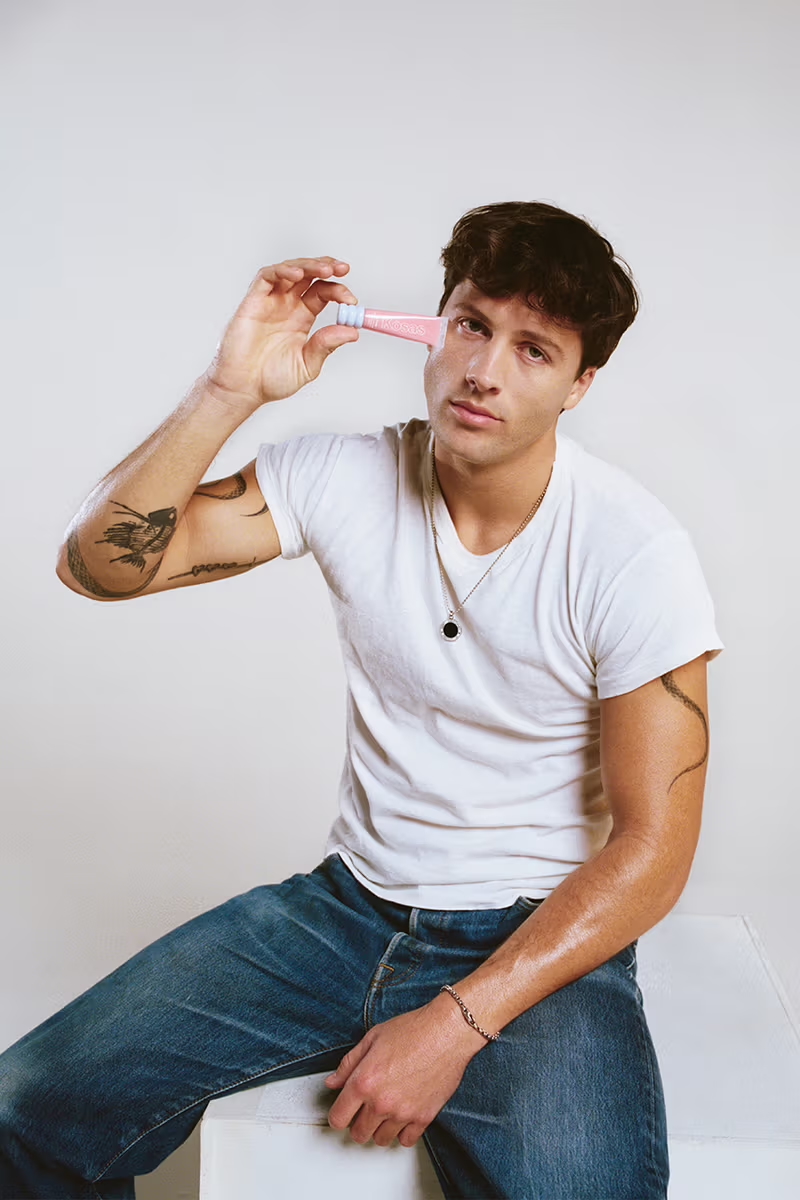
Rob Rausch for Kosas.
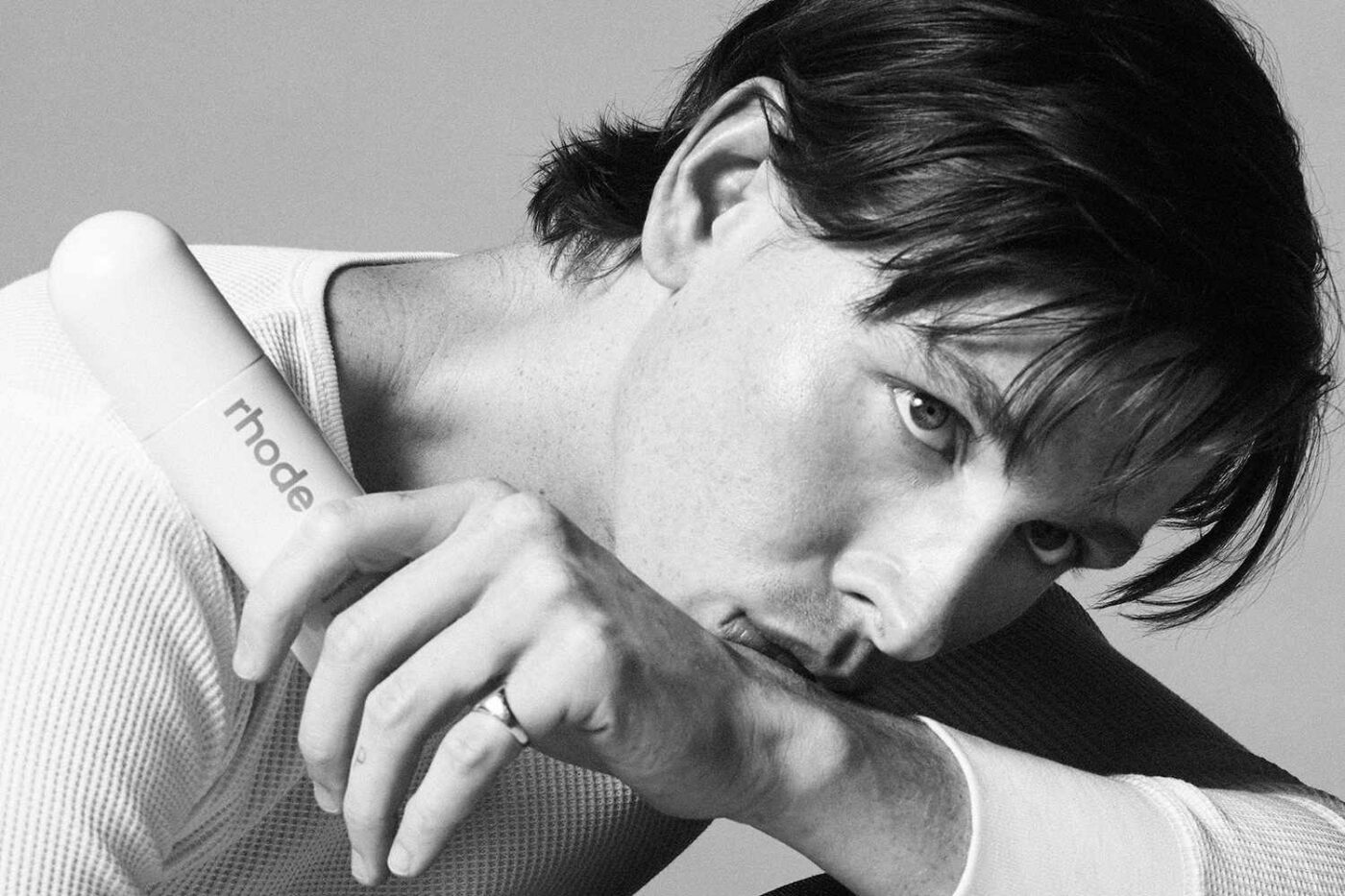
The new generation of heartthrob ambassadors are selling a different kind of fantasy and appealing to a different dimension of the female gaze, one trained on softer, nontoxic masculinity. “There’s a quiet seduction to the black and white campaign images of Dickinson posing with the Glazing Mist and his lips pressed against his arm. In another photo, his doe eyes are looking up with dewy skin from the product,” writes Women’s Wear Daily about the Rhode campaign.
Last year, “performative male contests” went viral across the country, a pointed satirization of men that adopt feminine-coded interests (matcha, feminist literature, trinkets) in hopes of attracting women. But gender has always been a performance—these contests, as well as the rise of “looksmaxxing,” or the practice amplifying gender-affirming traits—simply highlight its artifice. The spectrum of men consuming matcha and bell hooks to men smashing in their cheekbones with hammers is performance for two diametrically opposed gazes: the female and the male. Journalist Katy Ho writes that the contests indicate men’s growing understanding of the female gaze.
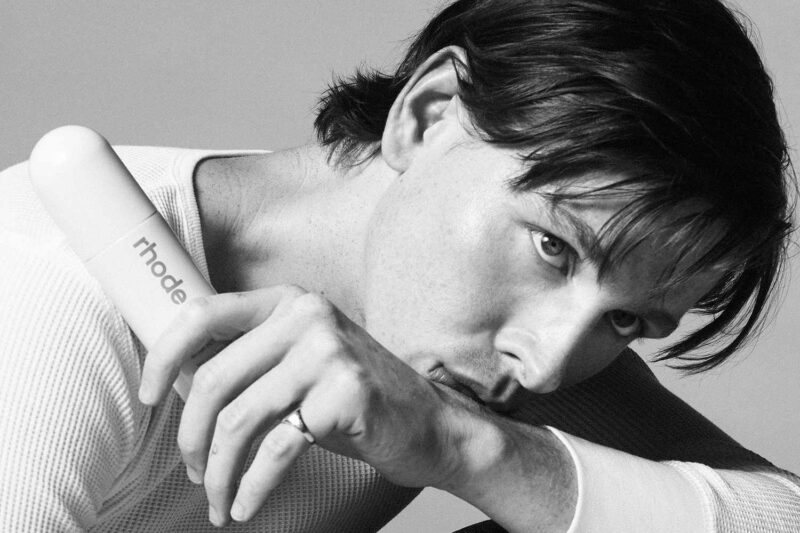
Harris Dickinson for Rhode.
Ho also makes the argument that “Men should be allowed to read feminist literature, listen to female artists, and take care of their appearances without becoming a punchline.” But he forgets that the punchline is one set up by the patriarchy and perpetuated by men. The male beauty movement insinuates that men, too, should strive for aesthetic improvement, rather than interrogating the way that aesthetic improvement has been framed as a path to self-actualization. Makeup can be a fun and experimental, but men submitting to beauty norms is merely carving out their own slice of the choice feminism pie. Perhaps true empowerment lies not in asserting that makeup for men is socially acceptable, but in questioning its social necessity at all. Everyone deserves to feel good in their own body, but it’s not truly liberating until that desire is disentangled from external pressures.
After all, cheeky beauty advertising is still selling something, even when dressed up with a megawatt smile and glistening abs. “Pairing a guy with something like this is actually pretty smart. I mean, who doesn’t want good lips?” Rausch reasoned about promoting the Kosas campaign. But to his 2.1 million Instagram followers, Rausch is perfect just the way he is.