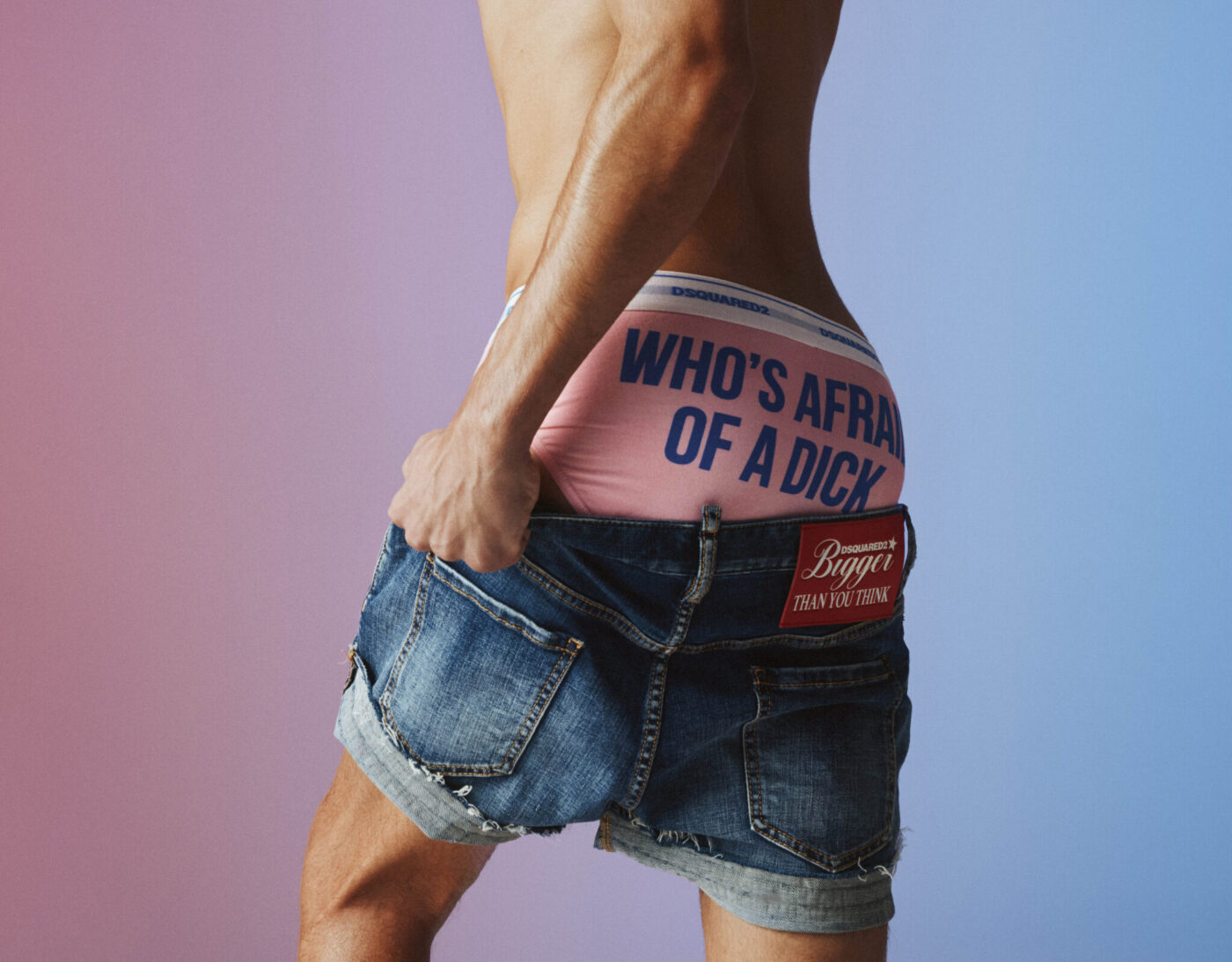
“Americans have a big stigma when it comes to nudity,” supermodel Mark Kleckner told Playgirl in 1994. While it’s true that Europeans exhibit a more relaxed attitude towards it, nakedness –male nakedness– has long been either celebrated (by the ancient Greeks and by Renaissance artists, for instance) or condemned (by the Catholic Reformation or today’s anti-porn crusaders). But it’s never been a straight line. The cultural pendulum has swung back and forth between these two opposite views, across space and time: from paganism to medieval art and the Gothic conception of the nude, rooted in the original sin and the onset of shame (“Then the eyes of both of them were opened, and they realized they were naked; so they sewed fig leaves together and made coverings for themselves,” Genesis 3:7); from Michelangelo’s The Last Judgement to the genitalia painted over with drapery, to those ‘additions’ removed in 1994.
Where’s the pendulum today? Playgirl was born of the sexual revolution and the feminist movement. “The magazine and mission felt different, revolutionary, an assertion of a sexuality that had, until then, been denied,” observes former Editor in Chief Michele Zipp. If the mission was equality – “to oppose the double standard of expectation for women’s and men’s sexual expression–” and if the magazine’s “true legacy,” opines Esquire, “is the way it normalized sexually objectifying men,” we can’t help but wonder, has it really?
In Greta Gerwig’s film Lady Bird, the title character buys a copy of Playgirl magazine, a scratcher and a pack of cigarettes, upon turning eighteen. “When I was about eleven, she [my mother] bought me a Playgirl magazine,” writes sociologist Angela Jones, “so that I could see real men’s naked bodies.” And Mickey Boardman, Playgirl’s Creative Director: “One day at the 7-Eleven, I fell in love with Playgirl. It was displayed behind the cash register with the other sexy magazines like Penthouse and Hustler, but this one was different: it unashamedly celebrated hot men.”
Over the years, fans and Gen X contributors have shared similar memories: some stole the magazine at the newsstand, some leafed through it in their aunt’s living room… Playgirl was their introduction to the penis (and often the first chapter of their erotic lives). But two decades into the 21st century, the penis is still a ‘problem.’ Even if drawn 500 years ago by Leonardo (his “Vitruvian Man” was shown without genitals in the opening credits for the Winter Olympics). A ‘problem’ we confront every day here at Playgirl, jumping through all sorts of hoops whenever pitching an interview, or casting an editorial. “To show, write or talk about the penis,” explains Peter Lehman, “creates the potential to demystify it and thus decenter it (…) There is no doubt that the sexual representation of the male body in general and the penis in particular remains a strong cultural taboo.” Today even more so than in 1973.
So, who’s afraid of the big bad dick?
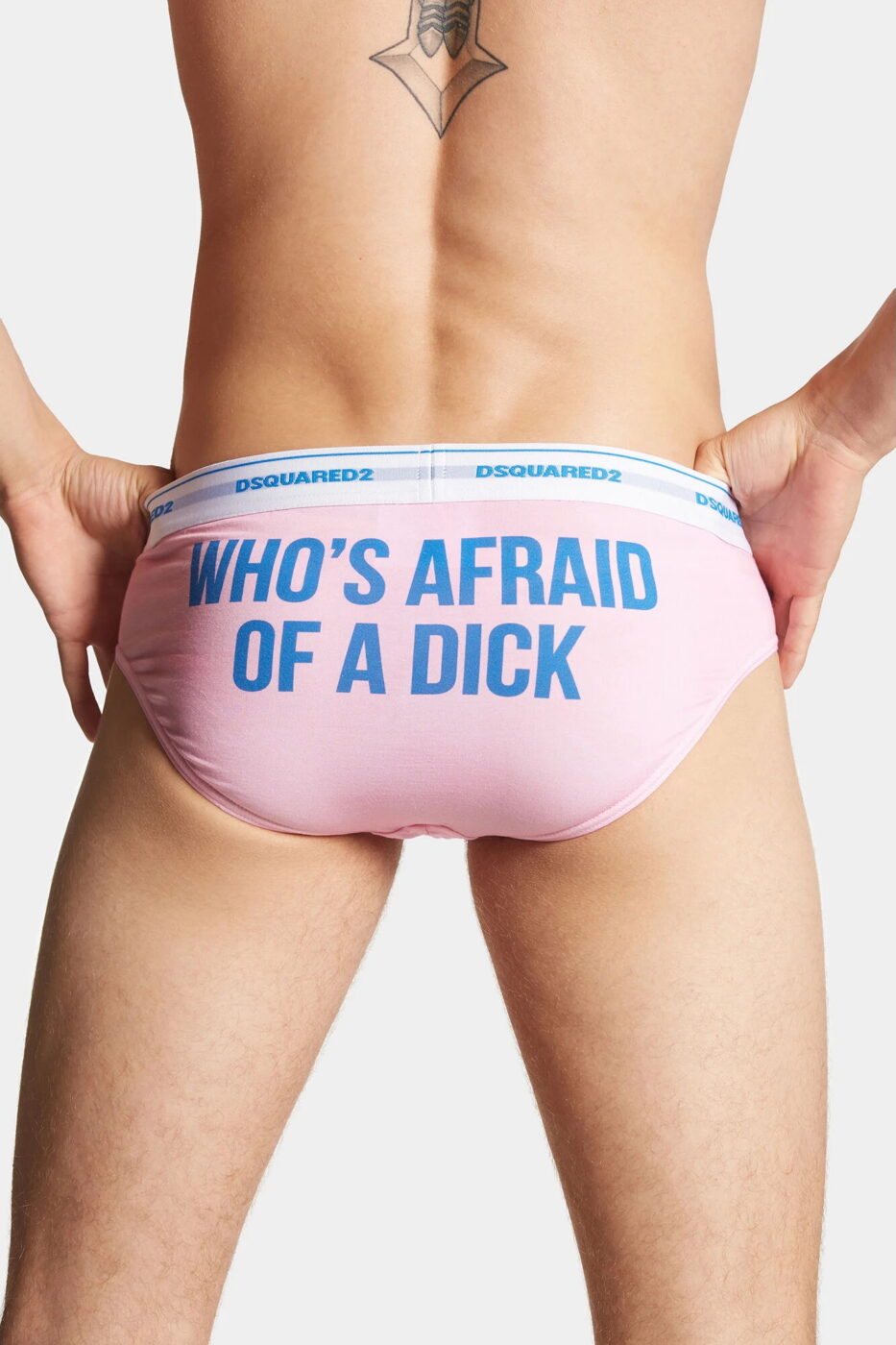
Rocco Siffredi X Dsquared2 • Photo: Christian Oita.
Talent agencies
If a model is signed with an agency, we reach out to his representatives. Often prejudiced, no matter what we do and what we tell them. The very polite answer: “Not sure if we have a guy that would be comfortable shooting nude. With that being said, these guys below might be ok shooting implied nude/butt shots (no frontal).” The biased answer: “I am not sure PLAYGIRL old brand or new brand is the right look for our models. We are looking for more of an upscale feel.” The borderline offensive answer: “Let me be very clear. None of my models do nude or implied at all!!!” [three exclamation marks. Turns out they do –on Onlyfans]
These representatives may spend thousands of dollars to go see Michelangelo’s David in Florence or Rodin’s nudes in Paris, but they wouldn’t lift a finger to contribute to the next work of art. “The nude is, after all, the most serious of all subjects in art,” posits Kenneth Clark in The Nude. They seek ‘high fashion photographers’ but ignore that the best of them have worked extensively at the male nude –Avedon, Barbieri, Gorman, Mapplethorpe, Newton, Platt Lynes, Ritts, Testino, Weber– and many have in fact worked with and for Playgirl magazine. They aim for an “upscale feel,” but what they really mean is that the penis can only be thought of as ‘distasteful’ and the magazine that dares to expose it as “extremely cheesy,” so a booker once scorned it. Never “bold, revolutionary” and forward-looking.
We’re making progress, though: a few agencies have opened their doors in the US and the EU. They’re often run by women bookers, all more supportive than their bigoted male colleagues: These women aren’t Running Scared.
Managers and publicists
Their job is to ‘manage’ their clients’ image. Which includes shielding them from scandals and negative press. But we aren’t talking nudity here (frontal or implied) – very few celebrities have posed nude for Playgirl over its 53 years. We’re talking perception: What does it mean to be featured in a magazine that also publishes male nudes? Some PR firms boldly embrace its sex-positive, unconventional vibe and its progressive stance (Playgirl maintains fruitful relationships with The Lede Company, Next Management, Caprio Media Design, FerenComm…) Some value and in fact court the controversy that may arise. Some welcome the opportunity to change public perception, whenever a client feels boxed in. Many more, however, either choose to ignore our pitches or to send us ‘canned answers’ that run the gamut from politeness –“Thank you so much for this offer, X is shooting a movie at the moment” and “We kindly pass at this time”– to thinly veiled contempt –“Not the right fit for Y” or “This isn’t for Z…” Don’t be a dick, Mr. Publicist.
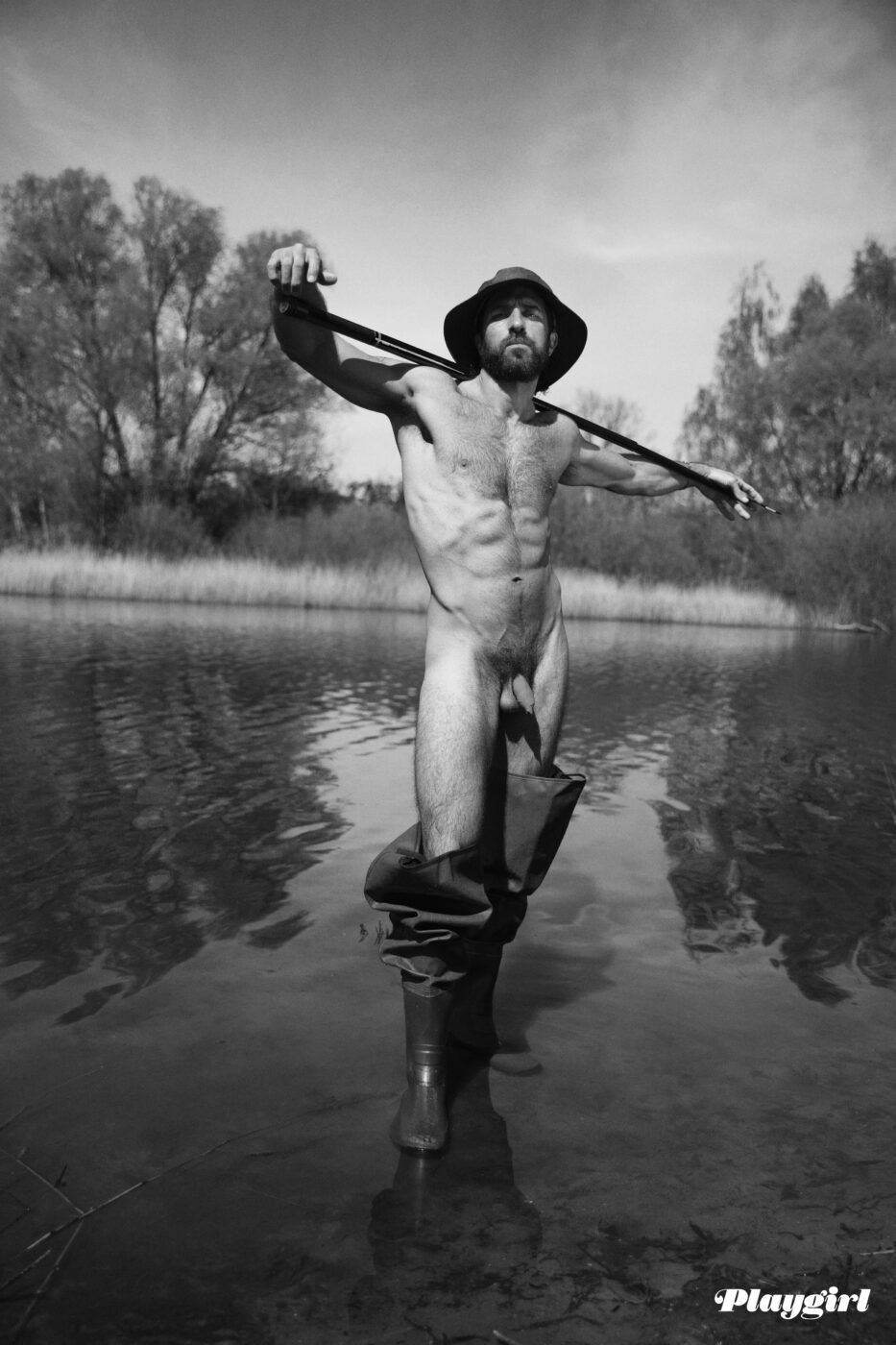
Ivan • Photo: Suzana Holtgrave.
Photographers
A number of women have famously contributed to Playgirl magazine over the years –Silvia Pecota, Carol Weinberg, Suze and Holly Randall; Suzana Holtgrave has shot two PlaygirlPlus pictorials since the 2022 reboot. But the majority of Playgirl’s nudes were and are being photographed –surprise– by gay men. As much as we’d want women to reimagine the nude and to explore the nature of female desire, we didn’t have much luck with them. Not necessarily because they are less motivated, or more prudish than their gay colleagues. Because of the external restrictions that culture placed on the female gaze (and female agency).
Talent (men AND women)
A few common scenarios: Candidate A can’t make up his mind about going ‘full frontal’ (his girlfriend doesn’t want him to, his parents can’t know about it, the money isn’t enough); candidate B is interested, but his sponsors won’t let him; candidate C gets cold feet and cancels last-minute; months after publication, our Man of the Month demands that we remove his Instagram handle and change his name. These are all par for the course, when running a publication like Playgirl. But these two other anecdotes are not –and they speak to the cultural taboo and the hypocrisy around it:
Anecdote 1. Playgirl publishes a series of interviews (“The Photography of…”) with artists committed to exploring the male nude. Images (implied nudity only) are provided by the interviewee himself to illustrate his/her work. On one occasion, two well-known fashion models requested that we take down their pictures as displayed in the interview with photographer XYZ. “Both guys are not interested in being named or featured in Playgirl Magazine,” their agent wrote us, threatening legal action, but ignoring those pictures would easily fall under ‘fair use:’ “Named in Playgirl,” imagine the horror! Both fashion models run their Onlyfans pages, both have been accused of queerbaiting.
Anecdote 2. She’s a very famous actress, a fierce activist and an outspoken feminist. But she refused to be interviewed by Playgirl: “I can’t be seen next to a naked man!” she protested. When it’s about freedom of sexual expression, she found it easy to talk the talk, not so easy to walk the talk.
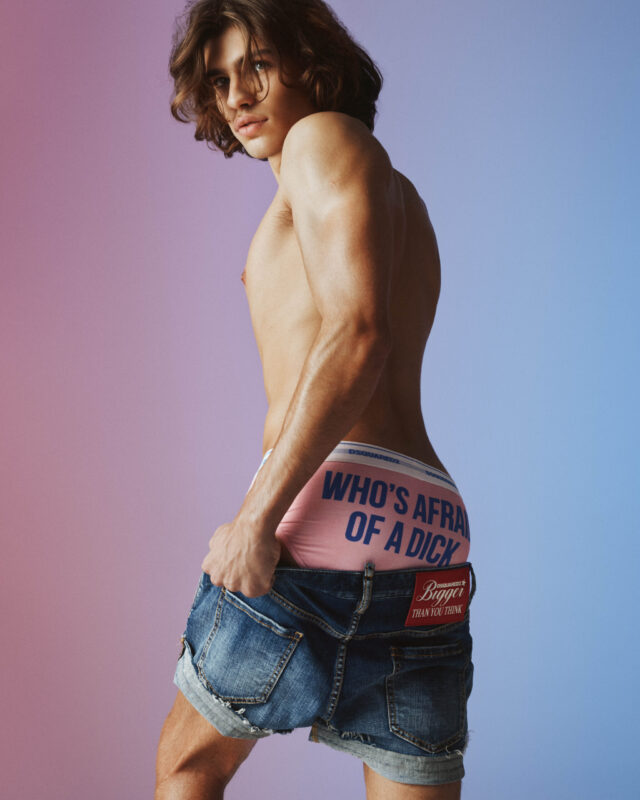
Rocco Siffredi X Dsquared2 • Photo: Christian Oita.
Production insurers
General liability and third-party damage are typically required to rent a location and/or to apply for a film permit. It turns out, however, that ‘nudity’ is considered ‘risky’ –what do you know– and that a) some insurers would deny coverage; b) the few that do provide it would make it twice as expensive: “They said that they are unable to help us,” apologized our broker, “due to the content and being involved with Playgirl (…) This insurance company has a history of being overly conservative with these kinds of things. I’ve made similar arguments to them about clients who are filming models in swimsuits, anything political, anything even slightly controversial, and they usually have a hard line against any of it.”
Never mind that none of our celebrity editorials feature nudity (frontal or implied): at the time, we were in fact prepping for music superstar Maluma and the cast of Days of our Lives. And yet the first question we were asked was: “Can you confirm if the photo shoot will involve any nudity?” The answer –no, it won’t– didn’t matter. The prejudice did.
Location owners
When the shoot does involve nudity (PlaygirlPlus pictorials), we’re always upfront about it. It isn’t pornography, but you’d be surprised how many proprietors (or how many location managers) balk at renting to Playgirl. Sometimes their concerns are reasonable: a family with minors in the house, a pool or a backyard with nosy neighbors… Sometimes they aren’t.
Social media
Against all odds, the digital cover sees the light of day and it’s ready for promotion on social media. Where it’s met with vague (and hypocritical) ‘community guidelines’ and the tyranny of the algorithm. But that’s a whole other story…