It could be argued that any director who dares to adapt a novel as historically and culturally significant as Wuthering Heights — still attracting legions of passionately devoted fans 179 years after its publication — has a responsibility of sorts. Not to stay faithful to the source material; plenty of successful adaptations have made major changes to the works that inspired them, but to explore the same ideas or evoke similar emotions.
Emerald Fennell’s garish and glittery film does neither of those things. Instead, it takes one of the most complex and compelling love stories of all time and renders it silly, stale, and incomprehensibly flat.
With this latest incarnation of Emily Brontë’s Gothic masterpiece, Fennell had a unique opportunity to explore facets of the story that have been missing in most of the other film adaptations. However, it was clear from the moment Jacob Elordi’s controversial casting as Heathcliff was announced that wasn’t going to happen.
In the book, the young Heathcliff is described as a “gipsy brat” and “as dark almost as if it came from the devil” when Mr. Earnshaw brings him home to live at windswept Wuthering Heights. Brontë hints that he might be a “little Lascar,” a term used in those days for a sailor from the East Indies. This is no inconsequential detail. The themes of class, race and power are integral to the story; Heathcliff’s character is shaped from the start by being treated — oftentimes quite cruelly — as an inferior. Elordi’s Heathcliff is about as ethnically ambiguous as Margot Robbie’s Cathy, which is to say, not at all. And that’s not the only way Fennell whitewashes Heathcliff’s tangled mess of a psyche (more on that later).
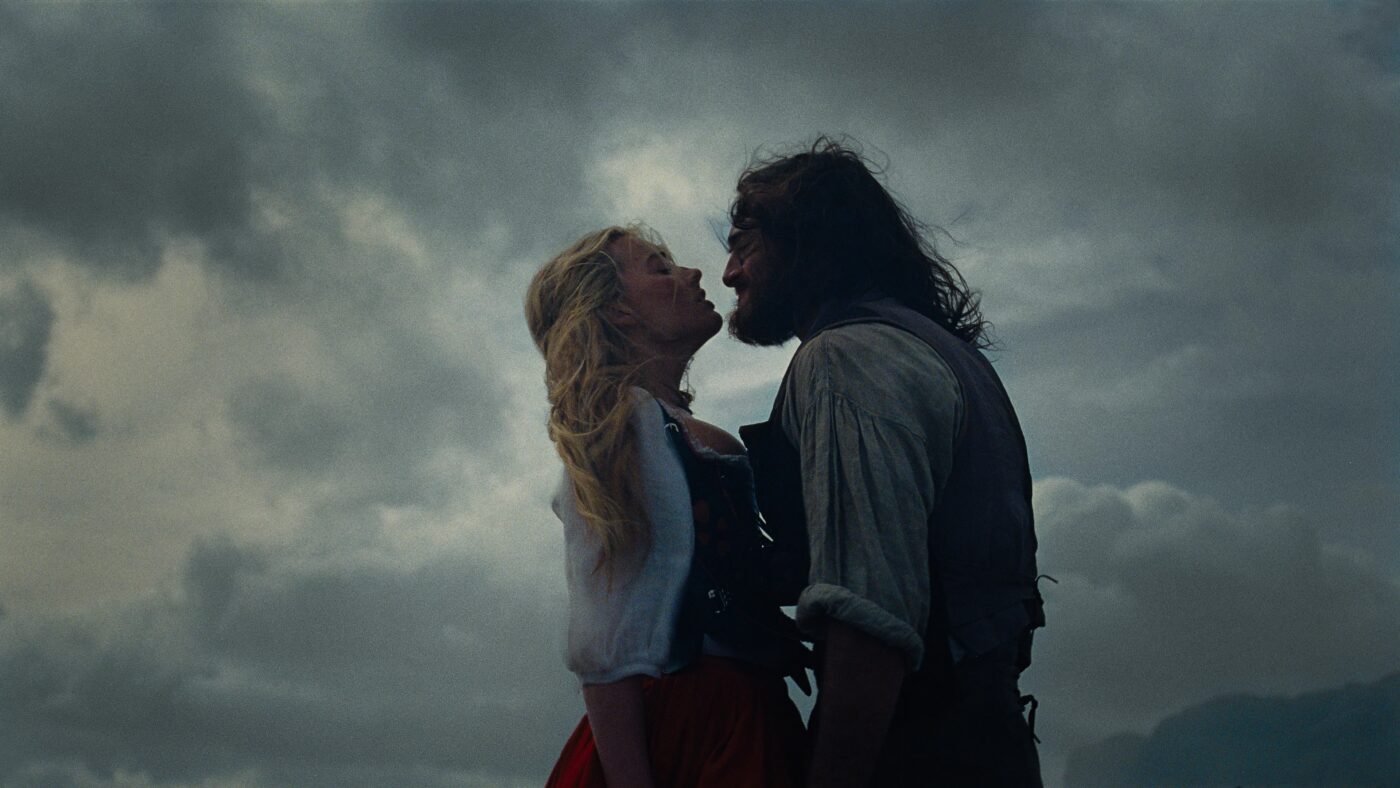
Speaking of Robbie, much has been said about the actress being too old to play Brontë’s tragic and twisted heroine, and though one’s knee-jerk reaction might be to deny this seemingly ageist criticism…it is a valid one. Cathy is a teenager in the book, with all the qualities of an elder adolescent magnified: She’s impulsive, dramatic, selfish, and reckless. Robbie, 35, does her best to embody these youthful qualities, but it’s difficult to accept this kind of bratty behavior coming from a grown woman. (This is particularly true in the earlier part of the film, when a mischievous, flushed Cathy flounces about hiding eggs in Heathcliff’s bed and petulantly wondering why the Lintons won’t visit.)
‘Wuthering Heights’ • Warner Bros.
As with Elordi, in retrospect, Robbie’s casting might have betrayed Fennell’s intentions long before Wuthering Heights’ Valentine’s Day weekend premiere. Fennell has said she meant for her movie to give viewers the same feeling she had reading the book as a teenager. “[The film] was about building a world that was one reader’s, one girl’s, interpretation of reading the book — which has certain wish fulfillment in there, things that happened that I wished would happen but maybe didn’t, a certain amount of grace extended, and then withheld, too,” the director told Town & Country.
This perhaps explains why Fennell’s Wuthering Heights feels a bit like watching a precocious child act out the story with Barbie dolls, smashing the plastic toys’ faces together and making them kiss while still fully clothed.
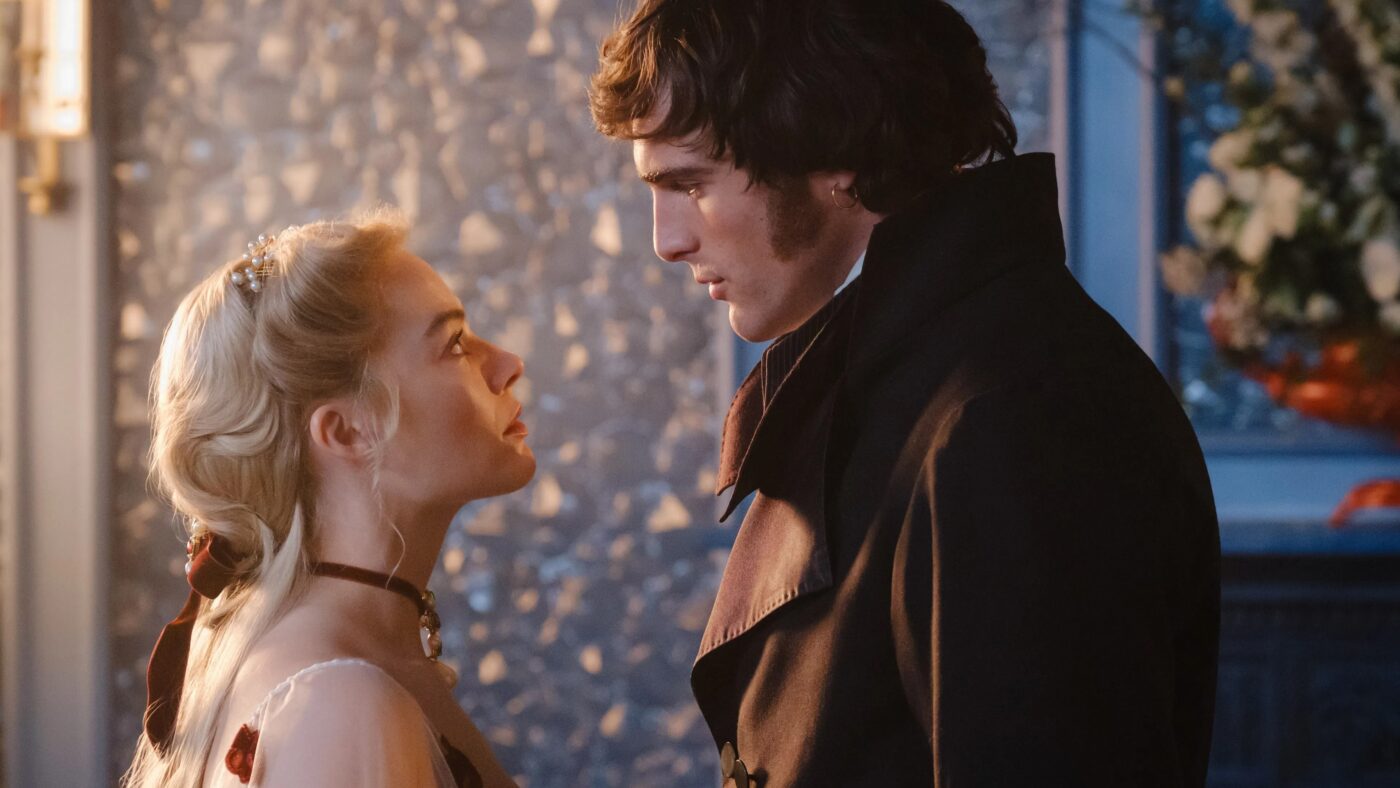
While marketed as a boundary-pushing bodice ripper, anyone expecting shock value on the level of Fennell’s Saltburn will be disappointed. Sure, there’s more sex in the movie than the book (because in the book, there is none), but in keeping with the rest of the film, these scenes are more the stuff of high school fantasies than anything else. Fittingly, the film’s visual aesthetic, too, feels like the product of a runaway imagination. It’s sort of like the cinematic equivalent of a candy apple, glistening and red and sticky…but all the cellophane dresses and oversized strawberries in the world can’t make up for what’s missing here.
In her apparent attempt to make the film more outrageous than the novel, Fennell does the opposite. When Elordi’s vengeful Heathcliff seduces the naïve Isabella (Alison Oliver), there is no sense of danger; on the contrary, with every move he warns her of his ill intentions, asking, “Do you want me to stop?” Make no mistake, Brontë’s Heathcliff wasn’t the type to be concerned with consent. Turning the abused Isabella — who bravely escapes Heathcliff’s torture while pregnant with his child in the original story — into a gleefully willing submissive is one of Fennell’s most offensive choices. In the book, Heathcliff hangs Isabella’s dog; in the movie, he chains a barking, panting Isabella up as a dog instead. This is no “monster,” this is an emotionally immature man with a mild fetish.
With Heathcliff tamed and so much context stripped away, the love story goes from high stakes to low risk. What’s the real impediment to this couple getting together, other than the fact that Cathy wants to live in over-the-top luxury, surrounded by walls painted to match her own skin? This hardly seems reason enough to make a ruinous choice with multi-generational consequences…and if Cathy is really that shallow, do we even care?
‘Wuthering Heights’ • Warner Bros.
On the topic of those multi-generational consequences, clearly Fennell had no interest in exploring the familial legacy of Heathcliff and Cathy’s doomed romance. To be fair, even William Wyler’s 1939 classic (and to this day, definitive) Wuthering Heights doesn’t attempt to include the second volume of the book, but Laurence Olivier and Merle Oberon’s performances make the love story stand on its own. Peter Kosminsky’s 1992 version of the story, starring Ralph Fiennes and Juliette Binoche, is one of the only screen adaptations to include the descendants of Cathy, Heathcliff, and Hindley (which The Independent called its “single unqualified advantage” over Wyler’s film).
The novel’s gothic elements are yet another piece of the puzzle left out by Fennell. The only nod towards the possibility that Heathcliff and Cathy’s romance might continue in the afterlife comes in Heathcliff’s tormented plea for Cathy to haunt him after he finds her lying dead, a black river of blood flowing from her bed and soaking the flesh-toned carpet.
Cathy’s death in the film is a visually striking moment, but, once again, it’s hard not to think of what might have been. Why would a director who shot the infamous scene in Saltburn, where Oliver (Barry Keoghan) literally has sex with Felix (Elordi)’s freshly dug grave, decide against including the pages in Wuthering Heights where a grieving Heathcliff digs up Cathy’s snow-covered resting place? (Or the moment, years later, when he finally opens her coffin to see her face still intact, concluding she must be waiting for him to join her in the earth before fully decomposing?)
Ultimately, though, it must be said that Fennell accomplished what she set out to do.
“Lots of women writers that I know do this,” she said in an interview with W Magazine. “The things that I make come from the imaginary worlds that I live in.”
“You can’t make a didactic film out of a book that is not didactic, really,” Fennell went on to say. “You can only make an approximation of how it makes you feel. I felt this, maybe with all the films I’ve made: The disagreement or the lack of consensus about something is valid and important. Therefore, I’m the least useful person to wade in on the nature of the romance.”
For those whose imaginary worlds resemble Fennell’s own, Wuthering Heights has the potential to resonate. The rest might feel more like they’ve just watched a two-hour Taylor Swift video with an especially sad ending.