“Listen to me. I don’t do romance. My tastes are very singular. You wouldn’t understand,” says a matter-of-fact Christian Grey (Jamie Dornan).
“Enlighten me, then,” answers Anastasia Steele (Dakota Johnson), mouth agape. In Fifty Shades of Grey (2015) we watched Johnson play a sexually inexperienced collegiate, who falls head-first into a BDSM relationship with Dornan’s Grey, a wealthy entrepreneur, who’s strictly business when it comes to the bedroom.
In the first of a three-part film franchise adapted from the wildly popular (albeit hokey) 2009 book trilogy of the same name, a formal contract is signed and Steele submits to Grey’s domination. Fifty Shades of Grey shattered box office presale records as fans of the books and prurient moviegoers alike tittered with anticipation.
Not since 9 ½ Weeks with a gallery assistant (Kim Basinger), who takes on the psychological toll of a Wall Street broker’s (Mickey Rourke) erotic games, did theatergoers have such a memorable Valentine’s Day weekend at the movies.
Adrian Lyne directed 9 ½ Weeks as a feast for the male gaze (Basinger’s breasts were burned into our retinas, while Rourke maintained an air of modesty), but in the case of Fifty Shades, it’s women who are pandered to. Director Sam Taylor-Johnson introduced a POV for female wish-fulfillment that sparked curiosity in even the more bashful among us.
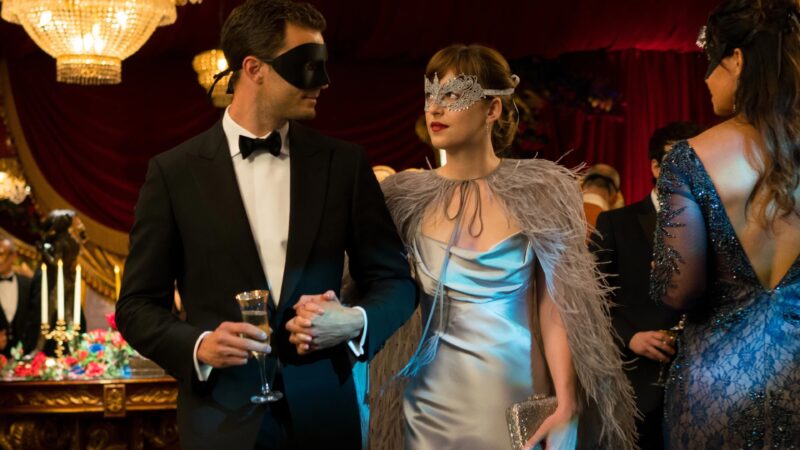
‘Fifty Shades Darker’ • Photo: Universal Pictures
But both films suffer the same fate as more recent mainstream erotica: they succeed in their sensual implications, but stumble through the kinky acts themselves. In their attempts to serve a more uptight heteronormative audience, they introduce edge, but are ultimately risk-averse.
Earlier projects with a sharper BDSM bent like Luis Buñuel’s Belle de Jour (1967), Liliana Cavani’s The Night Porter (1974), or David Cronenberg’s Dead Ringers (1988) were only lauded in arthouse spaces. They were taboo (with incestuous subtext in one and the psychosexual power play of a Holocaust survivor and her Nazi abuser in another) and tinged with a seediness that repelled many at the time.
Today with intimacy coordinators present on just about every film set, we’ve seen a bevy of kinky offerings perform well at the box office. But as BDSM goes broad, its sanitization could run the risk of alienating the very community it commodifies.
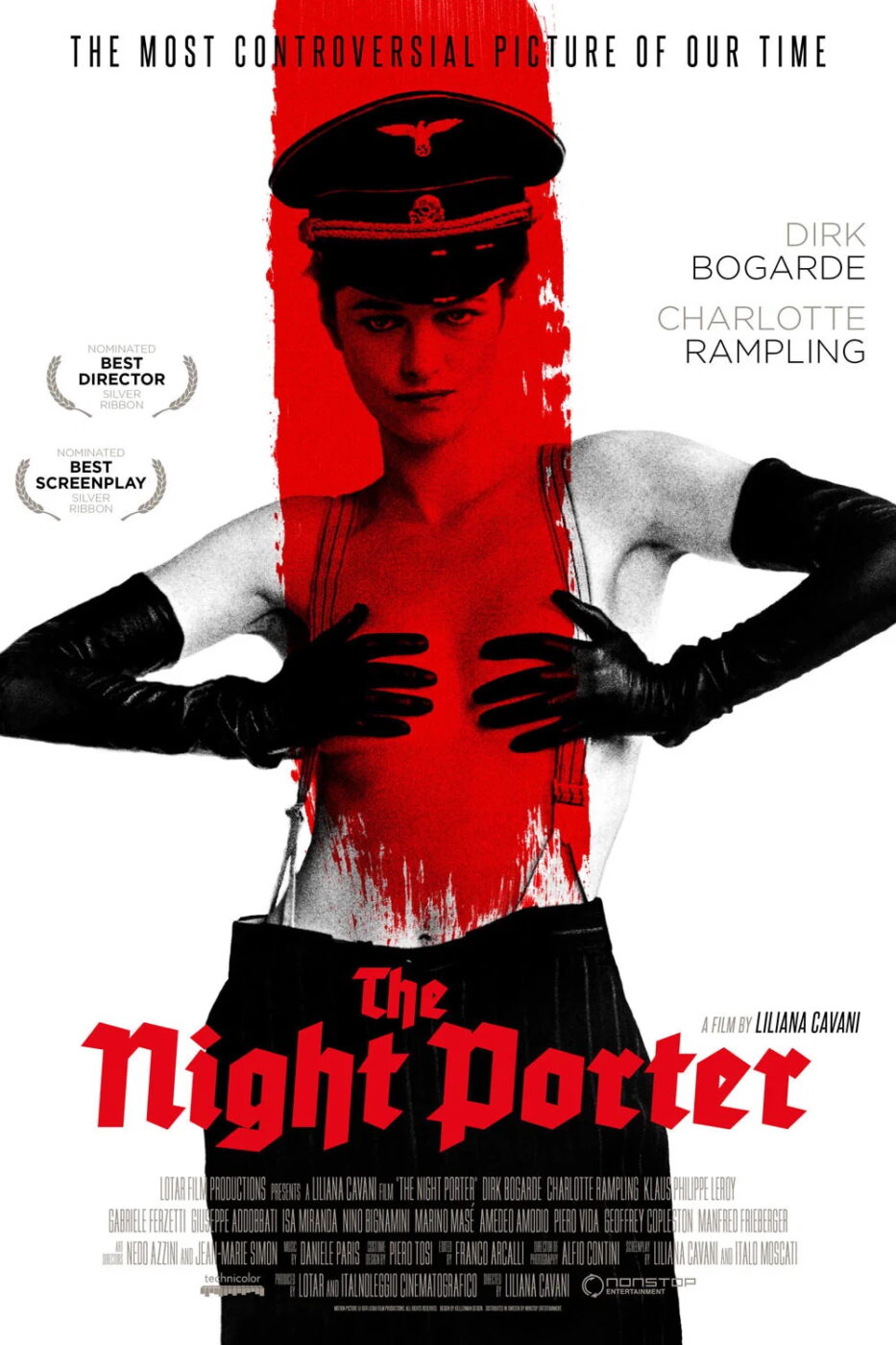
‘The Night Porter’
By now, we’ve all read Julia Fox’s memoir Down the Drain (2023) or have at least encountered arresting excerpts and soundbites of her reminiscing about those dominatrix days. But increasing representation in media has made BDSM all the more approachable to onlookers since the book’s debut.
Despite the right-wing conservatism that preys on our bodily autonomy, gender identity, and overall civil liberties, there’s a broader attitude in culture that isn’t so prudish. We see young people wearing desexualized corsets, chokers are less a signifier of after-hours plans and more an ordinary accessory, and sexually explicit song lyrics wash over listeners without so much as a twitch. The Comic-Con/Furries crossover has even chiseled out a more welcoming space for the introverted set.
Yet a tension still exists. The mainstreaming of BDSM brings with it great expectations from kink communities and fans who crave more true-to-life portrayals. When directors make compromises in a bid to attract newbies, their BDSM takes are often couched in comedic punchlines like Gary Marshall’s Exit to Eden (1994), which stars Rosie O’Donnell as a kooky undercover cop investigating an S&M island. Or woven into the fast-paced blur of a thriller like Paul Verhoeven’s Basic Instinct (1992).
Heated Rivalry (2025) was scintillating to a women-led vocal majority, while others found the TV show’s dom/sub dynamics to be tame at best. The gay ice hockey romance with its polite Canadian brand of kink did consume the world throughout last year’s holiday season, but according to actor Jordan Firstman, “It’s not how gay people fuck.”
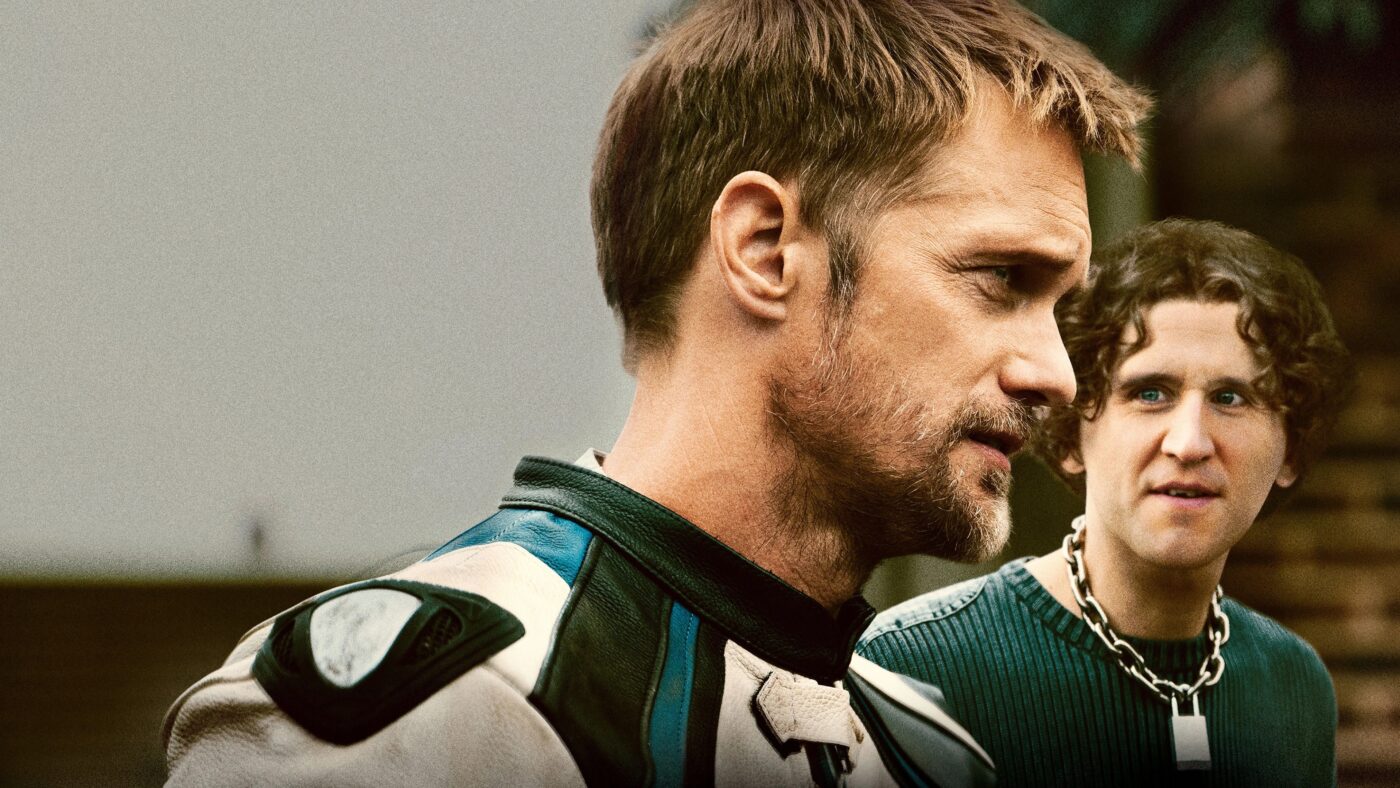
If Heated Rivalry cracks the doorway to BDSM for pearl-clutching audiences, then Pillion (2026) kicks it wide open. In this dom-com adaptation of Adam Mars-Jones’s novel Box Hill (2020), a placid parking enforcement officer named Colin (Harry Melling) is introduced to a Southeast London subculture of queer biker gangs and BDSM by the domineering Ray (Alexander Skarsgård).

‘Pillion’ • Photo: A24.
Colin learns that he has an “aptitude for devotion” and finds himself sleeping at the foot of Ray’s bed as his dutiful sub. Pillion closes on an open-ended note, but one thing is for certain: BDSM isn’t a mere phase for Colin, it’s a gateway.
Whether we’re talking gay sex or depictions of BDSM, Pillion brings an uncompromising level of authenticity on both fronts. Be it oral, anal, or a biker orgy in the woods, the camera never pans away when we expect it to. For director Harry Lighton, restraint was to be avoided at all costs. Pillion delivered on the realness, but caused too much blushing to puncture the zeitgeist.
On the other hand, Nicole Kidman and her glass of milk in Halina Reijn’s Babygirl (2024) were an all-out global success. Kidman plays a tech CEO named Romy, whose life is aspirational in the boardroom, but growing stale in the bedroom. She remedies this by taking a break from her passionless marriage to pursue an erotic love affair with a young intern, who helps her play with power dynamics.

‘Babygirl’ • Photo: A24.
Rejin directs this liberatory dalliance with a sensitivity that transcends genre and Kidman brings a vulnerability that digs deeper than other recent kinky fare, but the film ends on a narrowing note. Romy snaps back into her girlboss life and returns to the familiarity of her husband, with only the memory of her self-affirming tryst left to propel her.
Gregg Araki’s latest release similarly explores how BDSM can aid in self-discovery. And this time, after a dedicated run characterizing the angst and ennui of queer Gen X youth, it’s Gen Z he’s after. I Want Your Sex (2026) is the director’s self-proclaimed love letter to the generation that is decidedly having a lot less sex, despite the earlier mentioned corsets and chokers.
The film follows an amiable Cooper Hoffman as Elliot, a 23-year-old studio assistant, who’s lured into a sadomasochistic relationship with his provocative new boss, artist Erika Tracy (Olivia Wilde).
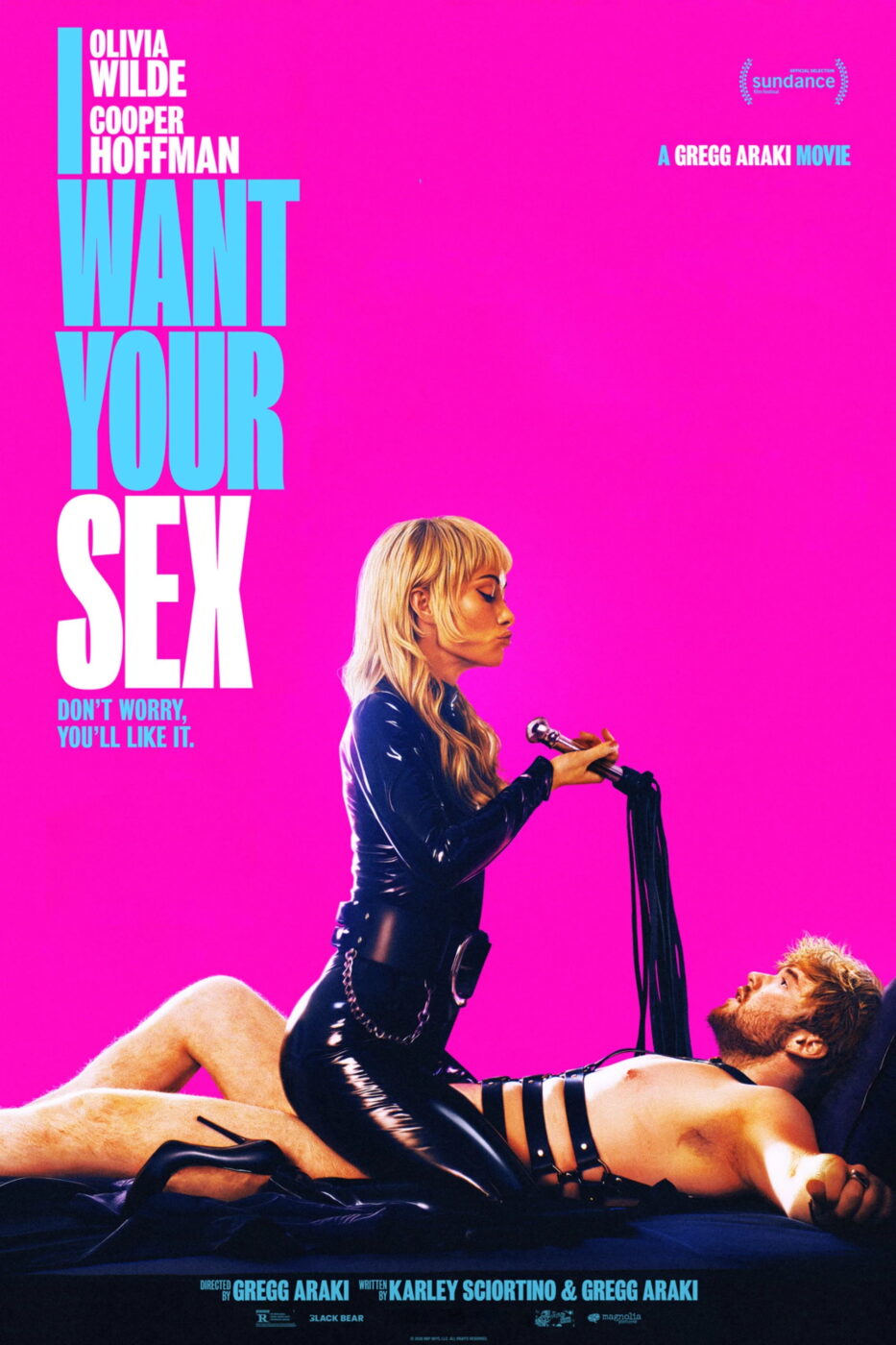
‘I Want Your Sex’ • Magnolia Pictures.
“Gen Z is all about FOMO,” says Erika, “and yet you’re willing to miss out on the sexual prime of your life.” This is all she has to utter in order to reel in this spiritually unfulfilled young man.
Erika, deranged seductress that she is, whips Elliot into shape. But in an eventual time jump, we see a future, where Elliot helms a successful podcast and his experience with Erika is a thing of the past. He isn’t thrust into a lifelong relationship to kink, but it feels like a vital chapter that helps shape him into the well-rounded person he’s become.
While kink communities might balk at this exploratory representation of BDSM, often introduced as a fleeting flight of fancy rather than an enduring lifestyle choice, Araki’s film still feels subversive amidst a sexual recession and the rise of heteropessimism.
At the end of the day, it’s a tall order. How do we introduce transgressive BDSM lifestyles on-screen as more than just a brief fish-out-of-water experience? How do we bear genuine kink communities in mind without losing the more straight-laced viewers out the gate? I think the answer is simple. Much like sex, practice makes perfect. We’re all still working out the kinks.