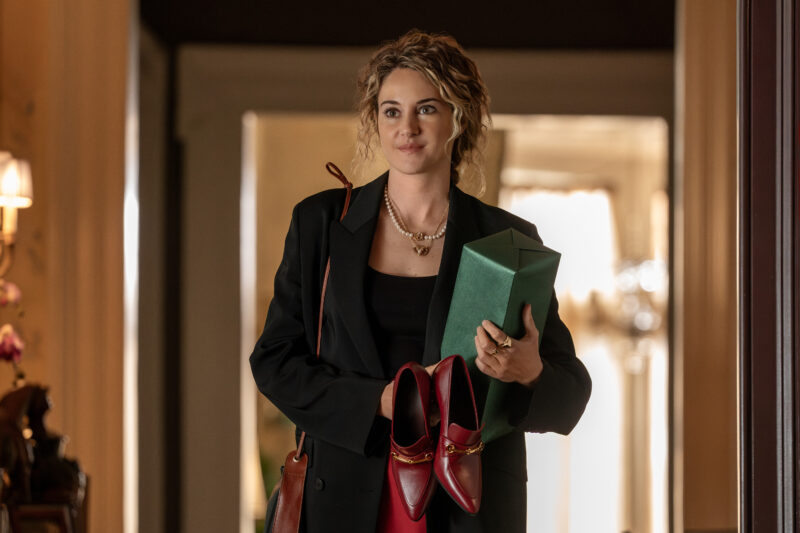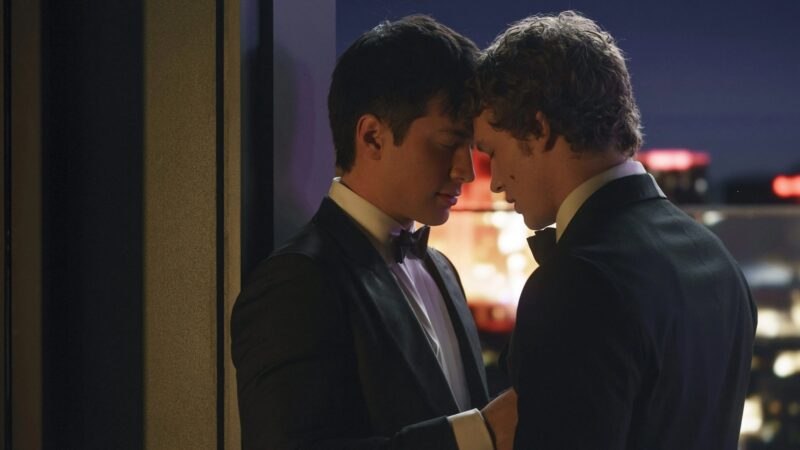
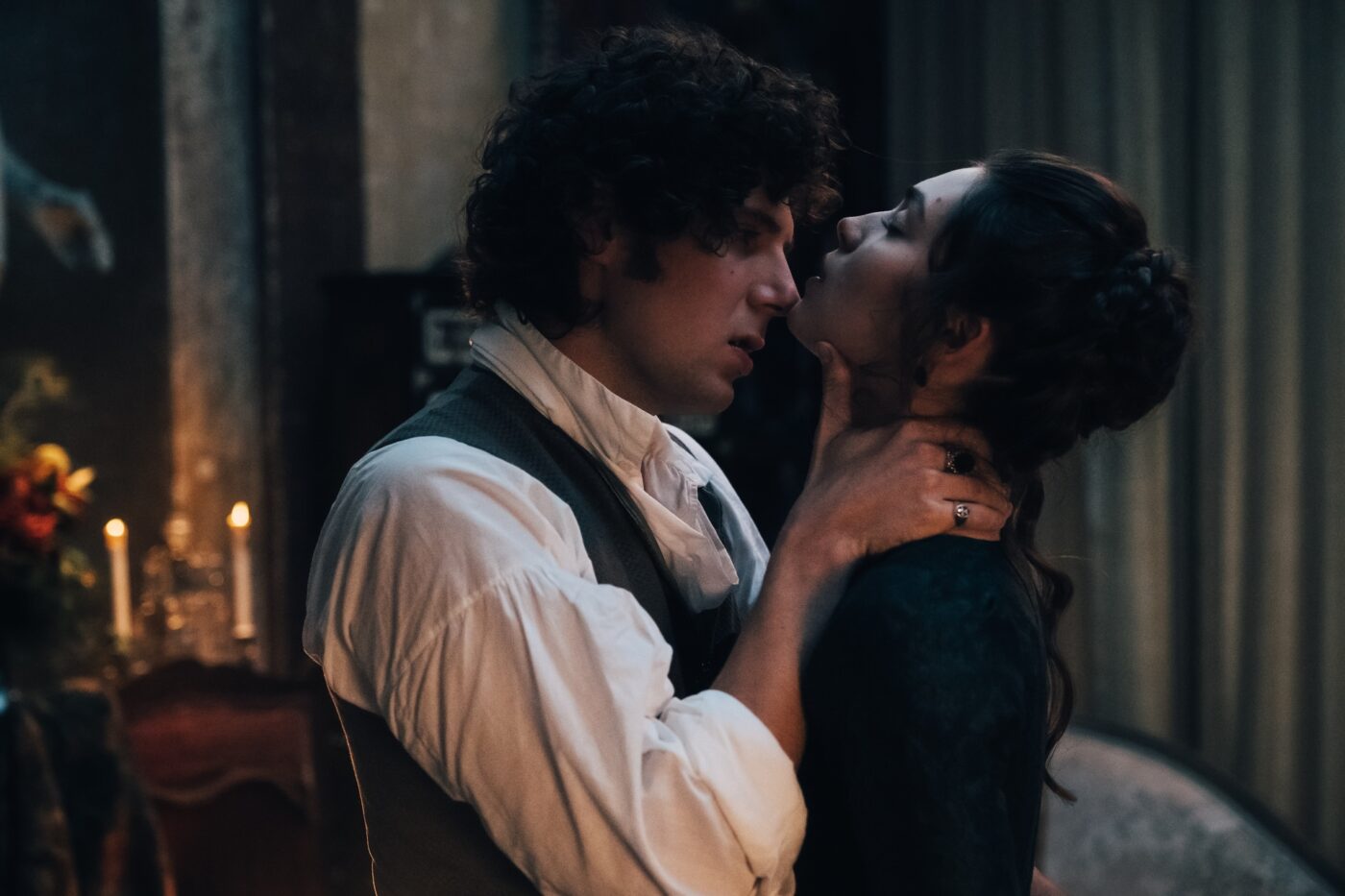
Time magazine’s favorable review, “The Seduction Puts a Steamy, Feminist Spin on Dangerous Liaisons,” begins by wittily noting that this is “the millionth onscreen iteration of Laclos’ masterwork” but goes on to note that the series “recasts” the central character Marquise Isabelle de Merteuil “as less a monster than a wounded woman fighting for the same freedom men enjoy.”
The series, directed by Jessica Palud, who also cowrote some of the teleplays, is another example of the importance of women behind the camera telling the story from the point of view of an active central female character. Yet an important and often overlooked aspect of such films and streaming series is the explicit way women look at and talk about the penis, paradoxically central to both their pleasure and oppression within patriarchy.
Consider the historical contexts of the 18th century and the 21st century. Pierre Choderlos de Laclos published Dangerous Liaisons in 1782. The Marquis de Sade began publishing his libertine novels in 1785. While Laclos achieved great literary success leading to the million adaptations, Sade’s work was mostly dismissed as pornography until the 20th century. His novels graphically detail aristocratic libertines having orgies, kidnapping, and raping women and girls in mansions. The works of both Laclos and Sade point to a preoccupation with libertine culture in the latter part of the 18th century.
But wait. Doesn’t that all sound like Jeffrey Epstein’s sexual trafficking, pedophilia, rape, his connections with billionaires and oligarchs, and his own island outdoing a mere castle? In a French series with Netflix as a partner, The Seduction resonates with libertine culture (aristocrats are like our oligarchs.) But it also resonates with feminism and the growing power of women in film. And it connects with rape revenge films. After being lured away from a convent and tricked into a sham marriage by Valmont (Vincent Lacoste), Isabelle (Anamaria Vartolomei), the main character, is sexually abused and vows revenge on the man who raped her and on all men within the libertine culture –of which he is a part.
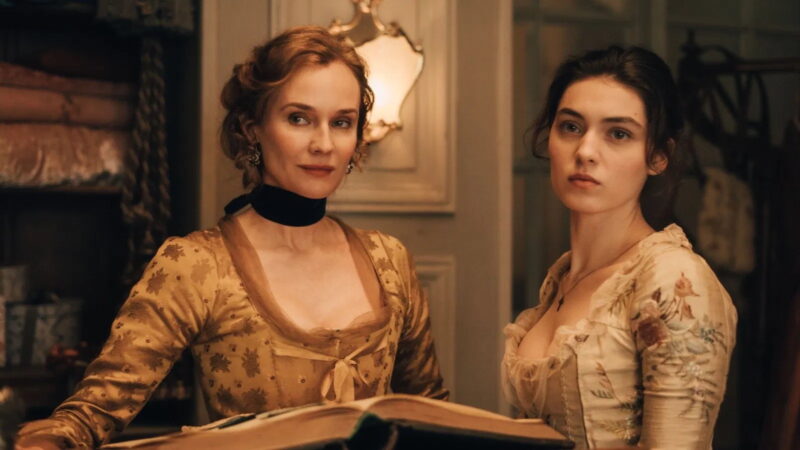
A prominent theme in The Seduction deals with penile-centered male sexuality as observed, experienced, and commented upon by the female characters. In Episode 1, Isabelle learns about the libertine world and enters it when she marries the much older Marquis de Merteuil (Jean-Pierre Lorit). In one scene, we see him position her so that he can force entry for intercourse. When he fails to enter her, he steps back to manually stimulate his penis and achieve an erection. Isabelle looks directly at his penis, a visual structure that returns throughout the series, while he strokes it until he accidentally comes, and she laughs. He tells her, “I am consumed with shame,” declaring he will go to America to fight in the French army to restore the “failure” of his penile-centered masculinity.
In Episode 2, Rosemonde (Diane Kruger), a woman in league with Isabelle must find a lover for Cécile (Fantine Harduin) who will succeed in taking the young girl’s virginity. This will stop Gercourt (Lucas Bravo), the libertine that her mother plans to have her marry. If she loses her virginity, he will lose interest. The lover must become Cécile’s home music tutor. He must also be “Handsome, noble, and quite well endowed. I will find him.”
When Rosemonde enters a music trio rehearsal, she carefully looks at the men, commanding the harpsichordist, Danceny (Samuel Kircher): “You. Come.” She evaluates his body staring at his groin and says, “Let’s see. Let’s see.” He drops his trousers. She assesses his penis, and commands, “Follow me.” The way Rosemonde looks mirrors the way Isabelle looks at Merteuil’s penis. Whereas Rosemonde is favorably impressed, Isabelle is laughingly disappointed. The emphasis in both scenes is on the woman watching and we never see either man’s penis.
In Episode 3, we see Danceny making love to Cécile. She puts her hand down his pants and stimulates his penis and he comes immediately. She pulls her hand out covered with cum and he flees. This scene recalls Merteuil coming prematurely. Ironically, the big penis means nothing.
The above scene leads to the three conspirators, Isabelle, Rosemond, and Valmont discussing the crisis in their plan. Isabelle gives an astonishing account of penis-centered masculinity: “Men are so fragile. They worry so much that their precious tool is too little of this or that, but they totally fail to use it with skill or endurance. But I did have the opportunity to get to know Gercourts’s. But let’s just say that all men have worries about the bigger size of their sex, but with Gercourt I might say it’s just more a matter of geometry. Imagine a corkscrew if you want an approximation of it. That’s close. So, when it comes to that man, the most common worry becomes vivid anguish. The anxiety that he hides for his passion for virgins who naturally have no point of comparison… Conversely, I have no doubt that Chevalier Danceny…” She breaks off looking at Rosemonde, and we see a brief shot of Danceny’s pants down, followed by Rosemonde smiling with satisfaction.
Next, they are having vigorous intercourse and Danceny says, “I’m coming, I’m coming.” She slaps him and they momentarily stop. He then sits up, they embrace, she says “counterfire” and pushes him down, resuming vigorous intercourse with simultaneous orgasms.
In Episode 5 Isabelle furthers a new scheme of hers by trying to convince Danceny to make love to Madame de Tourvel (Noée Abita) even though he says he is committed to Cécile. She tells him Cécile will be there for him tomorrow, but Tourvel is here for him tonight and that “Helping me will help Cécile.” But he rejects the libertine argument, refusing defining masculinity around the penis.
By contrast, the episode returns to Marquis de Merteuil who has been fighting in America. Although Isabelle learns he died heroically preparing for battle, we see him loading a pistol, looking down its long barrel when the gun discharges and kills him. The gun is an obvious phallic symbol and just as he failed sexually to prepare for intercourse, he now dies from the gun’s premature discharge.
Episode 6, the finale, begins with Isabelle in bed with a young lover. We see some shots of her breasts, but we never see his penis. There is much talk in the series about the penis, but even when the women look at it, it is never shown, an interesting choice for a Netflix show. Like Sorry, Baby (2025), these films directed by women place their emphasis on listening to what women say and watching how they look at penises rather than showing the alleged spectacle.
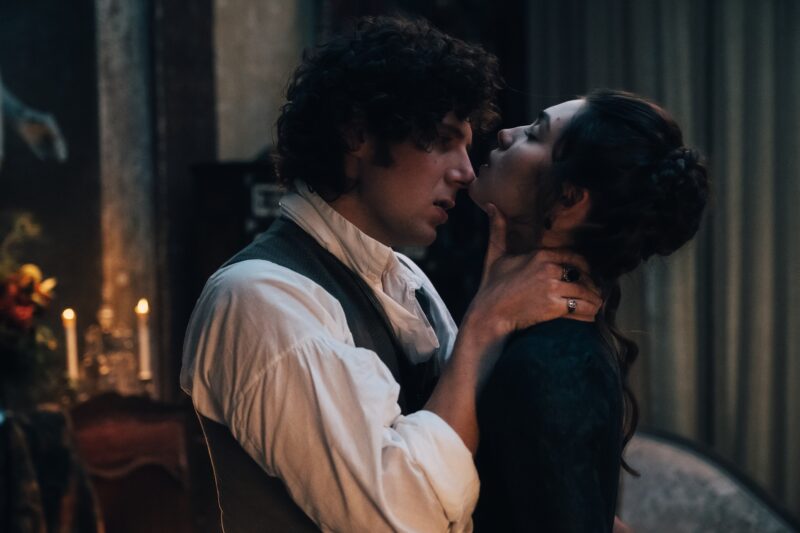
‘The Seduction’ • Photo: Caroline Dubois/HBO Max.
None of the scenes I analyze in The Seduction surrounding penis size or shape or premature ejaculation –all of which are watched, experienced, controlled, and explicitly spoken about by women– occur in the Laclos novel or the critically praised 1998 film adaptation of the novel directed by Stephen Frears. Like The Girlfriend and Sorry, Baby, The Seduction shined an important new spotlight on the representation of the penis.
Indeed, the finale highlights the power of women. Valmont and Gercourt, the seemingly powerful male libertines, all suffer loss due to powerful women. Gercourt loses his place in the King’s court due to Isabelle, and Valmont loses his life in a sword fight, when Danceny kills him for having seduced Cécile. And don’t forget the fate of Marquis de Merteuil.
The final scene shows Rosemonde visiting Valmont’s grave followed by Isabelle who in voice over acknowledges her “strength to survive,” and with her head held high she adds “Forever ruthless. And forever impenetrable.” Men are so fragile.
Peter Lehman is Professor Emeritus in the Film and Media Studies Program at Arizona State University.