It’s been 130 years since Alice Guy-Blaché became the first woman to direct a film (La Fée aux Choux, 1896), and women filmmakers have yet to gain equal footing in Hollywood.
The Tribeca Film Festival celebrated its 25th anniversary in June by giving a much-needed platform to emerging women filmmakers.
Switch
Created by Sofya Levitsky-Weitz and Isabelle Platt, the indie series Switch (which debuted its first three episodes at Tribeca), is a sexy, charming subversion of male sexual fantasy tropes. The short-form comedy stars Pauline Chalamet and Coral Peña as Lena and Maxine, a couple in the early, tentative stages of their relationship on a mission to find a man for a threesome. As Levitsky-Weitz and Platt tell Playgirl, the premise for the show was inspired by their own experiences as a couple: Levitsky-Weitz, who identifies as bisexual, was still with a man when she “fell hard” for Platt. But after they started dating, Levitsky-Weitz started to wonder how long she could stay sexually monogamous. That’s when they started to consider bringing a man into the mix.

‘Switch’ • Photo: Alyssa Brocato.
“We started kind of finding our way and having these very funny, absurd situations,” Levitsky-Weitz says. “And then we kind of realized it would be a really good vehicle to talk about these deeper ideas that we were really excited to talk about around identity and sexuality and openness and queerness and not sort of falling into a contained box, but building out desire and relationships.”
General Admission
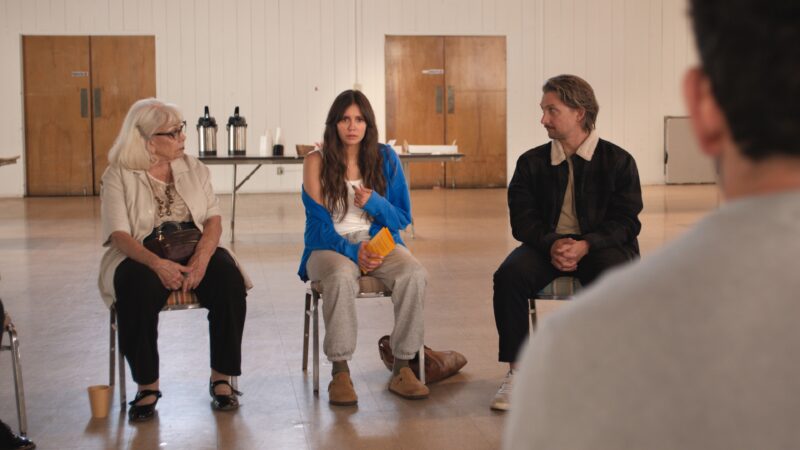
The challenges of monogamy are also at the center of the comic short General Admission. Directed by Kaily Morgan Smith and written by Sarah Adina, the 10-minute film stars Nina Dobrev as an emotionally devastated woman who attends a support group to pull herself together after a recent betrayal… only to unravel, hilariously, in the attempt. As with the creators of Switch, Smith and Adina drew from their own “trauma” when making the film. Adina caught her ex cheating and went to a co-dependency support group (where things took a turn for the unexpected); Smith was dealing with her own recent heartbreak when Adina sent her the script.
‘General Admission’
“What’s sad is I think 56% of women in their lifetime will experience some type of betrayal in a romantic relationship, and we’re not even going into betrayal of friendship, so then I’m sure it would be, like, 99.9% of people,” Smith says.
“When I handed it to Kaily, I was like, we’ve all had that shitty ex,” says Adina. “We’ve all experienced a version of this where you’re coming out on the other side of heartbreak. So that’s a really universal thing. And for women in particular.”
Stand Clear ‘the Closing Doors
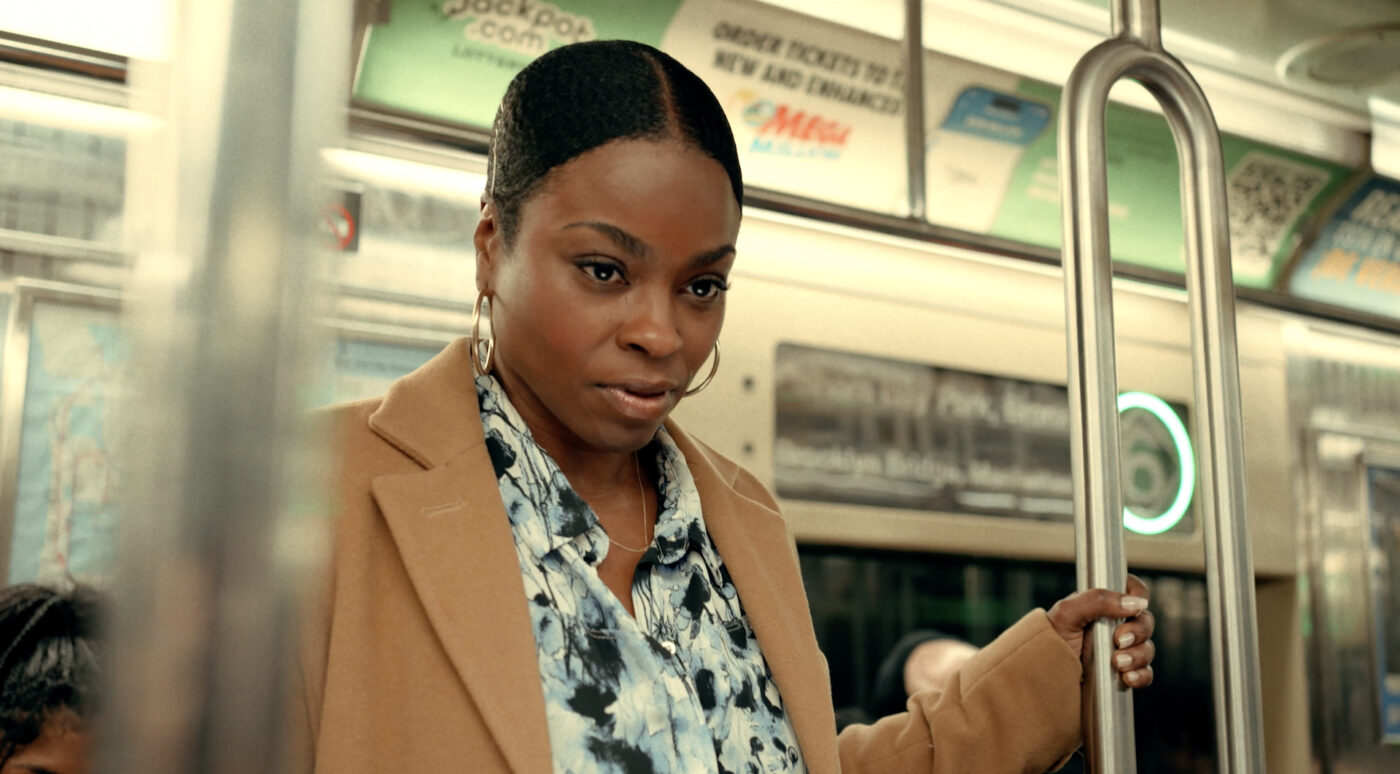
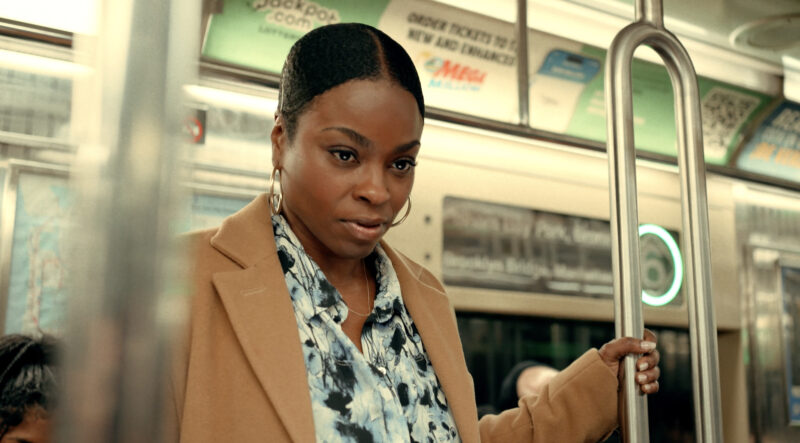
Stand Clear ‘the Closing Doors examines the everyday aggressions experienced by Black women through one interaction on a NYC subway (which writer, director and star Stacey Sargeant experienced firsthand). As Sargeant explains, she was on her way to acting class when she politely asked a White woman on the subway to move her bag so she could sit down. In the film, the woman’s hostile reaction leads to a heated battle over personal space (seen unfolding humorously in several different ways). The actual encounter was both less overt and more “diabolical,” according to Sargeant.
‘Stand Clear ‘the Closing Doors’
“In real life, the way she started elbowing me was more inconspicuous, so it felt even more diabolical,” she says. “Had I not been grounded and vibrating on the frequency I was vibrating on, I could have ended up in a lot of trouble as a Black woman because I just had some type of outburst out of nowhere.”
What Sargeant couldn’t allow herself to do in the moment became one of the possible scenarios explored in Stand Clear ‘the Closing Doors.
The Lorraine
Another Black woman building a life and legacy against the odds is at the heart of The Lorraine. The feature documentary tells the story of the The Lorraine Motel in Memphis, Tennessee (site of the assassination of Reverend Martin Luther King, Jr.), and its owners, Walter and Loree Bailey, whose significant contributions to history have been overshadowed in the years since that tragic event. Writer/producer Juleyka Lantigua knew about the existence of The Lorraine, which hosted the likes of Aretha Franklin, Otis Redding, Louis Armstrong and countless other Black travelers during segregation, but she didn’t know about the couple who made it all possible. When she finally heard their story, including Mrs. Bailey’s sudden death within days of MLK Jr.’s assassination, Lantigua says she “started weeping uncontrollably.”
“I understood fundamentally that she felt history crash into her home,” Lantigua says. “Here’s a woman in Jim Crow South, not only running a successful business, but expanding what’s possible across African American culture, because they became a safe haven for all of these artists, songwriters, musicians, performers and athletes who didn’t have a safe place to be when they were down in the South. So as woman of color who has traversed multiple industries and in a much more modern and forgiving context, I really understood.”
“I really, really understood what she was up against,” she continues. “I really, really understood how strong her marriage had to be. I really, really understood how principled she and her husband had to be to achieve all of the things that they were able to achieve. And so, this is what compelled me to tell their story.”
Retrieval
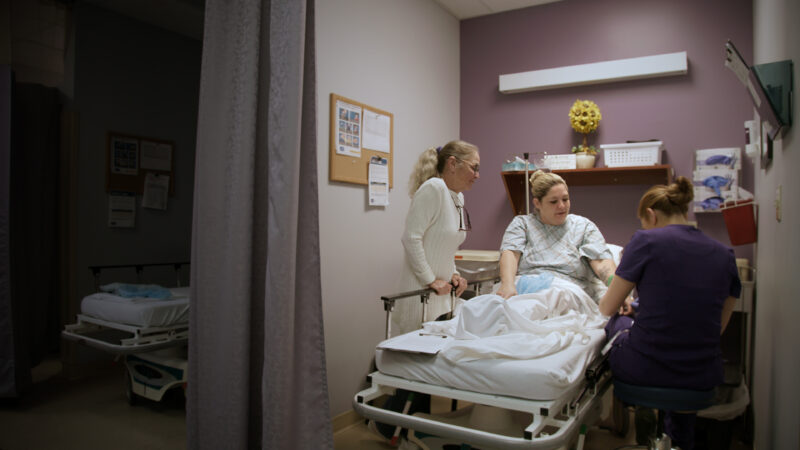
Retrieval offers a rare perspective on women dealing with loss. After her fiancé dies in a car accident, the main subject, Christina, turns to a medical procedure known as Postmortem Sperm Retrieval (PMSR) in the hopes of fulfilling the couple’s dream of starting a family. What follows is an intimate, often heartbreaking chronicle of Christina’s journey, along with those of her doctor, Dr. Mel Cohen, and the first-ever baby born from PSMR, Brandalynn Vernoff, now a grown woman.
Director Tracy Jarrett first learned about PMSR when her cousin went through the process.
‘Retrieval’
“As somebody who’d experienced a lot of personal grief in my own life, from losing my parents and grandparents and just kind of meditating on what that experience is, all I could focus on was how this was offering her something on the worst day of her life,” Jarrett says. “A sense of control, a sense of hope, a sense of opportunity, and also a chance to hold onto this person she loved and lost, which I would’ve loved a way to held onto the people that I’ve loved and lost.”
Having a predominately female filmmaking team was a crucial part of Jarrett’s filmmaking process.
“It was important to me that the subjects felt comfortable and felt like they were with other women who could understand where they were coming from, who they didn’t have to explain themselves to.”