Food is the language of desire. Nowhere is this more apparent than onscreen, where the acts of eating and cooking have been used to seduce, connect, comfort, and even transform characters. Food can be sexy in movies, to be sure, but it’s about way more than just foreplay.
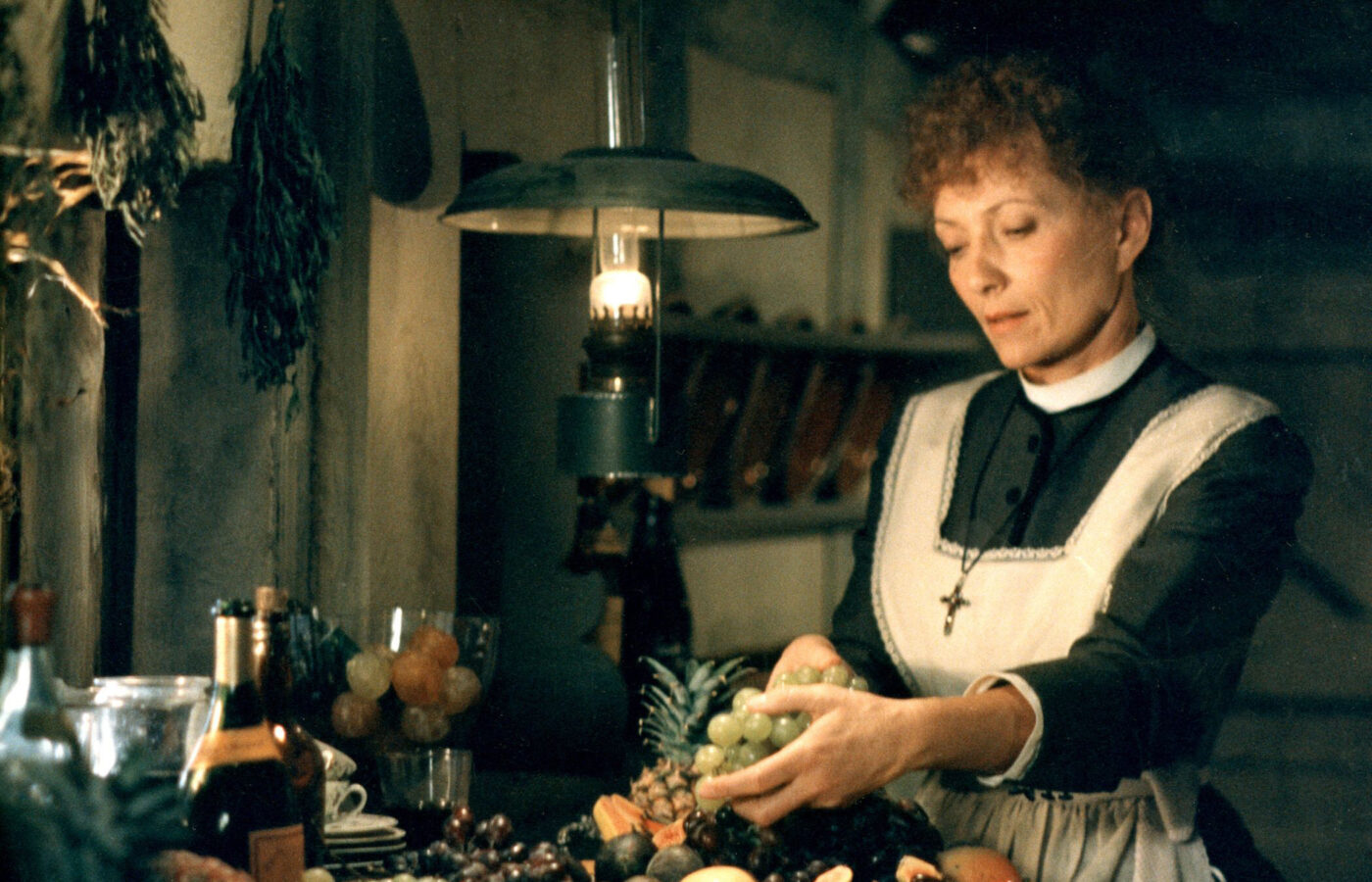
In Babette’s Feast (1987), food is the antidote to austerity. Two elderly sisters, Martine (Birgitte Federspiel) and Filippa (Bodil Kjer), have spent their lives in pious devotion, caring for the last, aging members of their late father’s Lutheran congregation in a remote Danish fishing village. When Babette (Stephane Audran) arrives on their doorstep, fleeing the fallout from the Paris Communard uprising of 1871, she’s in need of a home and has nothing to offer…except her cooking skills.
Alas, Babette finds little use for her culinary genius surrounded by such staunchly abstemious types, who subsist on a diet of a bland, brown ale-and-breadcrumb soup. Over the years, she manages to add subtle improvements to their dreary meals — though she’s careful not to go too far — eventually becoming a beloved part of the community. When she unexpectedly wins the lottery and decides to throw a lavish French feast for the reluctant villagers, the intoxicating power of the meal proves too strong to resist, and before long the dinner guests are eagerly licking their fingers and reaching for more wine, their stern faces flushing with color. Still, it takes an outsider (a decorated general who once loved Martine) to recognize the true artistry of the meal, from the choice of amontillado to the authentic turtle soup to the delicate cailles en sarcophage. He recalls his first experience with the dish, prepared by a chef with the “ability to transform a dinner into a kind of love affair, a love affair that made no distinction between bodily appetite and spiritual appetite.” That chef and Babette, of course, are one and the same, and her lesson is life-changing: Pleasure can be a path to the divine.
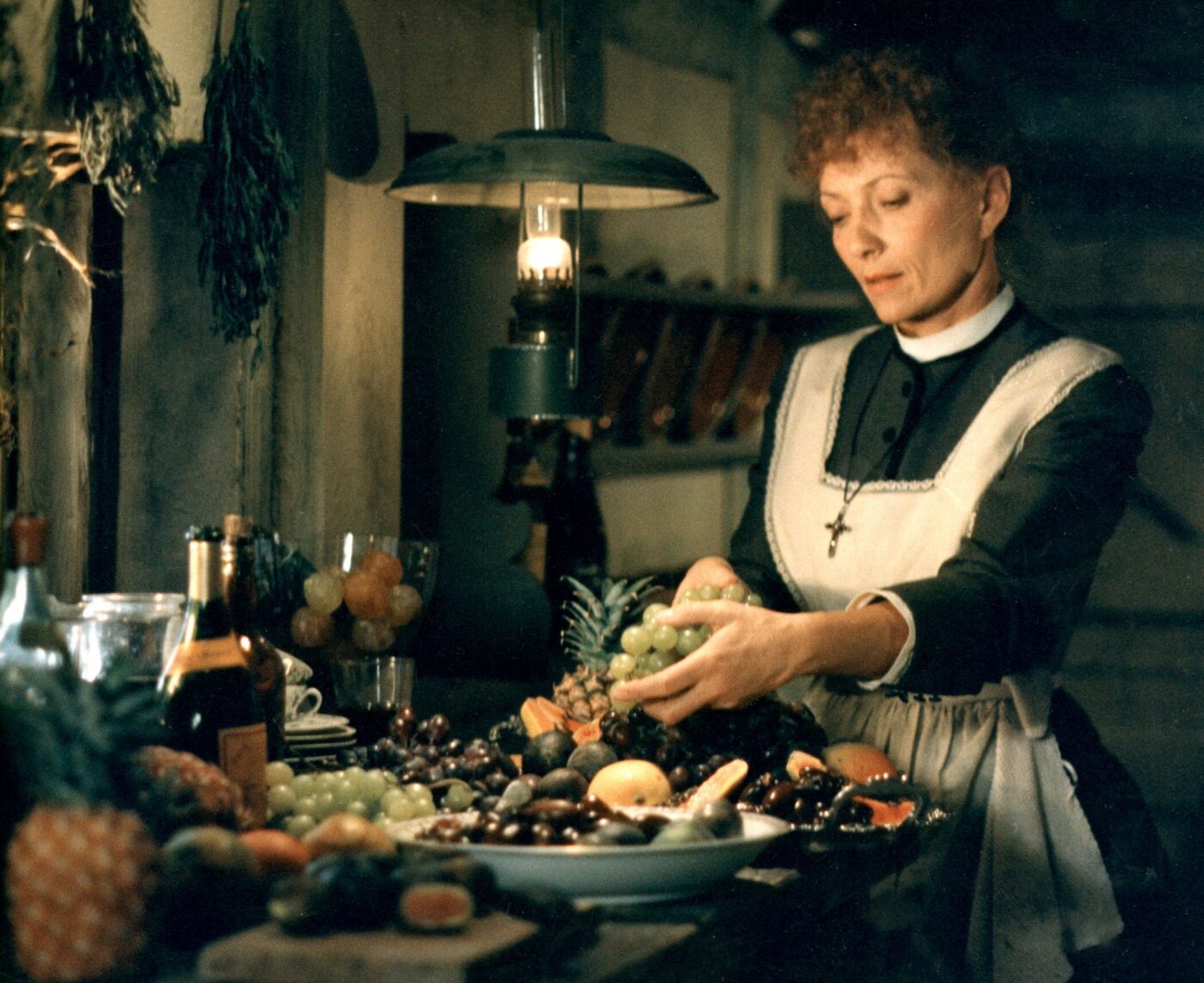
‘Babette’s Feast’ • Photo: Orion Classics.
Chocolat (2000) tells a similarly themed story: A gastronomically gifted woman liberates a village full of repressed Christians. Vianne, played by a radiant Juliette Binoche, blows into a storybook French town in the late ‘50s, her daughter Anouk at her side. Lent is just beginning when the unmarried mother opens her chocolaterie, a daring move, and killjoy mayor Comte de Reynaud (Alfred Molina) wastes no time in openly condemning her for it. Still, the townspeople slowly give into temptation.
While the food in Babette’s Feast is magical in a symbolic sense, the sweets in Chocolat might actually be enchanted. Vianne, who learned about the mystical and medicinal properties of cacao from her father, casts much-needed spells with her candy: She brings the passion back to one couple’s flailing marriage and brings an estranged grandmother and grandson back together. Vianne’s influence extends to Roux (Johnny Depp), the leader of a Romani group camped on the outskirts of town. Roux seduces her right back when he bites into one of her confections, their eyes meeting in a heated gaze. The chemistry between them suggests no witchcraft is necessary. But the magnitude of Vianne’s power is truly revealed when stone-hearted Reynaud is reduced to a laughing, sobbing pile on the floor after breaking into her shop and gorging himself.
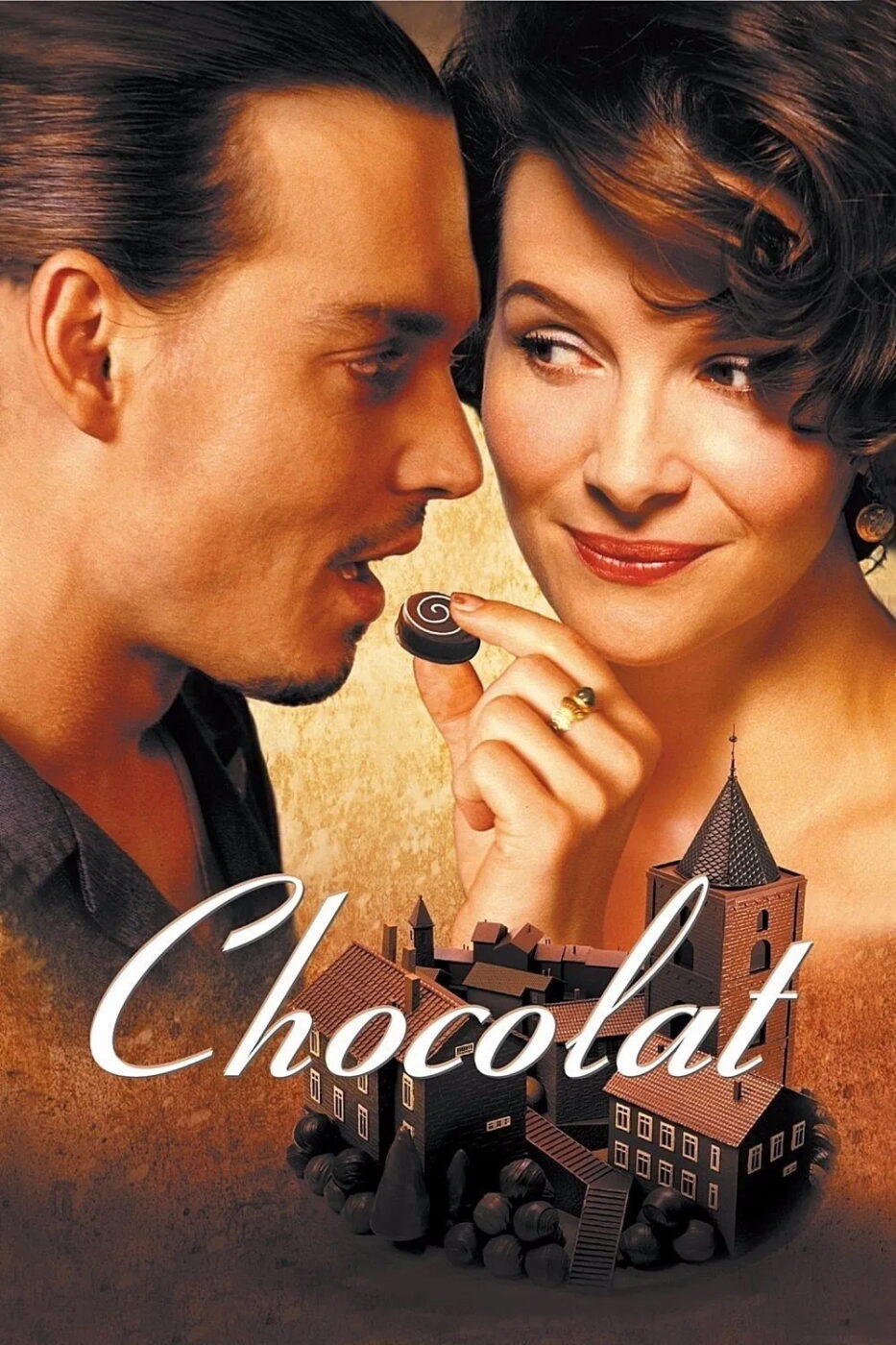
‘Chocolat’ • Miramax.
More supernatural still is the food prepared by heartbroken, tradition-bound Tita (Lumi Cavazos) in 1992’s Like Water for Chocolate. A generously frosted wedding cake infused with her tears induces uncontrollable weeping in nuptial guests; a quail dish with rose petals acts as such an intense aphrodisiac that Tita’s sister starts a fire with her body heat alone after eating it. It’s a more subtle (but no less potent) type of sorcery that takes place in Ratatouille (2007), when embittered restaurant critic Ego (voice: Peter O’Toole) finds himself emotionally transported to the innocence of his childhood through a “peasant dish” exquisitely prepared by a charming and talented rat named Remy (voice: Patton Oswalt). Food and memory are inextricably linked, with taste acting as a time portal. Once again, a character reaches transcendence through food.
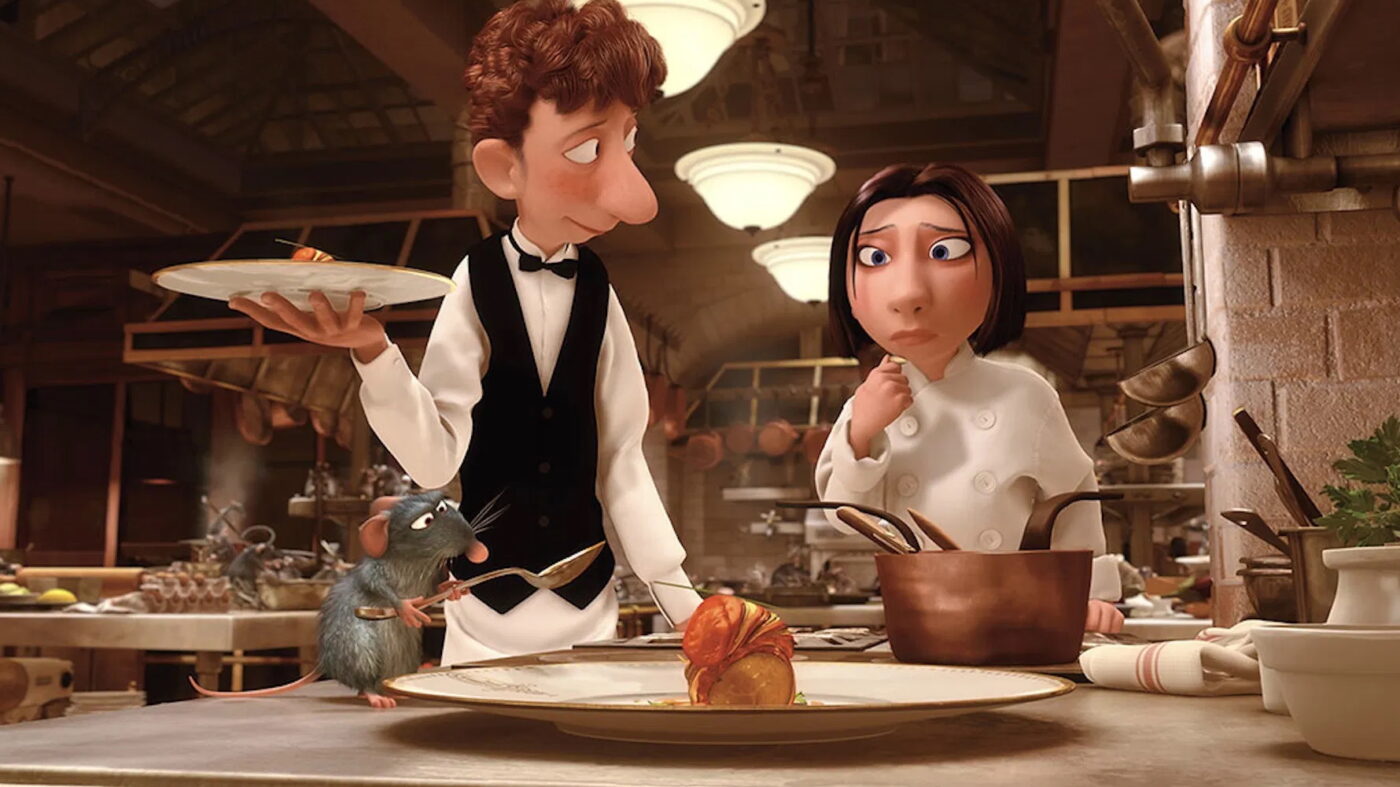
‘Ratatouille’ • Photo: Disney/Pixar.
A different sort of taste-induced awakening can be found in films like 9 ½ Weeks (1986), when the edible becomes erotic. In the psychosexual drama’s most famous scene, John (Mickey Rourke) uses a series of sumptuously shot foods to tease and dominate Elizabeth (Kim Basinger). The symbolism is as obvious as can be: Jello quivers on a spoon; John sprays champagne all over Elizabeth’s body and dangles a hot chili pepper over her open mouth; Elizabeth gulps milk as it spills all over her face.
Tampopo (1985) takes the connection between sexuality and food to yet another level (even the simple act of slurping noodles is a sensual one). In one unforgettable scene, a pair of lovers gently pass an egg yolk back and forth between each other’s mouths. The tension builds almost unbearably until the yolk breaks at last, spilling out of the woman’s mouth and dripping down her chin, a yellow stain on her white dress.
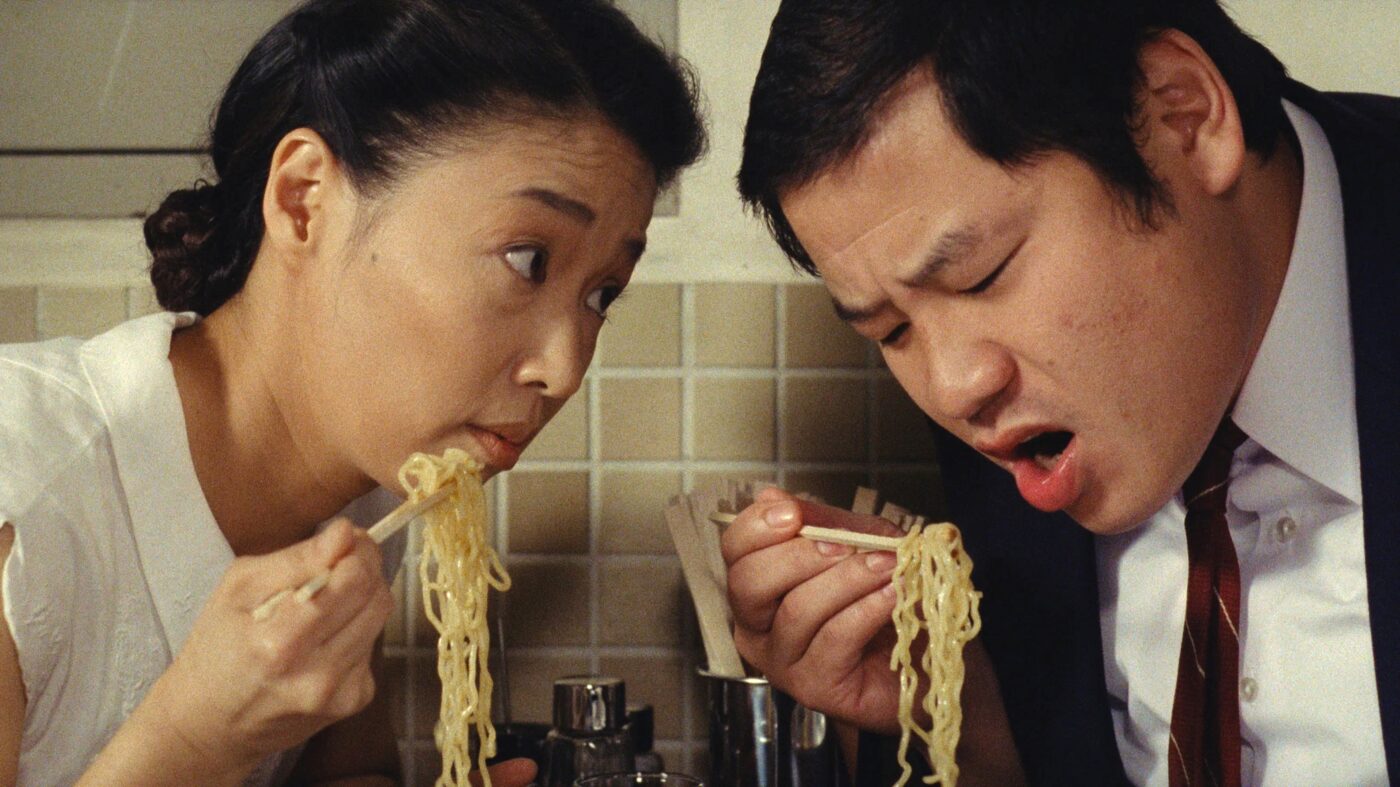
‘Tampopo’ • Photo: Toho Group.
Perhaps the title of Ang Lee’s Eat Drink Man Woman (1994) says it all — or rather, the Confucian text that inspired it, which reads: “The things which men greatly desire are comprehended in food and drink and sexual pleasure.” Lee’s story is one of family and connection, or lack thereof; three adult daughters and their widower chef father “communicate by eating.” Food is consistency and commitment, even when the patriarch loses his ability to taste. Ultimately, though, his senses are restored through his daughter’s cooking, and in the process, their relationship is likewise renewed. Food is pleasure. Pleasure is love. And so the cycle continues.