Lust: Pleasure, Performance, Power is filmmaker and author Erika Lust’s latest book (released this October by Metropolitan Books). Playgirl sat down with Erika for an exclusive and illuminating interview.
The first chapter of Lust is boldly and provocatively titled “Does Every Woman Deserve a Gangbang?” Here you discuss Kazumi’s Party, your first (feminist) gangbang.
“Feminist gangbang” sounds like an oxymoron because we have inherited a very particular visual and cultural idea of what a gangbang is. Traditionally, porn’s version is something done to a woman: she is surrounded, overwhelmed, and the spectacle is organized around male access to her body. Her pleasure is an afterthought, if considered at all.
Change where the agency sits and everything shifts. In Kazumi’s Party, Kazumi is nobody’s prop. The fantasy is hers. She wants to be there, she chooses the experience, and her desire structures the film. That shift may sound small, but cinematically it changes everything: whose pleasure matters, where the camera looks, how the performers relate to one another, and what we’re actually watching.
Calling something feminist doesn’t magically make it feminist. The real question is whether feminism can make room for women whose fantasies are messy, submissive, dominant, excessive, contradictory or politically inconvenient. It has to. Otherwise, we’ve simply swapped one rulebook for how women should behave sexually with another.
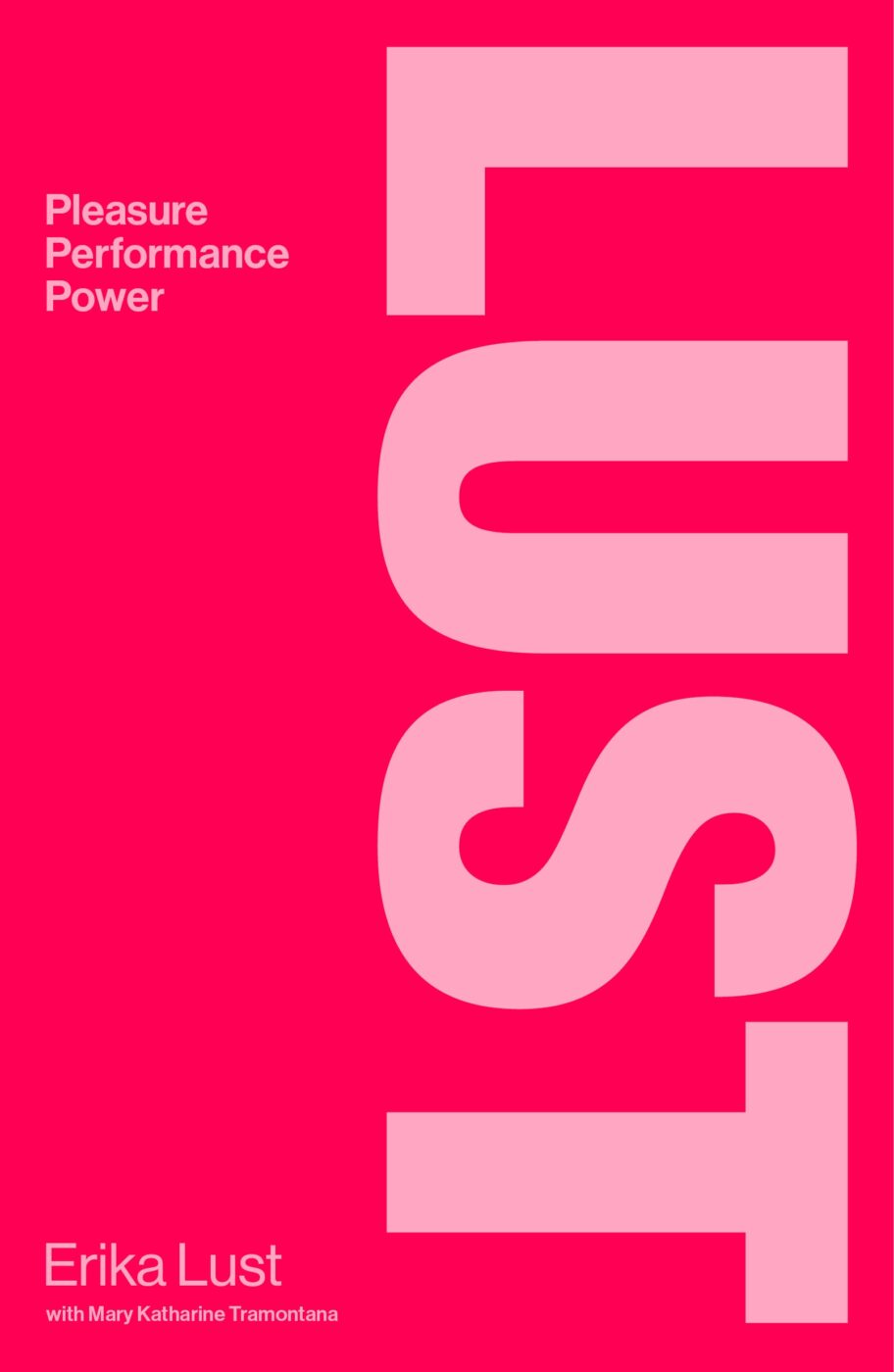
‘Lust: Pleasure, Performance, Power’ by Erika Lust.
What is feminism at its core?
It is about freedom, equality and agency. It is about dismantling the structures that have historically limited women’s choices and their ability to define their own lives.
That has to include sexual agency. Women won’t want the same things and shouldn’t have to. Some women enjoy submission. Some enjoy dominance. Some like pornography, some hate it. Some want monogamy, others don’t. Some want a great deal of sex, some very little, or none at all. None of those choices are inherently more feminist than another.
I get uncomfortable when feminism moves from analyzing power to policing desire. Sure, ask where fantasies come from. We’re all shaped by culture, gender, history and power; nobody develops their sexuality in a vacuum. But there’s a difference between asking that question and telling a woman that her desire isn’t really hers. If we only believe a woman when she desires what we think she ought to desire, we haven’t really given her much agency at all.
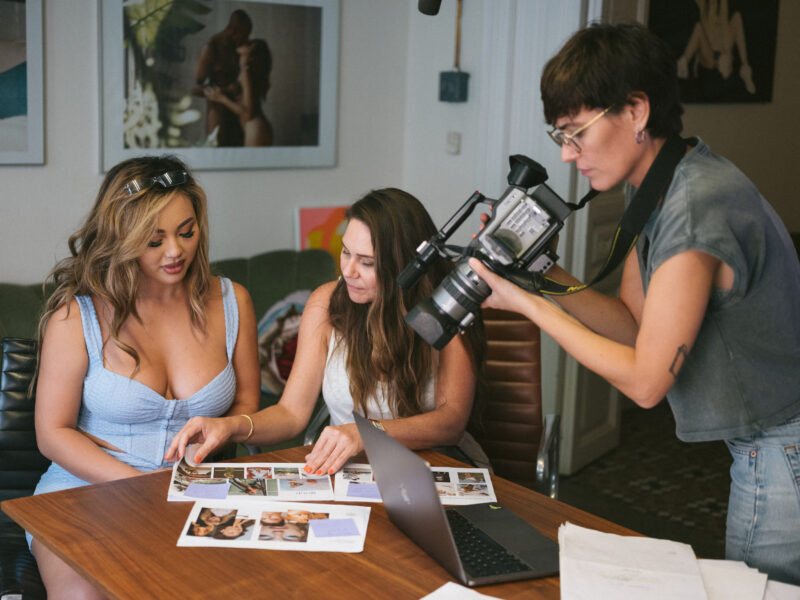
BTS ‘Kazumi’s Party’ • Photo: Monica Figueras.
Some feminists argue that women aren’t genuinely interested in BDSM, but merely acquiescing to male desire. You counter with a Kinsey Institute study, which finds that 65% of people indeed fantasize about BDSM. Hardly a fringe interest.
What the research shows very clearly is that BDSM fantasies are not some marginal or unusual phenomenon. Justin Lehmiller surveyed more than 4,000 Americans about their sexual fantasies and found that submission, dominance, pain, and other elements associated with BDSM were remarkably common.
That’s important because the idea that women couldn’t authentically desire BDSM reproduces an old paternalism dressed up in a new language. A woman says, “This excites me,” and somebody else responds, “No, it doesn’t. You only think it does because patriarchy taught you to.” There is something profoundly condescending about that. That’s not feminism.
And women aren’t only fantasizing about submission. Control, surrender, restraint, ritual, role-play, power, vulnerability, pain, care — sometimes all in the same fantasy. We need to distinguish fantasy from politics. Fantasizing about surrendering control does not mean you want fewer rights in your actual life. A powerful woman can fantasize about submission without wanting to be socially subordinate to men. A feminist can enjoy a fantasy containing unequal power without believing inequality should structure society. Human sexuality holds contradictions that political ideology cannot.
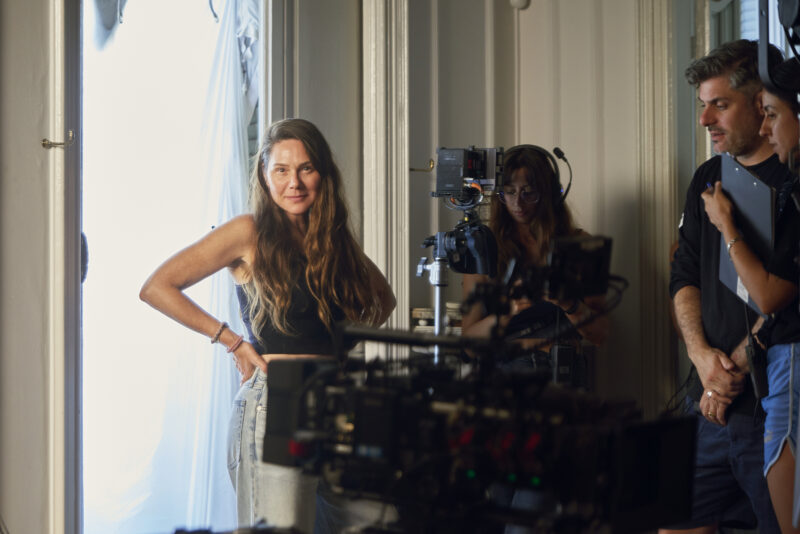
BTS ‘XConfessions Madame Oh’ • Photo: Adriana Ezkenazi.
The book explores BDSM, as does your series Safe Word. You posit that a new “orthodoxy” polices desire and demands politically correct sex. But that desire “doesn’t follow polite rules. It gravitates toward the hidden, the stigmatized, the forbidden.” That’s quite a powerful intuition — “sex becomes acceptable only when stripped of desire.”
We tend to confuse having an ethical framework around sex with requiring desire itself to be ethical, tidy and politically coherent. Those are very different things.
Our behavior absolutely requires ethics. Consent matters. Boundaries matter. Communication matters. How we treat another person matters enormously. But fantasy is a different territory. Fantasy can be strange, dark, ridiculous, transgressive, tender, aggressive, embarrassing. It doesn’t submit very well to ideological inspection.
And that is partly what makes desire desire. The forbidden has always had erotic charge. So have vulnerability, risk, role-play and the temporary surrender or taking of control. The task isn’t to sanitize those impulses until they become politically presentable. It is to create conditions in which adults can explore them consensually and safely.
When I say that sex becomes acceptable only when stripped of desire, here’s what I mean: we call ourselves sex-positive, but often only toward forms of sexuality that are gentle, easily explained, and politically reassuring. The moment desire becomes uncomfortable or difficult to categorize, our tolerance shrinks. I don’t think liberation means making desire respectable.

BTS ‘Safe Word’ • Photo: Monica Figueras.
In a few words, what is BDSM according to Erika Lust?
A consensual language of power, trust, sensation and imagination. The most interesting word there is trust. From the outside BDSM can look primarily like an exercise in power, but good BDSM requires extraordinary attention to another person: communication, boundaries, observation and the ability to listen. Power is the visible language, but trust is what makes the exchange possible.
At the end of chapter 7 you write, “We need more nuanced portrayals of BDSM and kink.” How do you envision those “nuanced portrayals?” And how do you assess your own contribution?
For decades, mainstream culture has mostly given us two versions of BDSM: either it is presented as a dangerous pathology, evidence that somebody is damaged, or it becomes a glamorous shorthand for transgression. Pornography can flatten it too, reducing it to props and gestures without showing the communication, negotiation, and trust that give those acts meaning.
I want to see the human relationships inside the fantasy. Who are these people? What do they want from each other? Why does surrender turn one person on and control the other? What happens before the scene begins, and what happens after it ends? There can be tenderness inside dominance, humor inside submission, and plenty of vulnerability in whoever appears to hold the power.
In Feminist and Submissive I wanted to confront the supposed contradiction in the title: the assumption that a woman’s submission automatically cancels out her feminism, as if the two can’t be in the room together. The film looks beyond the outward appearance of the power exchange and to the desire, consent and self-knowledge beneath it.
In Safe Word, I explored those questions over a longer fictional and emotional arc. I wanted to make something visually and erotically compelling that shows submission as part of a woman’s awakening — not as evidence that she is weak, damaged, or being manipulated. The boundaries, negotiation, and trust between performers are what make that possible, even when the audience never sees that process.
My films are not the definitive representation of BDSM. They’re my read on it, shaped by my own gaze, and by the performers I collaborate with. I hope my contribution has been to move the camera away from the question of “How extreme can this look?” toward something better. What does this person want, and what does power mean between these people? That is where BDSM becomes more than an aesthetic. It becomes a story about intimacy.