
“I’m sorry, I didn’t mean to call you boys,” Anne Hathaway tells three young employees. “Nobody calls men men anymore, have you noticed? Women went from girls to women; men went from men to boys. This is a problem in the big picture. You know what I mean? (…) OK here’s my theory about this (…) we were always told we could be anything, do anything and I think guys got… maybe not left behind but not quite as nurtured, you know. I mean, we were the generation of you-go-girl, and I wonder sometimes, well, how guys fit in, you know. They still seem to be trying to figure it out (…) They’re still like just little boys, they’re still playing video games. How in one generation have men gone from guys like Jack Nicholson and Harrison Ford to…” [Anne looks at the three scruffy ‘losers’ in front her, then turns to 70-year-old De Niro, dressed in an impeccable suit.] “Take Ben here. Look and learn, boys. Because, if you ask me, this is what cool is (…) I apologize for the tirade. I am going to go; I am forever in your debt, gentlemen. Another word which is never used anymore, let’s bring it back shall we?”
It’s the bar scene in Nancy Meyers’ The Intern (2015), but we’ll borrow it to half-jokingly encapsulate Scott Galloway’s Notes on Being a Man (a New York Times bestseller). Galloway hits the nail on the head when he describes boys and young men living in basements, vaping and playing video games. “Seldom in recent memory there has been a cohort that’s fallen farther, faster,” he writes in the book introduction. “A generation of young men from all backgrounds who are (a) unbearably lonely, (b) not economically viable, (c) not emotionally viable, and (d) basically adrift. And there is nothing more dangerous than a lonely, broke young man.”
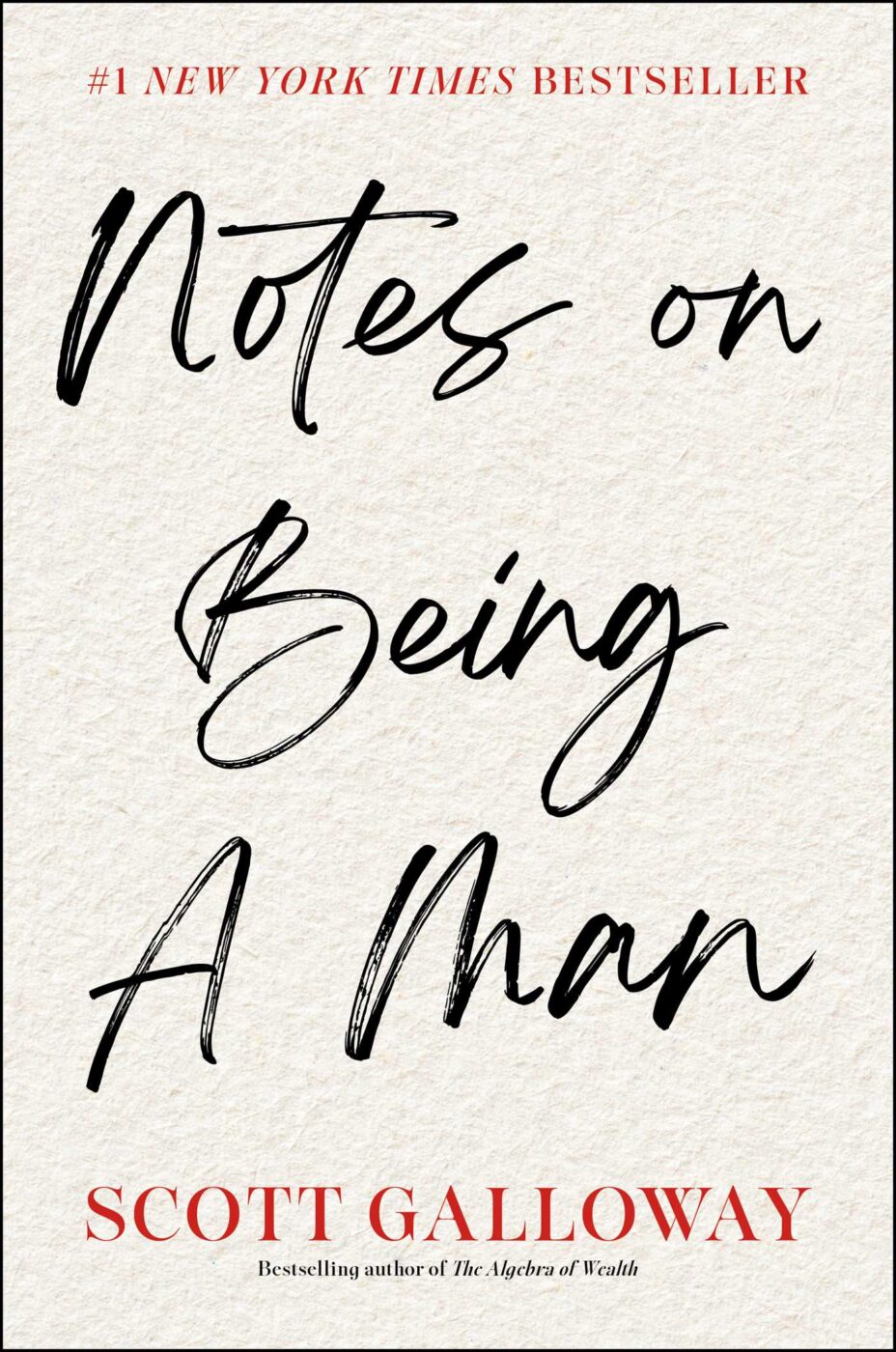
‘Notes on Being a Man’
His diagnosis is spot-on too: The economy, the lack of male role models, the political polarization, Covid and its aftereffects, relentless dopa hits from social media, fewer opportunities to connect (at the mall, at the movies, at the office…) His indictment of Big Tech as damning as Michel Onfray’s in Théorie de la dictature: “The deepest-pocketed, most talented companies in the world profit mightily by making you indignant, overweight, unhealthy, addicted and at war with America and your fellow citizens,” writes Galloway. These companies “are guided by algorithms that churn up incendiary content and feed off of us enraging. And shit-posting one another and our government.” They contribute –and profit from– “young men’s social isolation, boredom and ignorance.”
What we take issue with is the title –it should’ve been Notes on being a Man in the United States: The cultural framework would be vastly different elsewhere. And with the course of action Galloway maps out. “In answer to the questions Why are men here? And What men do? The answer is threefold,” he writes: “Men Protect, Provide and Procreate.” Then again, women can Protect, Provide and Procreate too, can’t they? Gay men can neither procreate nor adopt (in most countries): Are they children of a lesser God?
Galloway urges us to be “mentally and physically a warrior.” He’s tried to be three things in life: “The first is generous: someone who gives more than he takes (…); second, a really good dad; third, patriotic. Generous, good dad, a patriot –that’s my code.” But what about the men who didn’t get married, didn’t have children, never lifted heavy weights and run long distances? Who aren’t “fit, patriotic, patient, disciplined?” Yet not adrift either.
In his defense, Galloway acknowledges that “a decent percentage of the population will have a different view and outlook” (we’re that decent percentage). That as a white, heterosexual man, he doesn’t “purport to have the skills or life experience to tell others what it means to be a man.” But he does ask us “to mull our own passage and relationship with masculinity;” to foster conversations on modern masculinity, no longer “conflated with boorishness and cruelty.” His idea of masculinity is “kind, protective…” And that’s a starting point we can all readily agree with.

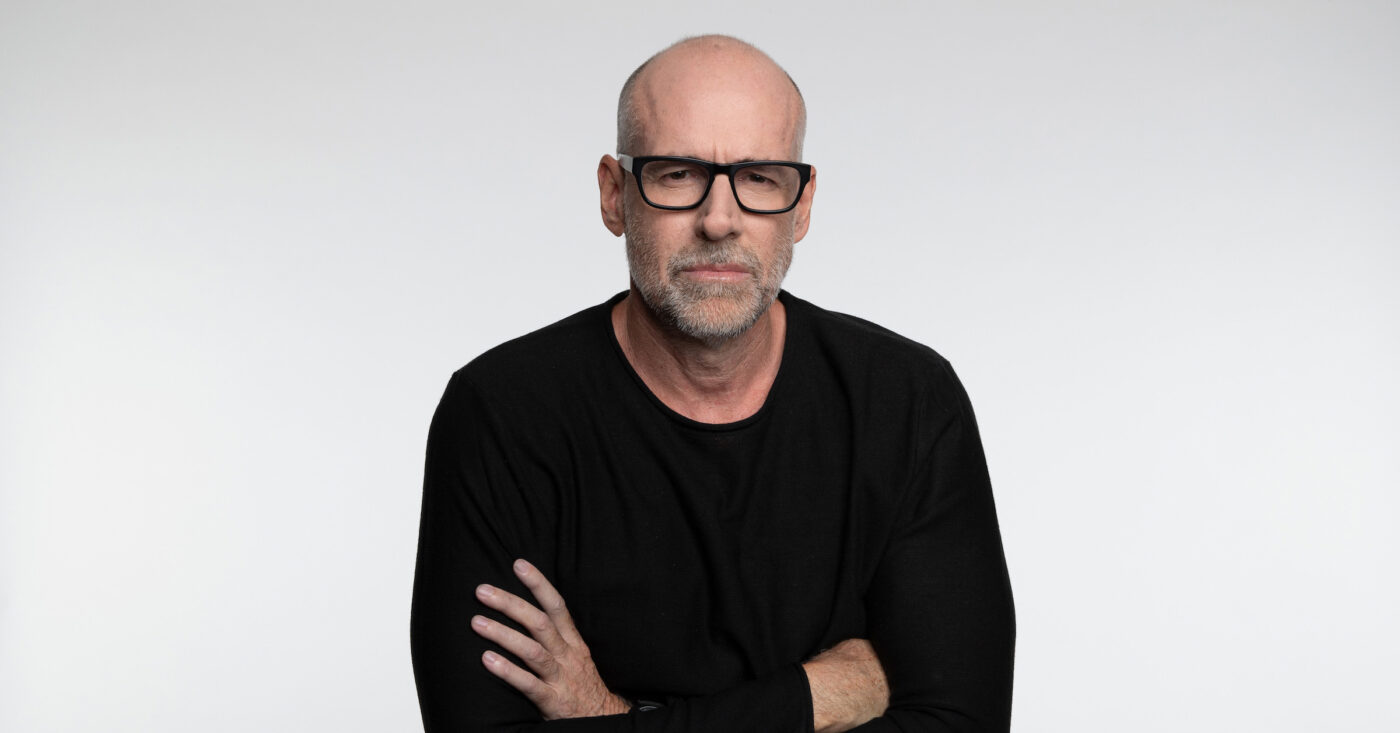
Scott Galloway • Photo: Piotr Sikora.