Sex, drugs, and rock ‘n’ roll is one of music’s most enduring slogans for a reason. It sells the fantasy that music has always been inseparable from excess: Desire, danger, performance, indulgence.
Yet for all of the handwringing over social media, parasocial relationships with celebrities, and TikTok thirst edits, there is very little about modern fan behavior that is actually new. Long before comment sections filled with “hear me out” confessions or drooling and heart-eye emojis, concert fans were openly lusting after musicians. Women were screaming, fainting, obsessing, fantasizing, and projecting their untamed desire onto performers centuries before the internet gave those feelings a public platform.
Women didn’t need permission to feel this way, and they certainly weren’t asking.
Long before social media transformed desire into content through barricade footage and slowed-down, zoomed-in videos that circulated endlessly online, frontmen already understood that the performance didn’t end when the song did. Sexuality became part of the experience itself—entangled into the movements, the vocal delivery, the unbreakable eye contact, the way a musician carried himself across a stage, and the sense that what was happening onstage was somehow a shared intimacy, even in a room full of screaming fans with the same thoughts running through their minds.
Performance itself became a form of foreplay shared between a frontman and sometimes thousands of adoring fans. Centuries before Elvis Presley scandalized television audiences with the swing of his hips, women were already losing their minds over musicians.
The 18th century didn’t need electric guitars or “moves like Jagger” to spark a fan obsession. Just ask Italian castrato singer Farinelli. He didn’t fit neatly into the expectations audiences had for male performers, and that mystery only added to the allure and intrigue opera thrived on. Fans found a way to project their suppressed desires onto him, and women in particular found themselves obsessed over him—and other castrati of the day—in remarkably familiar ways to the 21st century.
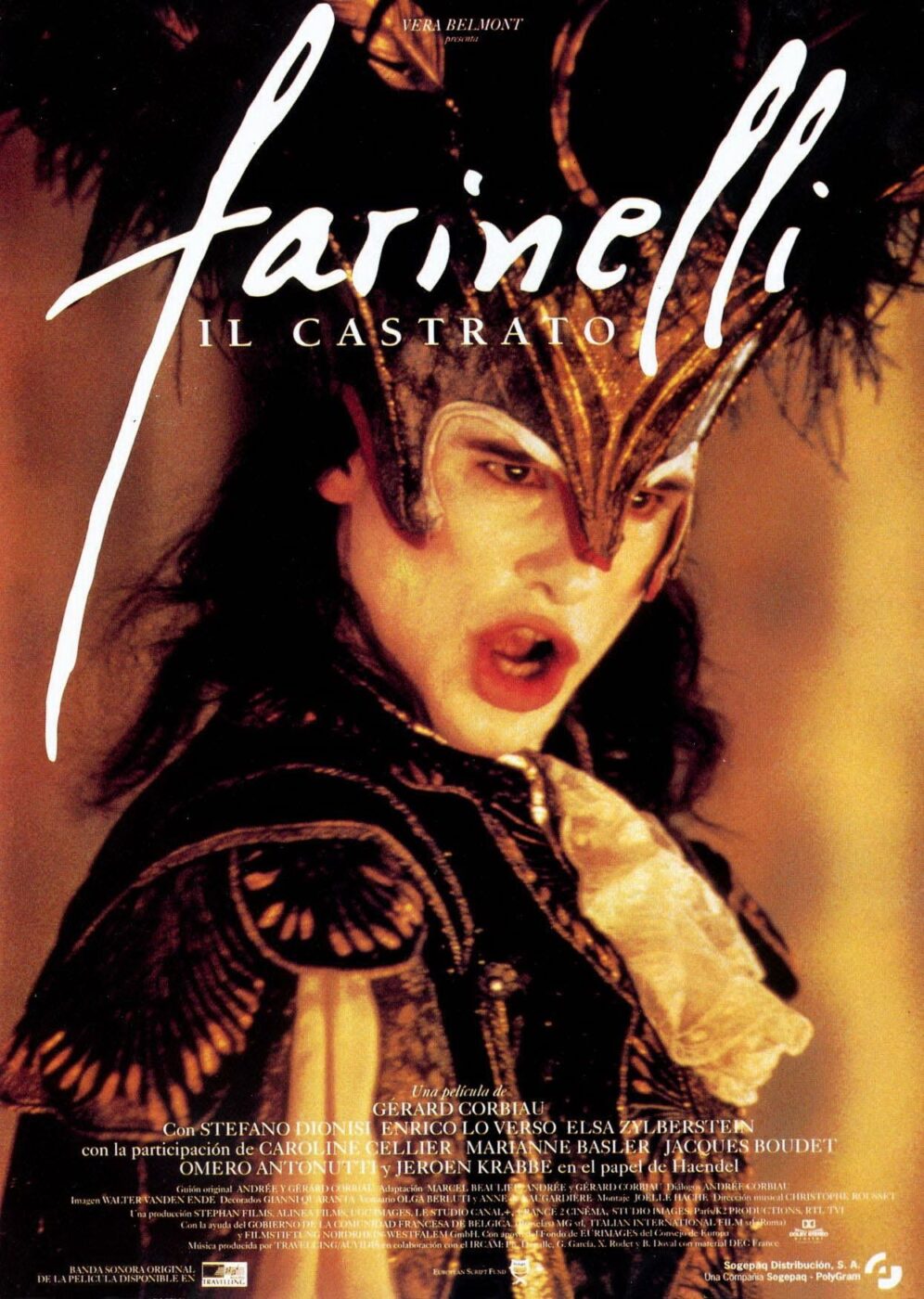
‘Farinelli il Castrato’
Then came Elvis Presley, bringing a whole lot of hunk, a hunk of burning love with him. His gyrating hips, curled lip, sweat-soaked shirts, and rubberlike body language recast rock music into something parents feared and young audiences desperately craved.
The reaction was immediate. Fans screamed so loudly they often drowned out the music. They cried, fainted, pushed toward the stage, and completely lost themselves in the frenzy. And Elvis? Instead of shying away from the spectacle of attention, he leaned into it further. During renditions of “Love Me Tender,” he would regularly leave the stage and run through the audience, stopping to kiss as many female fans as he could as they mobbed the aisles and reached uncontrollably for him.
Television networks were typically forced to film him from the waist up to avoid further outrage, but the censorship only intensified fans’ need. Female desire, once expected to remain private and restrained, suddenly became impossible to ignore as crowds of women openly lusted after The King of Rock and Roll. As they threw themselves toward the stage to be nearer to him, America was forced to confront the reality it had spent a long time ignoring: Women were every bit as capable of sexual desire as men.
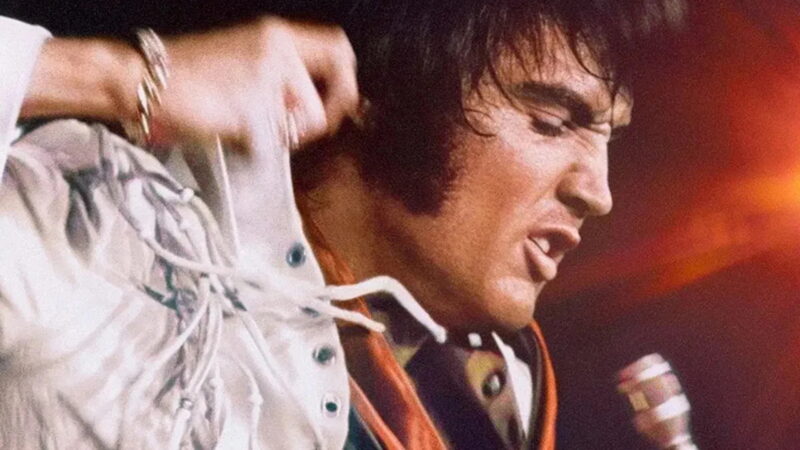
‘EPiC: Elvis Presley in Concert’ • Photo: NEON.
Elvis may have opened the door for sexuality’s presence in popular music, but artists like Jim Morrison and Mick Jagger were the ones who kicked it off its hinges.
Bare-chested, with dark curls falling around his face and broad shoulders, Morrison looked like trouble. He carried himself on the brink, perpetually teetering between ecstasy and self-destruction. People were drawn to how reckless yet charismatic the frontman was, delivering poetry like a prophet one night and getting arrested onstage the next. Fans couldn’t get enough of the unpredictability that followed him, heightening the thrill.
Morrison made fans wonder what might happen next. But Jagger made them wonder if he was flirting with them personally. There was a cheeky wink to everything he did, a confidence that turned every slithering strut across the stage or well-timed pogo jump into its own kind of provocation.
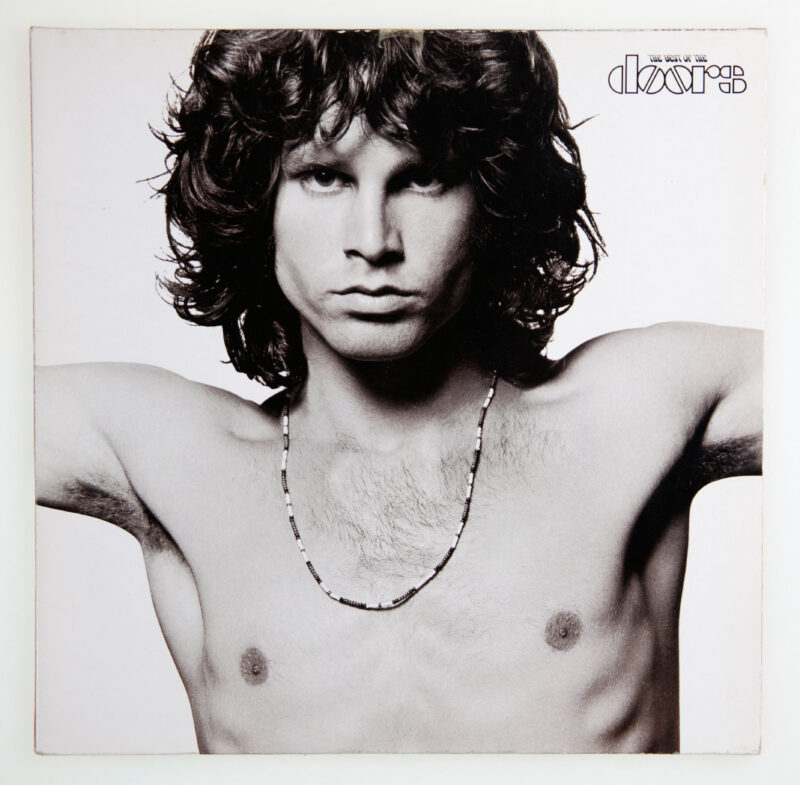
Jim Morrison • ‘The Best of The Doors’ • Photo: EyeBrowz.
While other artists wielded sexuality to their advantage, Prince built an empire around it, and he was centerstage royalty. Lace, ruffles, heels, plunging necklines, makeup, cascading curls, and a voice that carried sensuality and command—every detail challenged rock’s more traditional ideas of masculinity and made beauty feel every bit as powerful as brute.
Cool, composed, and entirely self-possessed, he used desire as one of his greatest artistic tools. Audiences never quite knew whether they were watching a virtuoso musician, a sex symbol, or some impossible combination of both.
That was the magic behind Prince as a performer. He understood something his contemporaries did not: being desired and being admired were not mutually exclusive.
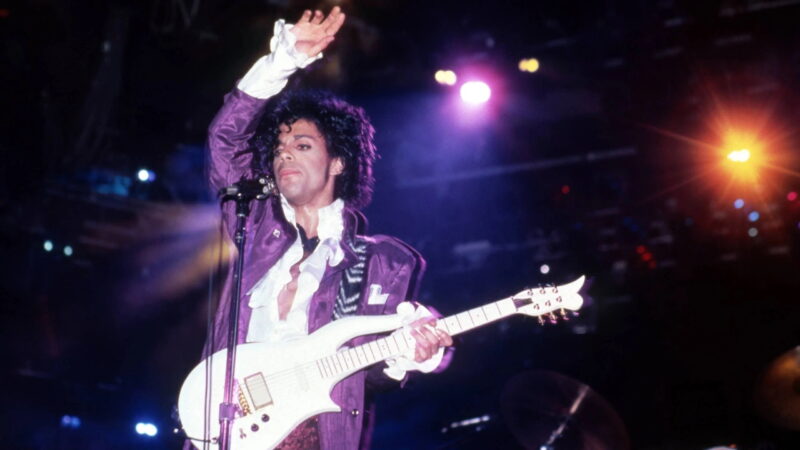
Prince • ‘Purple Rain’ • Photo: Warner Bros.
While Black male performers were often confined to narrow expectations of masculinity—especially within rock music—he refused to make himself smaller or more palatable for anyone. He wasn’t dangerous because he looked threatening; he was dangerous because he was beautiful, immensely talented, completely in control, and knew exactly how much power he had in all three.
On an entirely different note, there was one group of 1980s icons who seemed hellbent on kickstarting their fans’ hearts—and stopping them—by any means necessary: Mötley Crüe.
Embracing excess in both lifestyle and spectacle, the band took the slogan “sex, drugs, and rock ‘n’ roll” to its logical extreme. Their appeal wasn’t rooted in mystery or cheap seduction so much as temptation itself. Every story was bigger than the last, every indulgence more outrageous, every boundary another challenge to be crossed. Sex wasn’t simply part of the mythology. Neither were the copious amounts of drugs. For The Crüe, there were no limits. Fans watched them in horror and admiration as the band repeatedly survived situations that should have ended very differently.
Unlike many of the artists who came before them, Mötley Crüe didn’t hint at excess. They lived it with everything they had.
And then…the fantasy escaped the stage.
In 1995, the relationship between rockstars, sexuality, and public consumption was entering a new era. April that year, the theft and eventual leak of Tommy Lee and Pamela Anderson’s private sex tape brought one of music’s longest-running fantasies into public view. Fans who had spent decades imagining what happened behind closed hotel room doors suddenly found themselves with unprecedented access to a celebrity’s private life. They no longer had to imagine because, for the first time, they were seeing what had previously only existed in their imaginations.
The distance between fantasy and reality was shrinking—and fast. It was a cultural shift that would accelerate with the arrival of the internet and, eventually, social media.
Just a few months later, another musician was embracing that gaze, but on his own terms.
Peter Steele’s appearance on and inside the pages of Playgirl in August 1995 transformed the Type O Negative frontman from a crude sexualized creature into one of alternative music’s most unlikely sex symbols. Yet that sexualization extended further back than his nude spread as he flirted with sexuality long before the magazine came calling through shock value images (see: The Origin of the Feces album artwork).
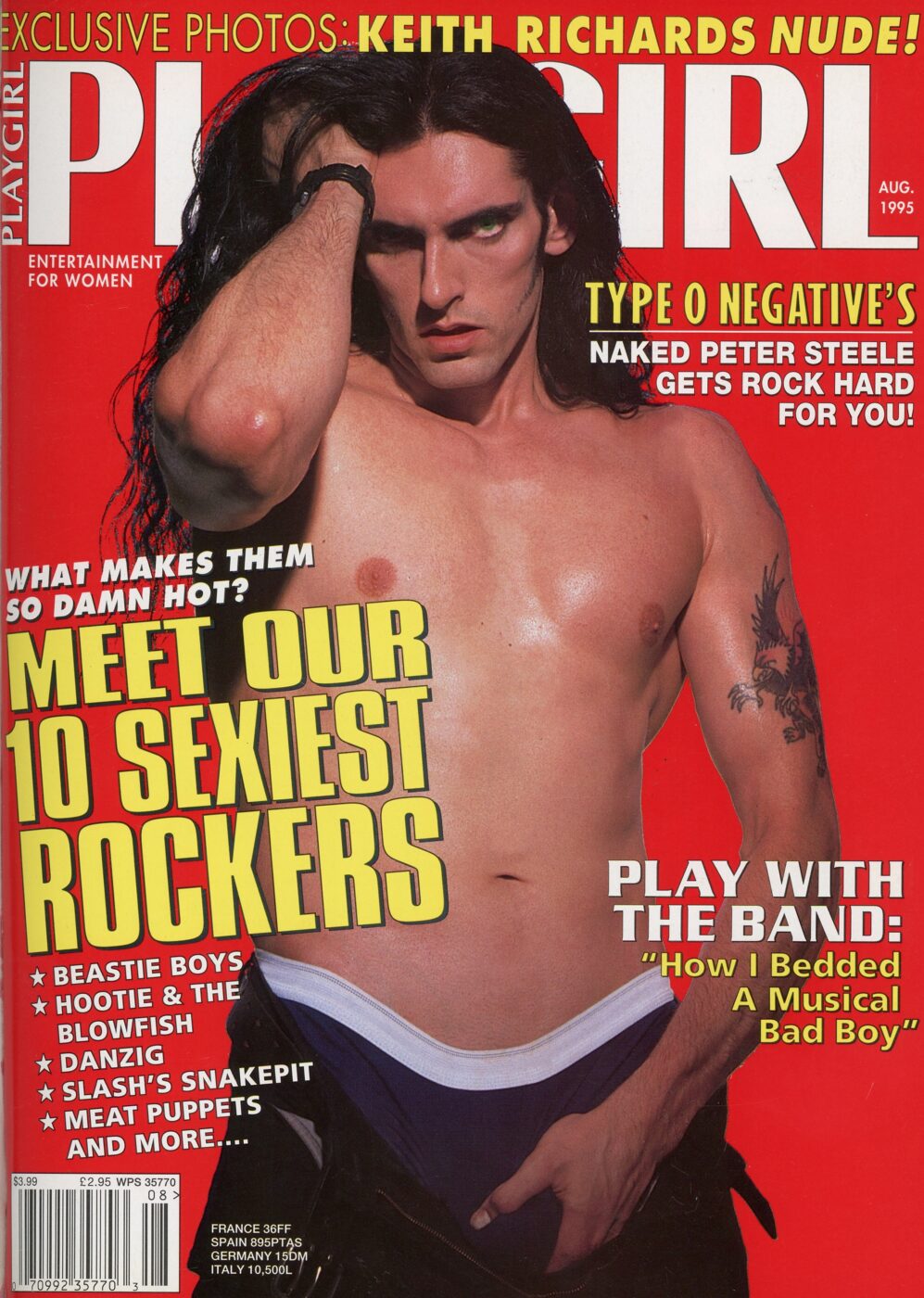
Peter Steele • Playgirl, August 1995.
Standing 6-foot-8 with waist-length jet black hair, poison green eyes, and a voice that seemed to emerge from the depths of hell, Steele possessed all of the physical ingredients of a traditional fantasy figure. Beneath his imposing exterior and tongue-in-cheek vulgarity (“Even though I still miss your lips/You’re about as real as your tits”), he was a songwriter preoccupied with loneliness and heartbreak (“Our cold eyes of Coney Island sand/Hair dyed the blood of a foolish man”). The contradiction proved irresistible. Steele Frankensteined a form of sexiness that was more intimate and cut deeper than many of the rockstar archetypes that came before him.
Beneath his towering exterior, dark humor, and gothic sensibility was an honesty that made the fantasy of human feel surprisingly human. But his more…physical attributes put on display in Playgirl didn’t hurt his sex god status, either.
By the early 2000s, fans no longer had to wait for a magazine interview, a TV appearance, or the next concert to hear from their favorite artists. Message boards, digital cameras, Myspace, and eventually the social media boom made musicians feel closer than ever before. For the first time, fans weren’t just following bands but also growing alongside them.
Few artists capitalized on that shift as much as Fall Out Boy bassist Pete Wentz. As the band exploded into mainstream success, Wentz became one of the first major rockstars of the internet age. He also challenged the decades-old assumption that the lead singer had to be the band’s primary sex symbol. While each member of the band cultivated a devoted following around their every move, none harbored the same star power and obsessive attention as Wentz. With precisely placed eyeliner, skinny jeans that left little to the imagination, deep-cut V-necks, and a snarl that girls couldn’t help but swoon over, fans were smitten with him.
So, of course, when nude photos Wentz had taken of himself leaked online in 2006, the incident became one of the earliest examples of a musician’s sexuality being consumed, discussed, and redistributed at internet speed across Myspace and Tumblr. The fantasy was no longer confined to magazine pages or backstage mythology as it was now searchable, shareable, and impossible to contain.
Fans were no longer willing to accept access to the fantasy alone. They demanded access to the person behind it—or at least the feeling that they had access.
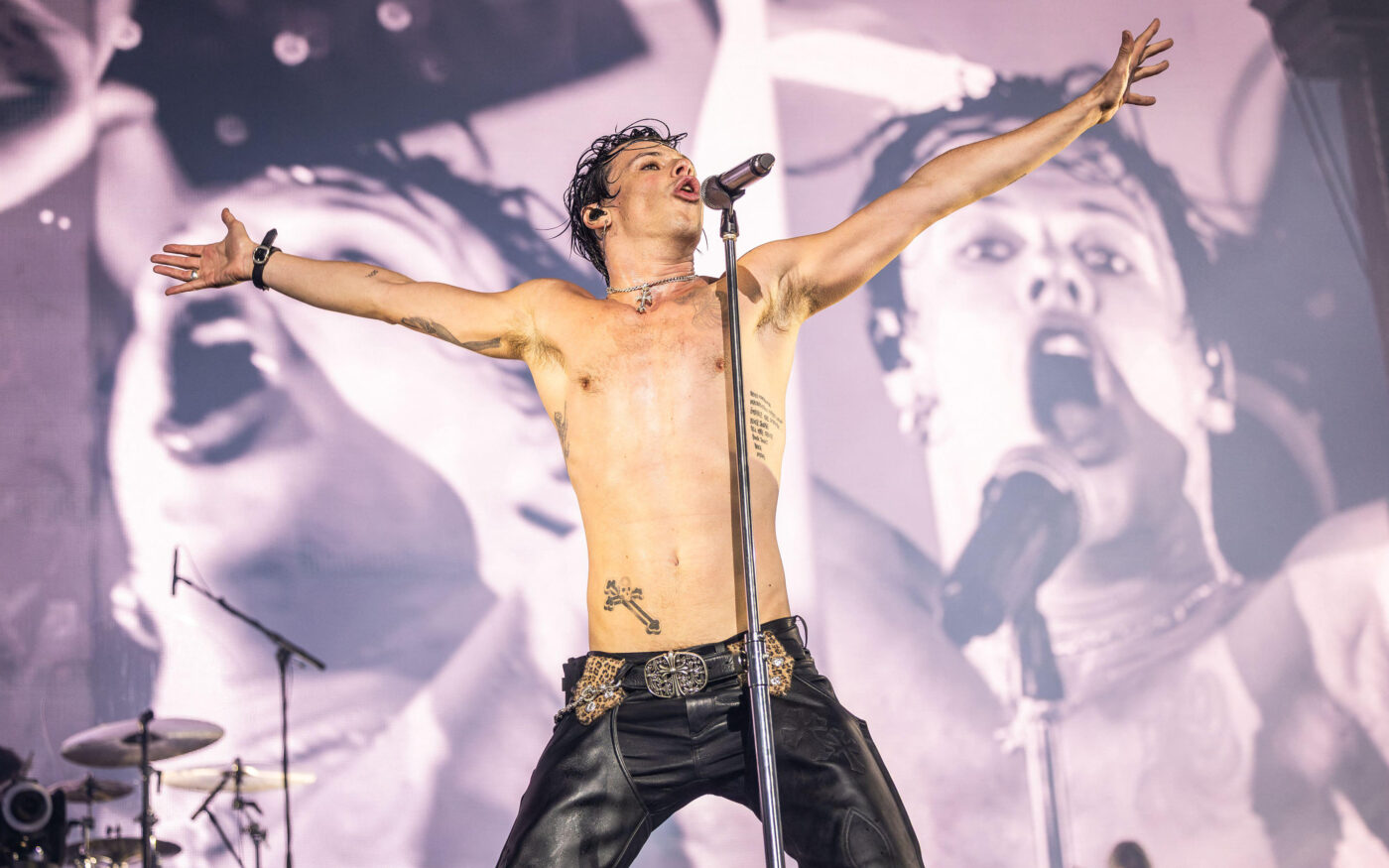
Somewhere between Elvis causing national outrage and fan-made thirst edits on TikTok, the rules changed. In the digital era, social media has created unprecedented access to artists, and fans are no longer watching the fantasy unfold before their eyes. They were becoming part of it consensually. Few artists understand this cheeky dynamic better than YUNGBLUD.
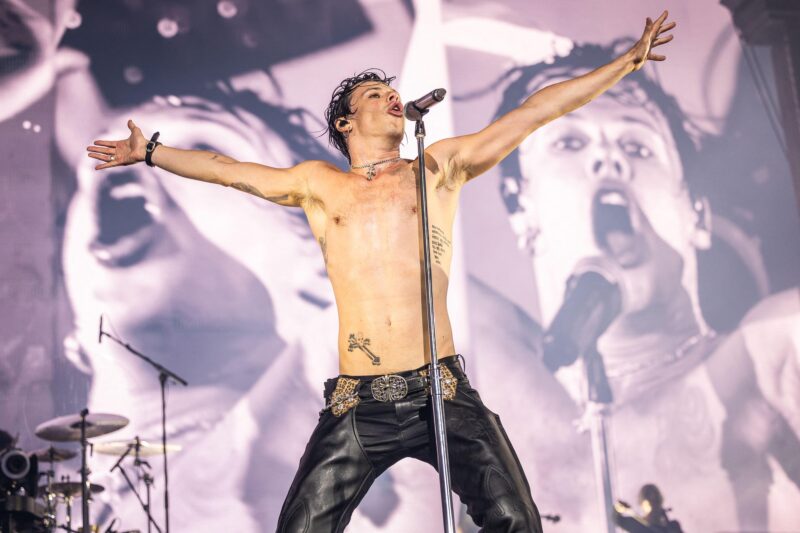
YUNGBLUD • Photo: Anne-Marie Forker/Alamy.
Flirtatious, mischievous, and entirely aware of the effect he has on a crowd, the British rocker has turned sexuality into something closer to a game of cat and mouse rather than a performance. He openly jests about his self-described “cougar” fans, recounts stories about signing “a granny’s tits” (his words, not mine), encourages the push-and-pull of audience participation with signs reading “Boobies Out 4 YUNGBLUD,” and reacts to fan advances with exaggerated innocence. “I’m just a polite English boy, and you motherfuckers are leading me astray,” he told a crowd while peeking through his fingers after being flashed by a fan. The joke, of course, is that he knows exactly what he’s doing.
YUNGBLUD and his fanbase thrive on interaction and empowerment. The teasing remarks, suggestive stage antics, playful exchanges, and constant back-and-forth with fans reinvent the one-sided attraction into a collaborative one. Through his open invitation to let your freak flag fly, he’s created a safe space for sexuality and self-expression to prosper without shame.
From Farinelli inspiring obsession in 18th-century opera houses and Elvis igniting hysteria to Prince redefining what’s considered sexy and Pete Wentz ushering sexuality into the internet age, the ways fans lust after their favorite singers have changed dramatically. Yet the underlying appeal remains awfully familiar. Desire itself has not changed.
Women were fantasizing about musicians long before TikTok edits, thirst traps, fancams, and Instagram. The difference is that what once existed in opera houses, concert halls, backstage halls, magazine spreads, and private conversations now publicly unfolds in real time. Social media didn’t invent desire, but it certainly hasn’t suppressed it either.
Fans still want performers who make them feel something larger than themselves: desire, excitement, rebellion, freedom, lust, connection, or possibility. The platforms have evolved, the fantasies have adapted, but sexuality on stage has remained one of music’s most enduring acts.