“I finally receipted script. Am exceedingly sorry but I do not like it.”
Marilyn Monroe sent this cable to 20th Century Fox studio head Darryl F. Zanuck on January 25, 1954. The script was for a film called The Girl in Pink Tights, which was supposed to be Monroe’s next film, but she was having none of it. By then, she had tired of the role into which she had been cast: The dumb blonde, the showgirl, in films like The River of No Return, Gentlemen Prefer Blondes, and How to Marry a Millionaire. The Girl in Pink Tights was to be a period piece about a school teacher who becomes a showgirl to help her boyfriend become a doctor. She was capable of more, and she not only knew it, she had already done it in dramatic films like The Asphalt Jungle and Don’t Bother to Knock. She wanted to make her own choices. Nearly one year later, on January 7, 1955, she’d finally have the opportunity when she co-founded, with photographer Milton Greene, her own production company, Marilyn Monroe Productions.
The studio system was teetering on its last legs at this time, and lawsuits abounded. For decades the studios had made all the choices of what actors, directors, and screenwriters would work on a film. But, as stars became the reason people came to see movies, many actors began to chafe under the studios’ thumb. In 1944 actress Olivia de Havilland famously sued Warner Bros. after they extended her contract to include time they had suspended her, which a judge called “‘peonage,’ or illegal servitude,” Variety reported. The Supreme Court would declare studios a monopoly in 1948, meaning they’d soon no longer have the control over production and distribution that they once had.
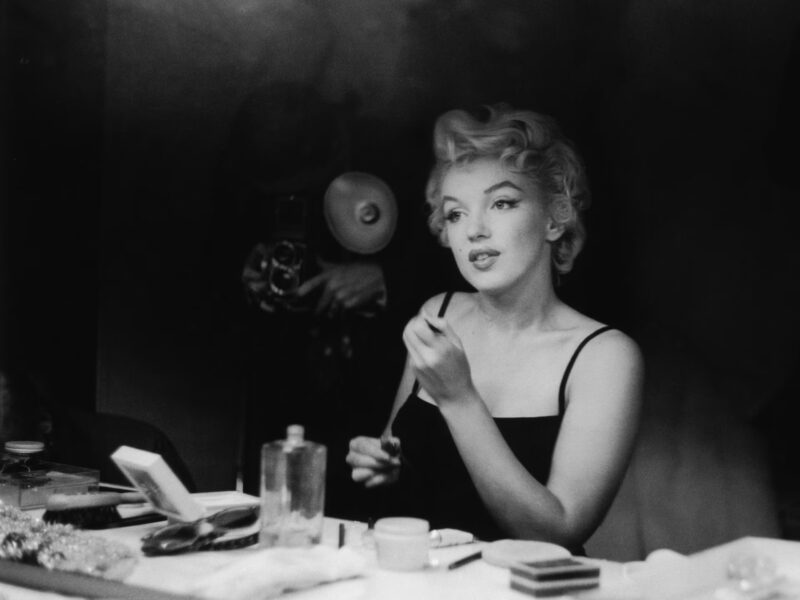
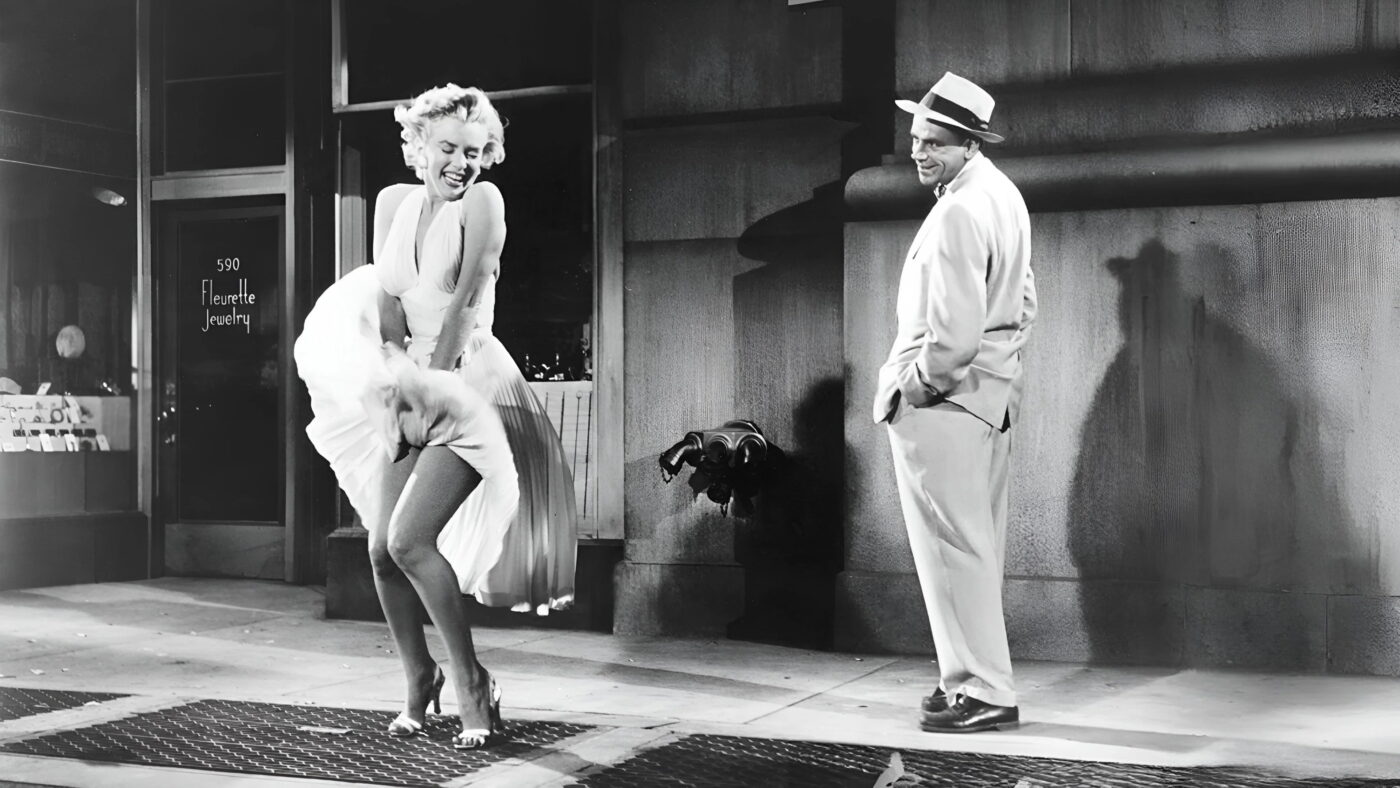
‘Marilyn Monroe: Hollywood Icon’ exhibit at the Academy Museum of Motion Pictures • Photo: Sam Shaw courtesy Shaw Family Archives.
Where other stars would simply take a suspension and get back to work, Monroe decided to leave her studio behind. In doing so, she became one of the few women ever to found her own production company. Preceded by the likes of Alice Guy-Blaché, Lois Weber, silent film star Mary Pickford, Bette Davis and Lucille Ball.
Monroe didn’t work for a year while negotiations with Fox went back and forth, but she ultimately leveraged her fame to ink a contract that worked in her favor. Newly married to beloved New York Yankees center fielder Joe DiMaggio, they traveled to Japan and Marilyn took a side tour to Korea where she entertained the troops stationed there during the Korean War. Greene saw to contract negotiations in the meantime; he would own 49% of the company to Marilyn’s 51%, the vice president to her president. By the time the year was over, she and DiMaggio would split and Monroe would move from Hollywood to New York to start a new life. This would include Marilyn Monroe Productions as well as a revised deal at Fox that gave her the opportunity to approve projects and directors as well as produce her own work. With Greene and his wife Amy, she’d appear on famed journalist Edward R. Murrow’s television show Person to Person to discuss Marilyn Monroe Productions, an appearance Monroe herself advocated for.
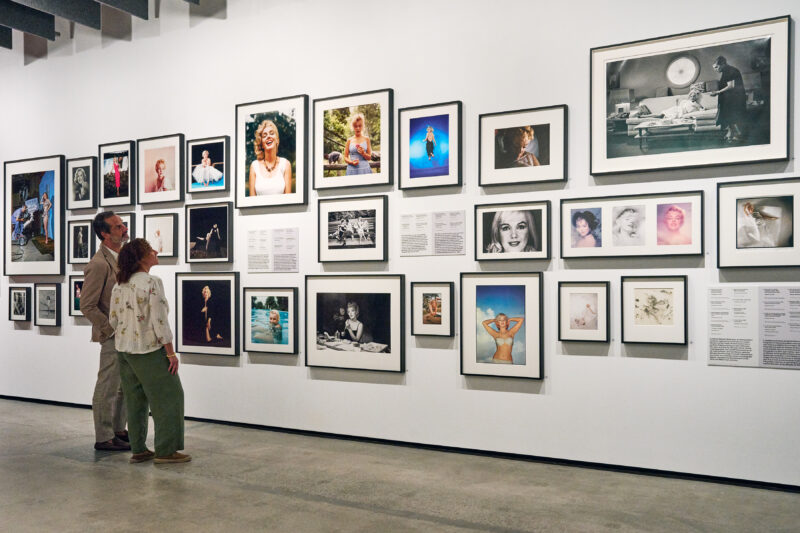
© Academy Museum Foundation • Photo: Emily Shur.
Hollywood not only frowned upon Monroe’s decision to start her own production company, it openly mocked her, believing that her ambitions were foolish, her intellectual capacities similar to those of the characters she played. When the press learned of her interest in playing Grushenka in The Brothers Karamazov, for example, they asked her to spell the character’s name. “There were people that recognized her as being a comic genius and things like that, but the overall view of her in Hollywood was that she was a joke and she wanted too much, she expected too much, and it caused a lot of resentment towards her,” said biographer Charles Casillo, author of Marilyn Monroe: The Private Life of a Public Icon.
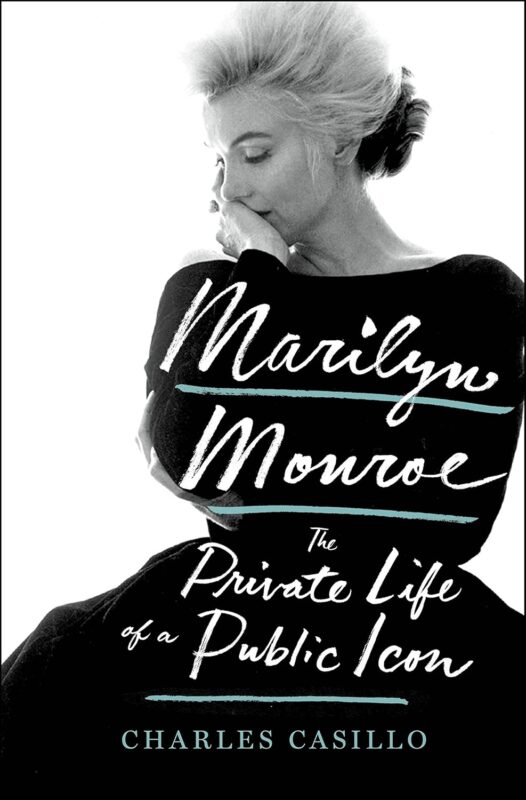
‘Marilyn Monroe: The Private Life of a Public Icon’
Nobody thought she could do it. In one interview, for example, a female reporter questions outright whether or not Marilyn knows how the production company will work. “Do you understand the business aspects of your company, or do you run it or does Mr. Greene run it? We’re all confused on this…do you make the decisions? Are you the boss lady?” Which is something so wild to hear today, when such questions would be seen as dismissive and condescending. But the production company carried on and in 1957 it released its first independently produced picture, The Prince and the Showgirl, co-starring, produced and directed by Laurence Olivier. Indeed, on the title card at the beginning of the film, the copyright is ascribed to Marilyn Monroe Productions.
The film follows a streetwise showgirl, Monroe’s Elsie Marina, invited for dinner to the home of the Prince Regent of Carpathia (Olivier). Elsie knows he’ll try to make dinner into something more, and flips his narrative in the process, much to his chagrin. Monroe’s character, while it has many traces of her previous lives on screen, isn’t dumb; on the contrary, she’s wily, fast-talking, and inquisitive–like Monroe herself, she is often underestimated.
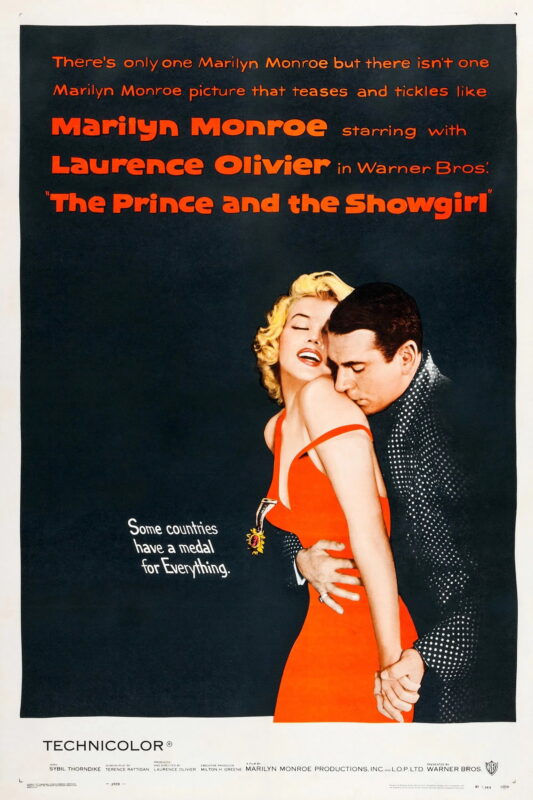
‘The Prince and the Showgirl’
Though there were challenges —Monroe was often frozen by insecurity, leading to extreme delays on set— she would win a David di Donatello Award, Italy’s equivalent of an Oscar, for her performance. The film otherwise received mixed reviews, but that hardly mattered —the point was that Marilyn Monroe Productions had achieved what was considered impossible for Monroe herself, and for actresses at the time. “It wasn’t like this day and night thing…and [suddenly] everyone else saw her as a smart, canny businesswoman. But I think it was a start when people said, ‘hmm, there is more to that woman than we think,’” Casillo told Playgirl.
And while The Prince and the Showgirl would be important to actors searching for more independence from the studio system, it would be the only independent film from Marilyn Monroe Productions. Monroe would have to finish out a four-picture deal with Fox, and though her production company was involved, the studio still placed her in many showgirl/sex kitten roles of the type she had been trying to avoid. She likely did the pictures just to finish out the contract, Casillo believes. “She fought right up to the end to be taken more seriously and to [have] a more respectful image and a more respectful view of her from not only the public, but from Hollywood,” he said.
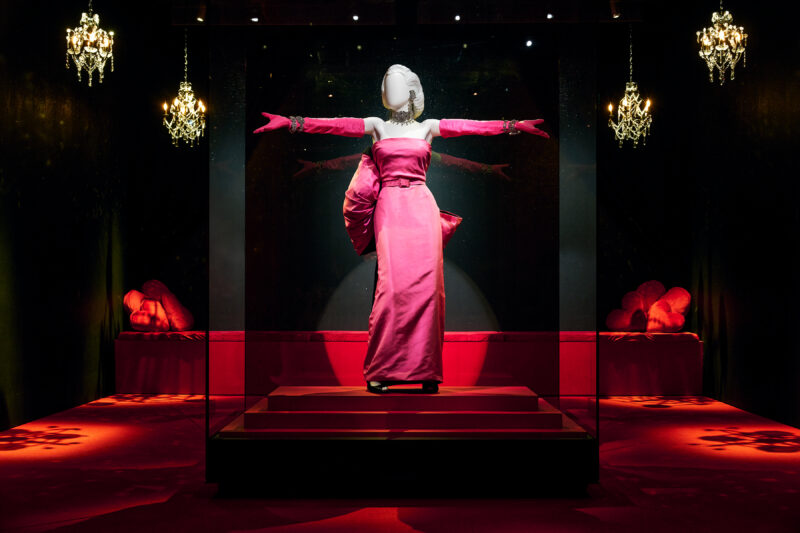
© Academy Museum Foundation • Photo: Emily Shur.
Marilyn Monroe Productions existed until Monroe’s passing in 1962, but its presence, and those of production companies like it, brought on the death knell of the studio system, placing more power in the hands of artists, and more power in the hands of women. “It took people like Marilyn to slowly etch the way, that women could be taken seriously. Women can have their own companies. Women can do what men do,” Casillo continued. Marilyn had her own challenges, but her desire for more, to be perceived as more, to do more, helped create opportunities for women in Hollywood.
Visit the ‘Marilyn Monroe: Hollywood Icon’ exhibit at the Academy Museum of Motion Pictures, through February 28th 2027.