
Any given Sunday, the line for cupcakes at Magnolia’s in New York City’s West Village wraps around the block. What had once been a sleepy bakery known by locals is now a global sensation. The game changer? Television. Specifically, season 3, episode 5 of HBO’s Sex and The City. The lead character biting a cupcake forever changed the destiny of this bakery. Though the episode aired nearly thirty years ago, the lines keep getting longer, proving the relationship between food and television is no ordinary love.
Television transformed American society almost instantly. Once sets became widely available in 1950, they rendered two social institutions obsolete: the fireplace and the dinner table. In the blink of an eye, the glowing light emanating from a box became the new flame we gathered around to talk, relax and eat. About one year after the launch of televisions came the foldable TV tray; by 1953 frozen TV dinners followed suit. This shift from the kitchen table to the TV dinner in the living room was just the start. Soon, viewers weren’t just eating food in front of the TV –they were watching food on TV.
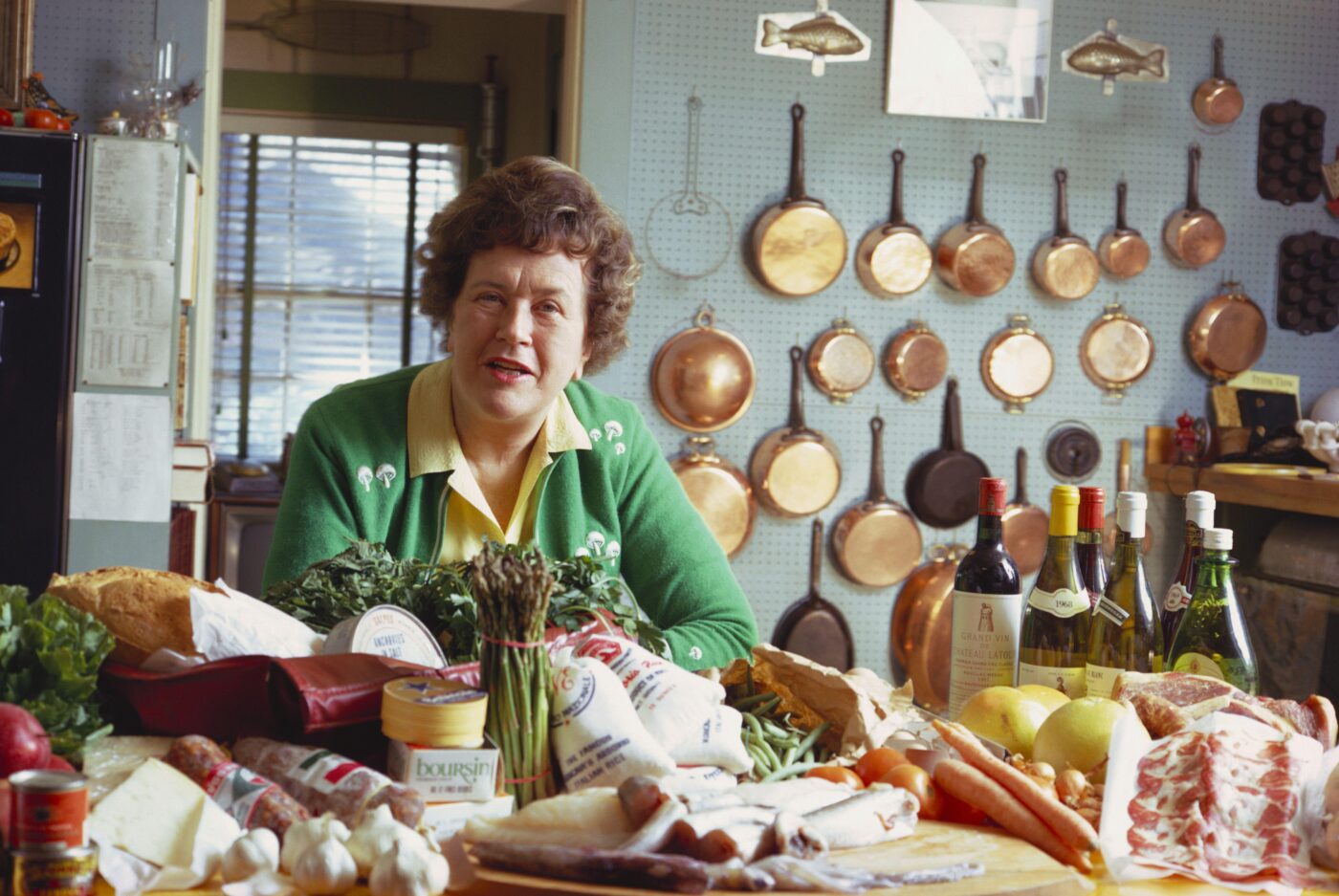
In the US the first televised show to focus on food was I Love to Eat (hosted by James Beard) which aired on NBC from 1946 to 1947. These fifteen-minute episodes, sponsored by Bordenfoods, featured cooking demonstrations and light banter by the renowned author. For the next 40 years many more chefs debuted on our screens, faithfully following Beard’s formula –but also making it their own: British born chef Dione Lucas introduced us to the best of English cuisine in To The Queen’s Taste (on CBS, 1948); in 1949 Italian born Joseph Milani brought his fun personality and signature tagline ‘A dinner for four –and not a dollar more’ as the host of Chef Milani Cooks on KABC. By 1963 the legendary Julia Child reimagined the American table with her continental dishes, as the host of The French Chef (on WGBH); by 1986 Martha Stewart was making waves with four bestselling cookbooks, leading to Holiday Entertaining with Martha Stewart on PBS.
Enter the Food Network (1993). This new channel cleverly launched with old episodes of shows by icons like Julia Child, while slowly introducing new personalities. In its thirty-three years on air, the channel has attracted billions in ad revenue and made millionaires and household names of chefs and personalities like Bobby Flay, Emeril Lagasse, Mario Batali, Giada De Laurentiis, and Rachel Ray. The relatable personalities, affordable recipes and inspiring presentations quickly made these shows and their recipes staples in American households. The Food Network’s chefs inevitably branched out into books, cookware, brands, and restaurants. In recent years, more formats and channels and streaming platforms have taken center stage. Among them, The Travel Channel’s No Reservations hosted by the late Anthony Bourdain and Bravo’s Top Chef hosted by Gordon Ramsay.
Yet, ironically, the most memorable food moments on television are not on cooking shows at all. Over the years dramas and comedies have fed us our most cherished memories, all anchored on recipes and dishes both real and imagined: The cherry pie in Twin Peaks; the soup, black and white cookie, and non-fat yogurt in Seinfeld; los pollos hermanos, pizza and Better Call Saul foods in Breaking Bad; eggo waffles in Stranger Things; the afternoon tea in Bridgerton, the crispy potato omelette and Chicago deep dish pizza in The Bear…
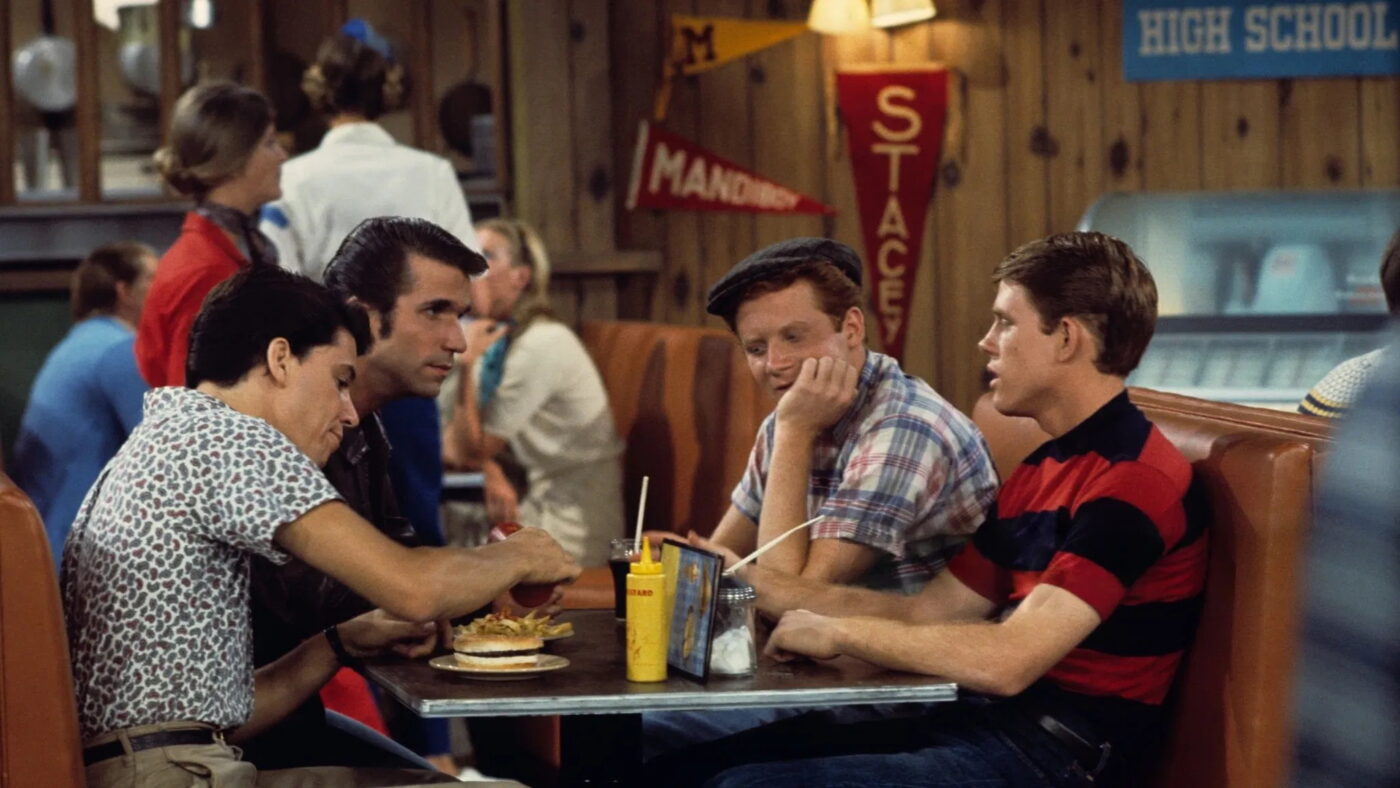
‘Happy Days’ • Photo: ABC.
Be it travelogue, fiction, reality, scripted or non-scripted, competition or not, food on television is not just entertainment –it’s a call to action. Milk and cereal are every kid’s favorite –especially for those born in the 60s through the 80s. Why? Because of the Saturday morning ritual of watching cartoons (often cross promoted with cereals.) From 1972’s Pink Panther Flakes –a collaboration between The Pink Panther and Frosted Flakes– to Teenage Mutant Ninja Turtles Check Mix in the 1990’s, the symbiotic relationship made for magical mornings and food memories. Burgers, fries and milkshakes are a decades long favorite for teenagers, thanks to sit-coms all set in a ‘burger joint.’ From ‘Arnold’s Drive In’ in Happy Days to ‘The Max’ in Saved by the Bell to ‘The Hub’ in That 70’s Show.
Steak or lobster by candlelight have become the go-to romantic meals for adults, thanks to a myriad of shows. For Rob and Laura in the Dick Van Dyke Show (1960), for Mr. Big and Carrie of Sex in The City (2000), for Daphne and Simon in Bridgerton today.
Food on television has shaped American food culture –and its global menu. No matter where in the USA you reside, your daily meals likely have a worldly vibe. Matcha in the mornings, tacos for lunch, Chinese for dinner. Maybe baklava for dessert? We are effortlessly familiar with global flavors, even when not familiar with the culture. It’s a privilege of the melting pot we live in, but also a direct benefit of the shows we’ve watched. All the more evident on social media. Here, a growing army of at-home master chefs, neighborhood foodies and social media influencers are adept at showcasing cuisines from all over the world. Seeing them try recipes, review restaurants, or share cooking secrets is to see the impact of Bourdain, Ina Garten and Nigella Lawson.
They have imbued us with the culinary intelligence, cache and cool of a well-traveled bon vivant. No, they didn’t raise us, but they definitely raised our palate. No wonder food gurus feel as close as family. After all, they may have taught us something about cooking even our own kin could not. Breaking bread, if only through the small screen, has made us one family and one country.