What makes a man? And how would a woman know?
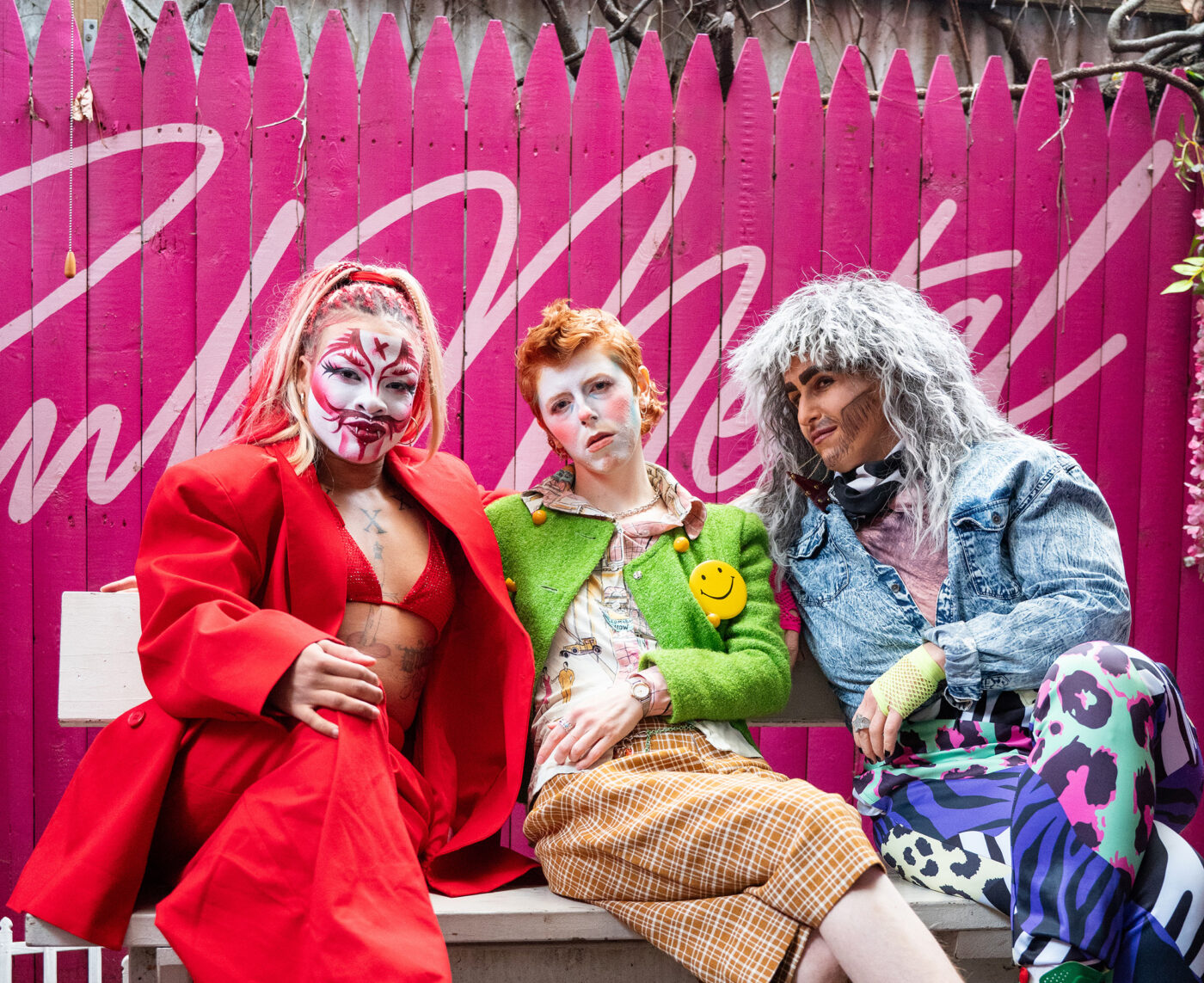
For Drag Kings, the answer is all about performance. And for a very special one, we traveled to Brooklyn’s Pink Metal Bar, a revolutionary queer space known for The Black Cherry Sideshow and its performers. Here, we meet: Packing Peanut, Xaddy Addy and Scud Missel.
All three kings were born biological women but respond to different pronouns. Peanut identifies as they/them. Xaddy as he/him. And Scud as he/him. They hail from different places, with different backgrounds and radically different styles, but they have something in common: each requested to be referred to as the male stage characters they portray. It’s an homage to their masculine alter egos and the innovative, influential, yet marginalized community they represent: Drag Kings.
Though the term Drag Kings is said to have first appeared in 1954 in California’s National City News, male gender performance dates back to at least 1700’s England when women actors dressed in breeches to play male roles. By 1867 famous male impersonators began taking the forefront starting with Annie Hindle, a British Born performer who gained acclaim in America. She opened the door to a long list of personalities who would both innovate and define the artform, including Vesta Tilley, Ella Wesner, Hetty King, Gladys Bentley and the illustrious Stormé DeLarverie. Stars like Madonna, Beyoncé and Ciara have been inspired by the artform, getting into drag for performances, music videos and hit singles like “If I Were a Boy” and “Like a Boy.”
Despite such legacy performers doing male Drag have historically been underrepresented and undervalued. But today the Kings are clawing back. In June 2025, King of Drag, a new series on the Revry Network, featured Season 9 Winner of RuPaul’s Drag Race Sasha Velour as judge, and iconic King, Murray Hill. The show centers Drag Kings and celebrates diverse styles and characters. Like RuPaul’s Drag Race, Drag Kings has introduced the audience to a dynamic cast of stars including King Molasses, who won Season One.
If there is a home for this unapologetic momentum for Kings it’s arguably New York City. Here a cross section of CIS women, transgender men and non-binary performers are pushing the art form in new ways. And that’s what leads us to Pink Metal, with Peanut and Xaddy and Scud. To watch them move their mouths to songs, contort their bodies to feelings and maneuver their props to perfection, igniting a rainbow of emotions from freedom to pain and joy. Emotions that birthed the very characters they perform.
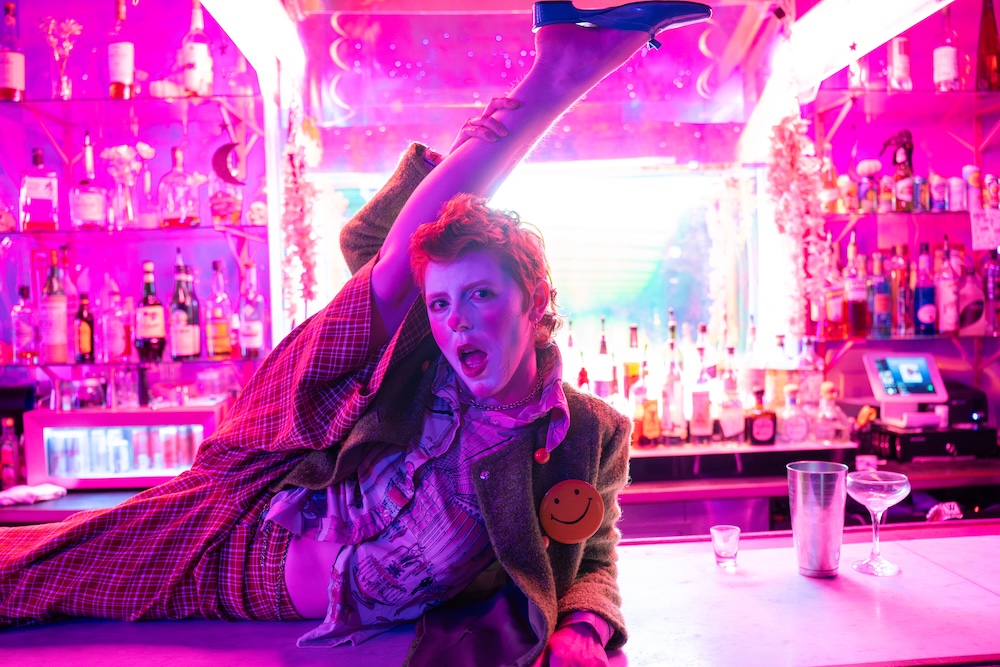
Packing Peanut • Photo: Mark C. Photography.
For Packing Peanut, it may have been freedom.
“I remember being a child and telling people, I don’t feel my face,” they recall. “I don’t feel my name. I don’t feel like my age. I don’t feel like my body. Like, I just am what I am. Like, my soul is all that I am. Like, I’m not even my body.”
That sense of self is the very foundation of their character, Packing Peanut.
“It’s the amorphous packing peanuts,” they say about their name inspired, literally, by the packing bubbles used to protect fragile items for shipping. “It’s just that little white thing you can throw away at any time.”
But on stage that little white thing is doing something very subversive, showcasing a version of fluid masculinity that is at once charming and toxic.
“I’m taking from horrible men I’ve met, men I’ve dated. Just behavior I’ve witnessed, the skater boys I grew up with,” says Peanut. “I like being a little bit shitty, a little bit gay, a little bit wrong, a little bit rude. Just everything I was always kind of envious of or wished I could get away.”
This makes their character a discourse on the nuanced nature of men’s relationship with the feminine and the masculine.
“They want to socialize with bros and then just have a girlfriend that they can talk to their bros about, like share her nudes.” Peanut embodies this energy, while offering a good time. “Packing Peanut is the best of men and the worst of men. He’s bad for you, but you kind of want him anyway.” The character is cathartic. “It’s my own attraction to men. It’s like what I love about them. And being like: I know you’re going to be so bad for me. I know you’re going to give me grief, but I also know I’m going to have a really fun two-minute romp.”
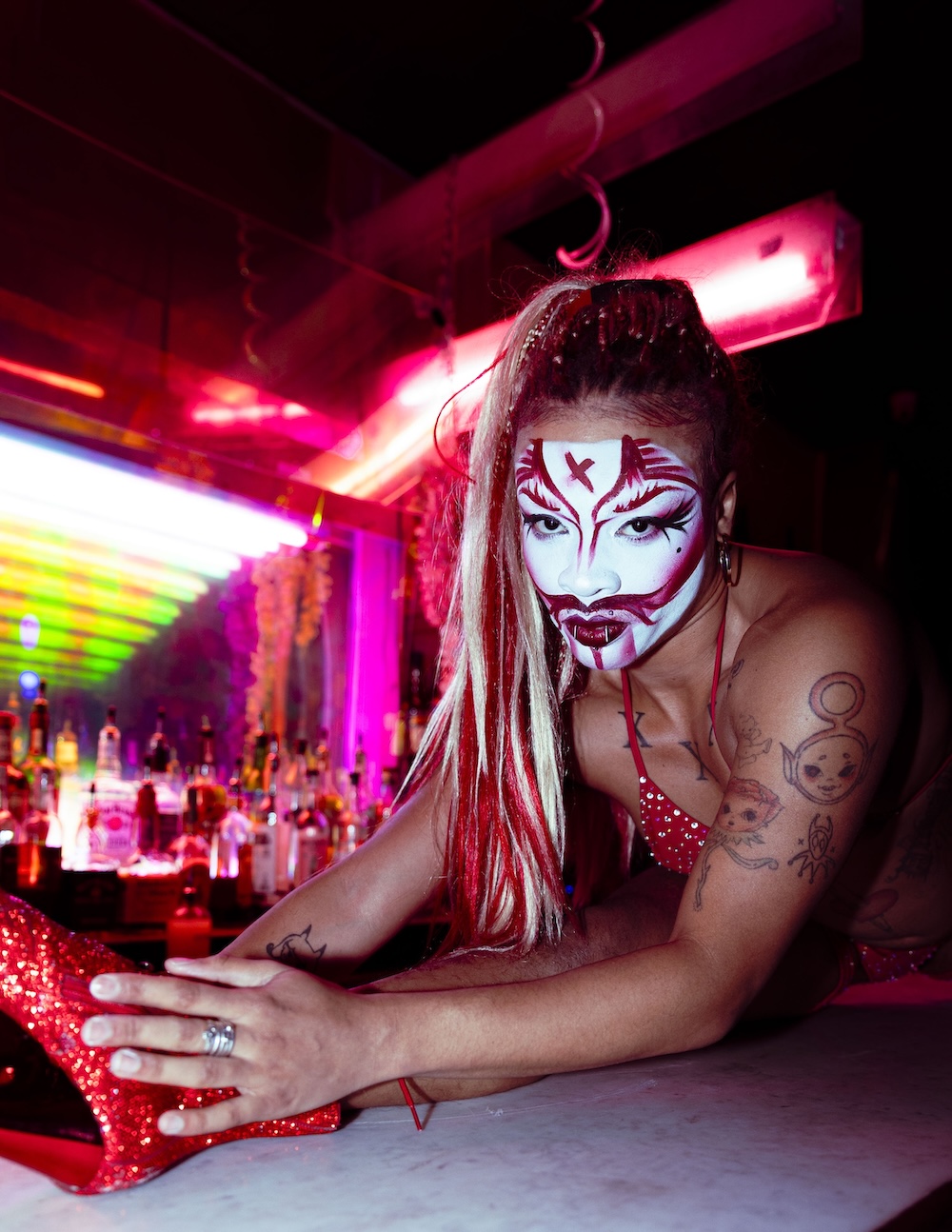
Xaddy Addy • Photo: Dodanin Cruz de Los Santos.
For Xaddy Addy, it may have been pain.
“It was pretty dark times when I first started doing drag,” he says. “It was Summer of 2020 when I came up with Xaddy Addy. Before that, my whole world kind of got upended. And it wasn’t a big world, because I was an agoraphobic, socially anxious sex worker. But my world uprooted in the sense that I had no clients. I couldn’t take clients at the time.”
To compound the chaos, home life was less than nurturing. “I was in a relationship where femininity was his main attraction to me and I think it was very confusing to him to realize that I was a very masculine kind of person.” The COVID shutdown became an opportunity for Xaddy to open up and redefine everything, including identity. “I was watching a lot of virtual drag shows. One was hosted by an older drag king named Uncle Freak. And on those Fridays that he would do his show, I would just start practicing makeup.” Xaddy, an unapologetic character was birthed.
“I’m not gonna necessarily fulfill the standards of what a drag king [is expected] to be. Xaddy is a feminine king, the likes of Prince and Little Richard.” This seductive combination of masculinity and femininity has become the character’s signature. “He is a man in a dress, quite literally, and can still ooze just as much power and sex appeal and respect than anybody that might be a six-foot-tall queen.”
For Xaddy this character has become healing not just on stage, but offstage too. “I don’t dress in dresses and girly stuff and makeup out of drag. I’m a dude when I’m not in drag. This is the time for me to suspend my own belief about myself and be like, I could be this transmasculine person with some muscles and a gown.”
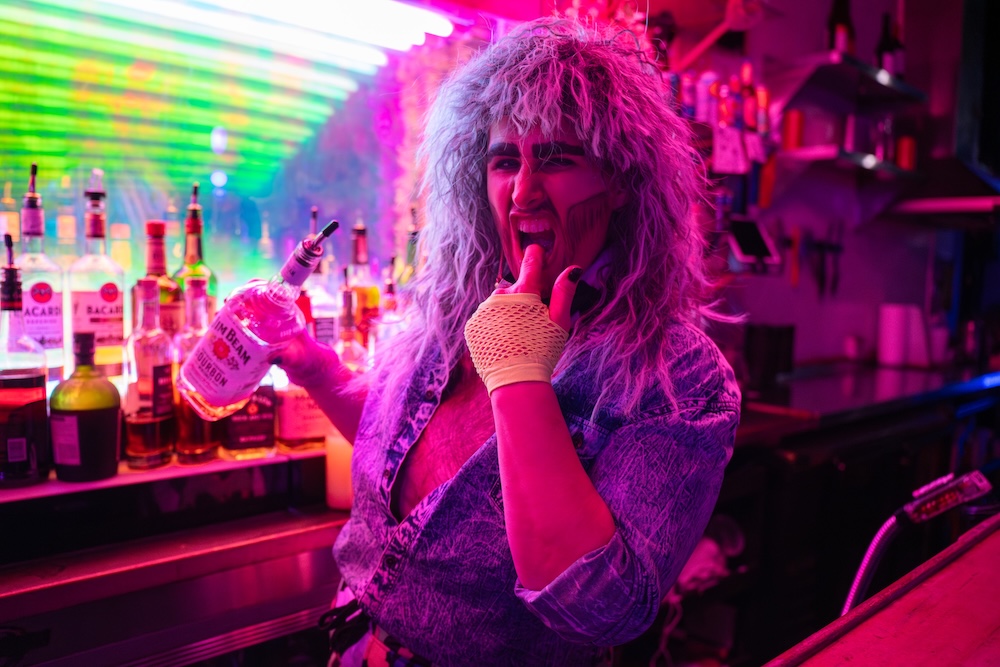
Scud Missel • Photo: Mark C. Photography.
For Scud Missel, it may have been joy.
“Most drag performers, their first time in drag is either Halloween or Pride. I was a Halloween person,” says Scud with his signature smile and laugh.
“I literally was just like a guy with a beanie and a beard in that very first iteration.” The costume became a hit and the foundation of Scud Missel’s friendly, gregarious and outgoing personality. “I basically took a bunch of photos with guys who were not in costumes, but were [in] beanies and beards, and I was like, ‘Hey bro, we have the same costume on,’ just to mess with it.”
For Scud, this moment was the missile that launched it all. “These men don’t even consider it a performance,” he says recalling the night. “It’s still a costume for them, even if they don’t think of it that way. So it just kind of evolved from there.”
The moments and experiences that birthed each of these Kings is beautiful. But the crown affairs can be ugly.
“It’s just, to my mind” says Scud, “and put me on record saying this—oppressed people can oppress people. And as much as I appreciate what RuPaul has done for drag, all of the drag we see on Drag Race is filtered through this one, frankly, boomer’s interpretation of what drag is, right?”
He continues, “It’s taking the gender that we all perform 24/7, you know, every day, and making it art and making it performance and putting it into the spotlight. I think Drag Kings have been out of that conversation because of patriarchy, to be totally honest. And just because a man is gay doesn’t mean that he can’t perpetuate patriarchy.”
Therein lies the complex reality for artists performing masculinity, in a man’s world.
“It’s like we can protect the Queens,” says Xaddy. “We know that drag queens can be more visibly under attack but we’re not like thinking about the pay gap of drag kings and the booking disparities of drag kings. We can’t act like we are just kumbaya, but at the end of the day, we are still acting transphobic and using misogyny and misogynoir and fatphobia and how we perceive people to influence how people get booked and paid.”
Packing Peanut agrees. “Book disabled kings, book black kings, book indigenous kings, book fat kings. Let’s book all the different kinds of kings and things.” For performers themselves, there’s a benefit beyond money and exposure. As we wrap the conversation, Scud chimes in on the ultimate benefit of Kinghood: “I do think it makes me just generally more empathetic and able to kind of see maybe behind the mask that we all kind of put on.” It’s a beautiful breakthrough and a necessary one for their reign. Long Live the Kings.
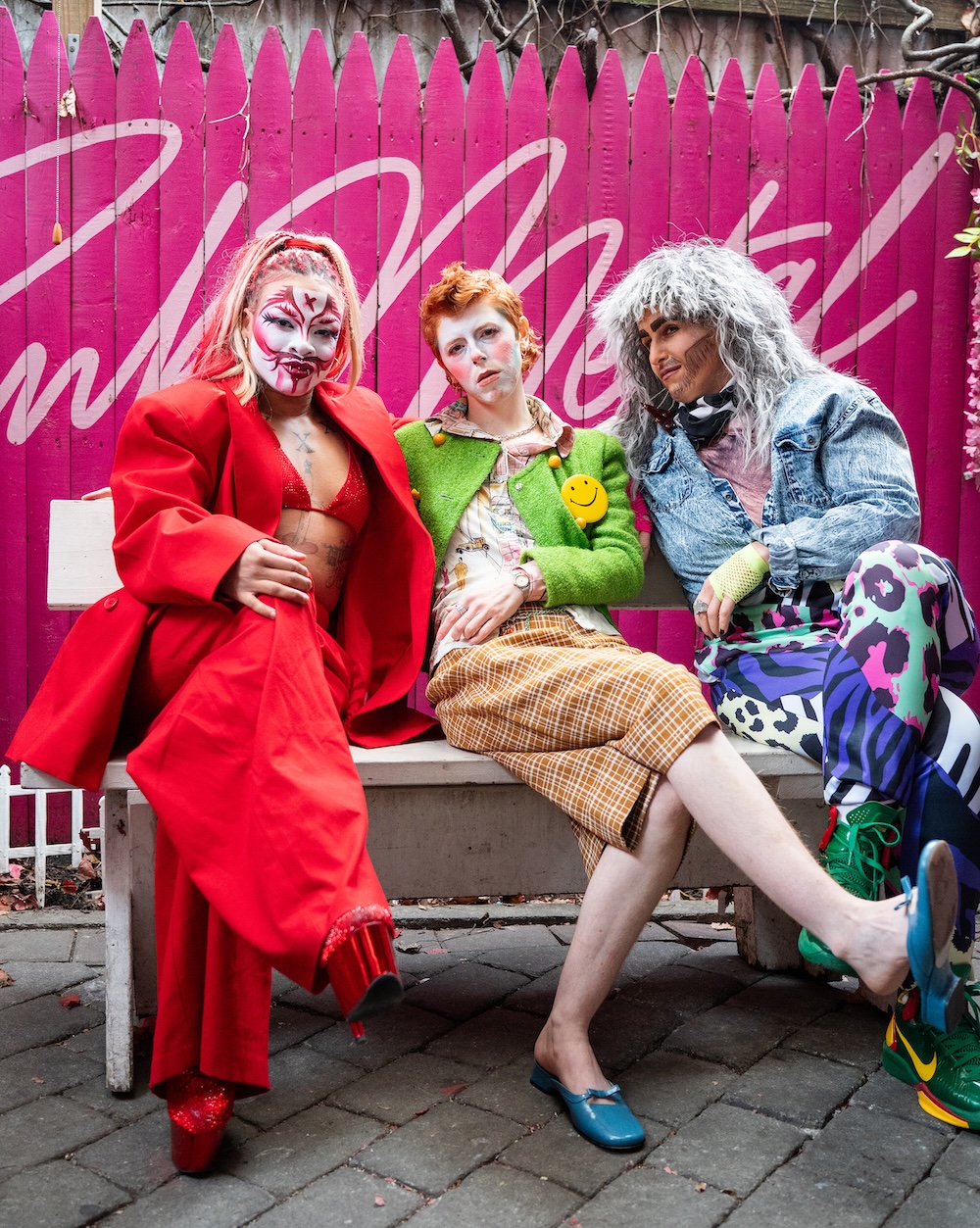
Three Kings • Photo: Mark C. Photography.