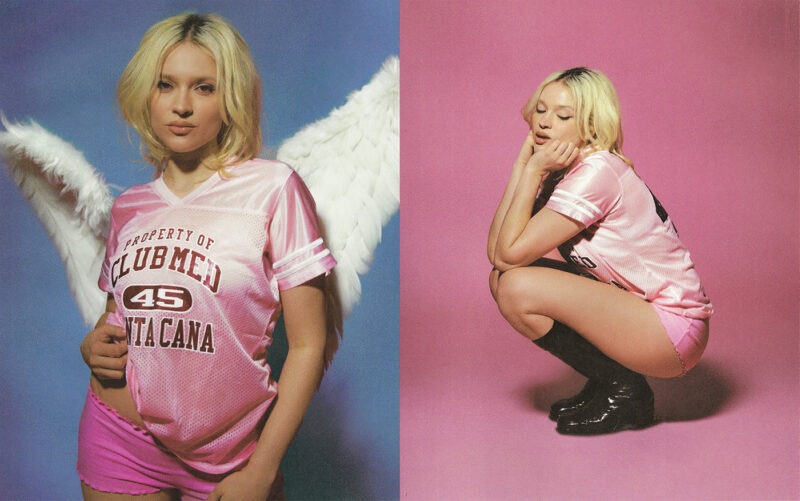

Wikipedia observes the phrase Big Dick Energy “denotes an easy confidence or a sense of assurance and purpose. In general, having big dick energy is unrelated to whether or not someone actually has a large penis or any penis at all. The term can be used for any gender.”
Let’s think critically to understand the implications of the phrase, coined in 2018. Predictably it immediately carried a message that contradicted the Wikipedia definition when Ariana Grande “referenced the size of [Pete] Davidson’s penis in a tweet and it springboarded to everyone talking about (the now abbreviated) BDE. Overnight, it became part of pop culture.”
Now we’re being asked to deny that Big Dick Energy has anything to do with big dicks! In fact, why not get rid of the adjective “big,” a defining feature of masculinity which is always seen quantitively: How much of a man are you? How big is your penis? How many times can you get it up in one night? How long can you last? How many women have you had sex with and so on. Obviously, despite the claims to the contrary, the big dick in BDE is linked to the big dick.
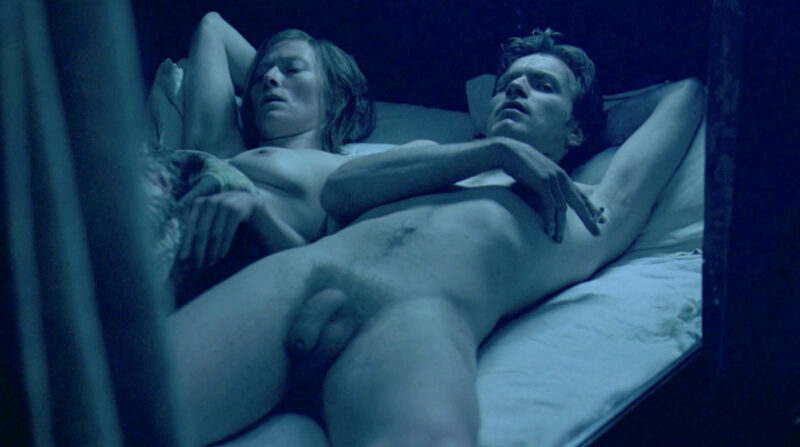
Ewan McGregor in ‘Young Adam’ • Warner Bros.
A similar situation arose in the use of psychoanalysis in the 70s and 80s with its emphasis on the phallus. Scholars endlessly repeated that the phallus had no connection to the penis and that women could possess the phallus just as much as men. This became a productive approach that illuminated overlooked aspects of film storytelling. In The Long Kiss Goodnight (1996), for example, a woman fighting for her life takes a gun from a dead man under water (a symbolic castration) and rises to the surface powerfully possessing the phallus in the form of a gun. In films like G.I.Jane (1997) women said things like “Suck my dick” and spoke of having “balls.”
The problem here is not with the concept of applying such masculine terminology to highlight how women can seize power just like men. It however encourages the long-held practice of staying away from analyzing the representation of the penis. So, we continue to attribute allegedly awesome power to it.
Feminists have long pointed out that “fat” women have traditionally been excluded from representation. This is not just about idealizing thin bodies but also about the bodies that are excluded and the way such exclusions can cause body shaming and self-esteem issues. Lena Dunham in the television series Girls (2012-2017) profoundly challenged that exclusion. Similarly, the omnipresent big dick representations imply that smaller dicks are not worthy of serious representation. This surfaces on porn sites which all have a marginal category of small “dicks” that are laughed at, humiliated, and even eroticized for implicitly pathetic men.

Harvey Keitel in ‘The Piano’
It is commonplace in big dick discourse to note that big penises have been glorified throughout history in many cultures. Those so-called penis representations, however, are in fact purely symbolic creations such as pillars holding up architectural structures or sculptures rising from the ground that literally have no connection to bodies. After the invention of photography, photographs and films of the nude male changed everything. A wide variety of cultural discourses arose about the representation of the penis in art, medicine, sexology, pornography, humor, all seeking to control what penises mean.
Very big dicks are the norm in pornography; average penises are the norm in medicine which seeks to assure all men that they are “normal” and can satisfy women; small penises are the norm as the butt of countless penis size jokes in culture; racist stereotypes suggest men of some races have large penises and are hypersexual, while others are undersexed with small ones, and so on. We can understand the importance of these things only if we focus on defined historical periods. Playgirl was groundbreaking in the 1970s for bringing full frontal male nude images into American magazines at a time when films also featured frontal male nudity.
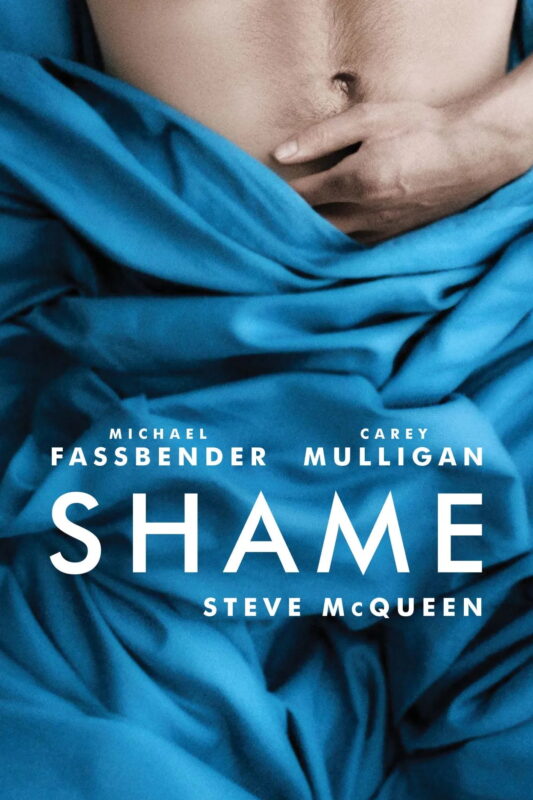
‘Shame’
Richard Gere, Harvey Keitel, Ewan McGregor, and Michael Fassbinder all did nude scenes. Gere gained notoriety in American Gigolo (1980): Harvey Keitel in The Piano (1993); Ewan McGregor in The Pillow Book (1995); and Michael Fassbender in Shame (2011).
During the premiere of Shame at the Venice Film Festival a female critic gushed on social media that Fassbender had dethroned McGregor as films’ top big dick. This touched off a media frenzy about Fassbinder’s extremely large penis. It achieved so much attention that it led to a Vanity Fair article entitled “A Year in the Life of Michael Fassbender’s Penis,” where Julie Miller refers to Fassbender’s “prodigious penis.” Gere and Keitel were well within the average penis size range but in the 80s and 90s critics did not dwell on their size. By the mid-90s that began to change with McGregor and, as 2011 social media made clear, McGregor had become enthroned as the big penis star, until he was dethroned by Fassbender. The mere fact that Vanity Fair had an entire article about Fassbender’s penis shows how “big dicks” had become more prominent in movies and popular culture discourse.
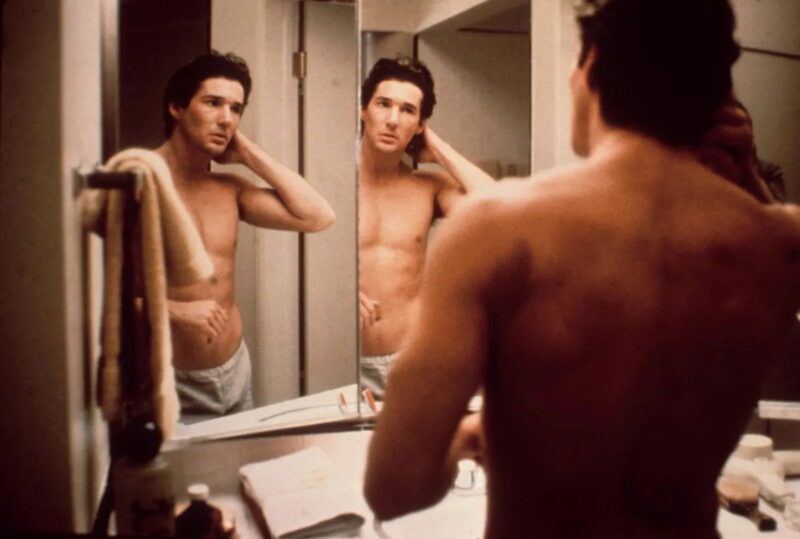
Richard Gere in ‘American Gigolo’ • Photo: Paramount Pictures.
But given the rise of the prosthetic penis, Fassbender may ironically be the end rather than the continuation of something: the prosthetic penis ended showing an actor’s real penis by covering it with a prosthesis. However, rather than ending the emphasis on big dicks, it furthered it. As one prosthetic artist explained, “Filmmakers will always give a bigger penis to more manly, virile characters and smaller penises are usually just about the gag factor.”
Publicists reveal that actors and directors often discuss what kind of penis their character would have. But in reality, penises tell us nothing about strength, power, success nor anything about character. Thus, prosthetics have become the ultimate way to regulate the representation of the penis. And the emphasis on big penises has contributed to Big Dick Energy. As shows like Spartacus demonstrate, powerful gladiators have big dicks even when dead, a sign of the power and “energy” they once had.
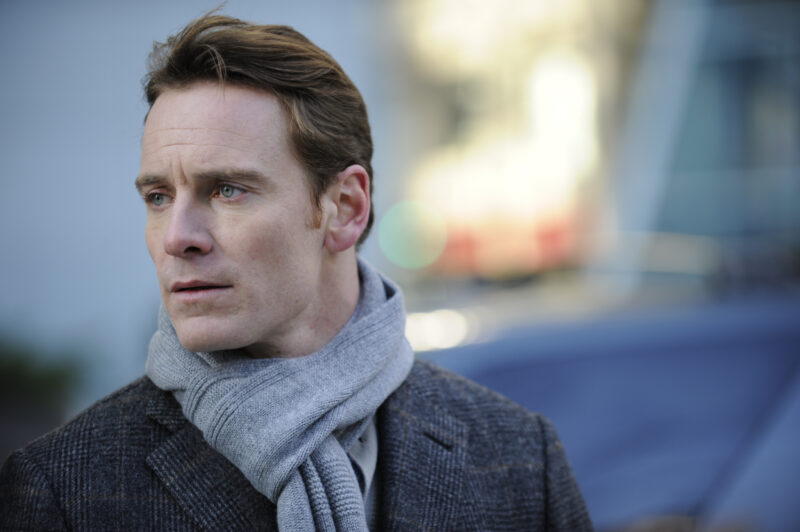
Michael Fassbeneder in ‘Shame’ • Photo: Fox Searchlight.
Playgirl is particularly interesting within this context since it showcases the nude male body and, at the same time, promotes analysis and discussion about such representations. Big Dick Energy is the current phrase at the top of the penis-phallus-big dick pyramid. What comes next? Maybe we have had enough dwelling on the literal and symbolic importance of the penis-phallus-big dick. Why not acknowledge that whatever we call it tells us nothing significant –no matter how big it is? Surely, we can find language that equally acknowledges women’s and men’s positive energy without regard to body parts or size.
Peter Lehman is Professor Emeritus in the Film and Media Studies Program at Arizona State University.